
 Pin it
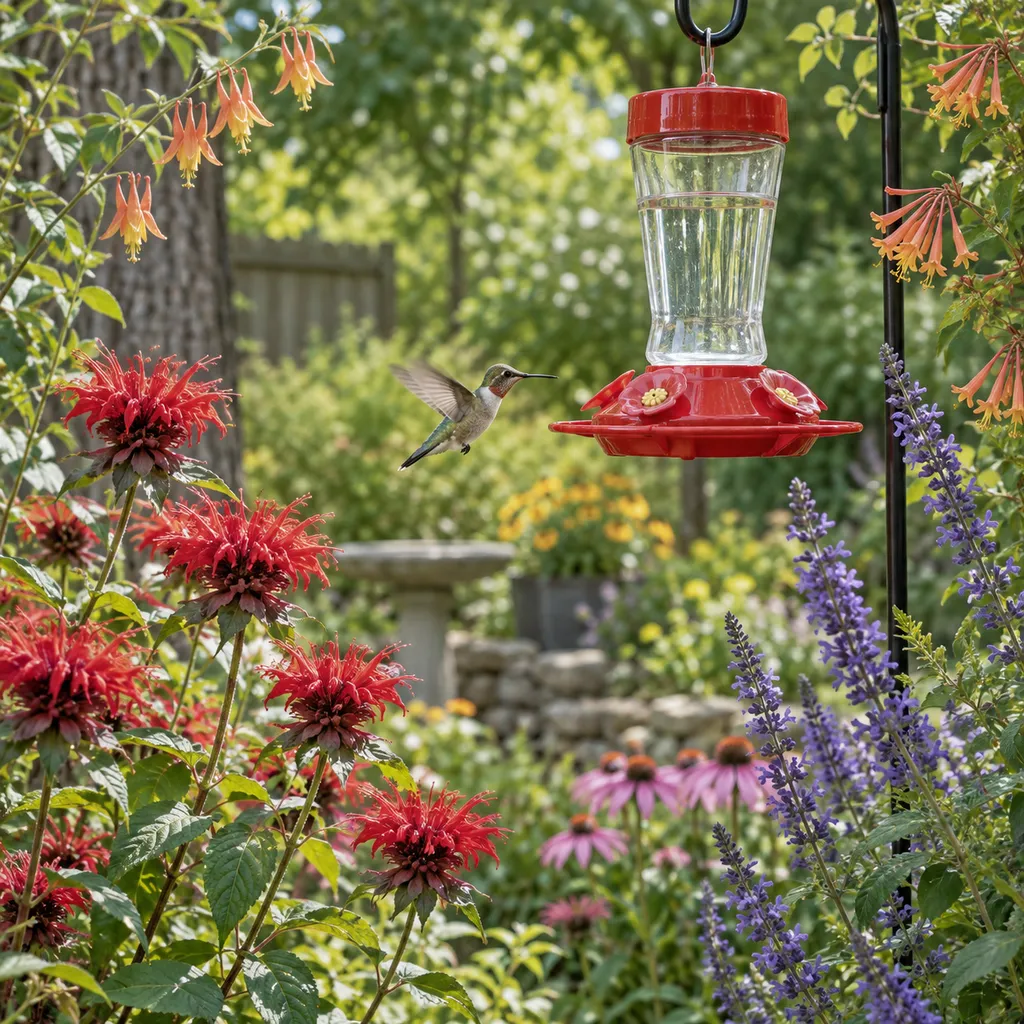
The short answer: feed by local sightings, not by a fixed national date. In most of the eastern United States, March and April are arrival months, May through July are nesting and peak garden months, August through October are migration months, and November through February are mostly winter-feeding months for the Pacific Coast, the Southwest, the Gulf Coast, south Florida, and unusual late visitors. Audubon recommends checking local first-sighting data and hanging feeders about two weeks before arrivals, then keeping them up about two weeks after the last bird you see in fall: https://www.audubon.org/community-science/hummingbirds/how-create-hummingbird-friendly-yard. Cornell also notes that keeping feeders up in fall will not delay migration because day length is a major trigger: https://www.allaboutbirds.org/news/youre-seeing-fewer-hummingbirds-at-your-feeder-should-you-worry/.
The rules that do not change by month
A monthly calendar is useful, but the nectar basics stay the same in every season. Use the 4:1 ratio: 1 part plain white table sugar to 4 parts water. Boiling is optional; it helps dissolve sugar, but the nectar must cool before you fill the feeder. Do not use red dye, honey, brown sugar, raw sugar, molasses, maple syrup, fruit juice, sports drinks, artificial sweeteners, or additives. If you want the full mixing guide, see How to Make Hummingbird Food: The 4:1 Nectar Ratio. Audubon gives the same basic sugar-and-water guidance and says not to use honey, artificial sweeteners, or red dye: https://www.audubon.org/community-science/hummingbirds/how-create-hummingbird-friendly-yard.
Freshness changes with temperature. As a practical schedule, change nectar about every 1-2 days above 90°F, every 2-3 days in the 80s°F, and every 4-6 days in cooler weather. Replace it sooner if it turns cloudy, stringy, sour-smelling, or shows mold or black specks. Clean the feeder at every refill with hot water and a brush so old sugar water does not build up around ports. For a temperature-by-temperature schedule, use How Often to Change Hummingbird Nectar by Temperature. Cornell advises changing sugar water more often when temperatures are over 90°F and cleaning feeders with hot water and a bottle brush: https://www.allaboutbirds.org/news/youre-seeing-fewer-hummingbirds-at-your-feeder-should-you-worry/.
January and February: feed only where hummingbirds are present
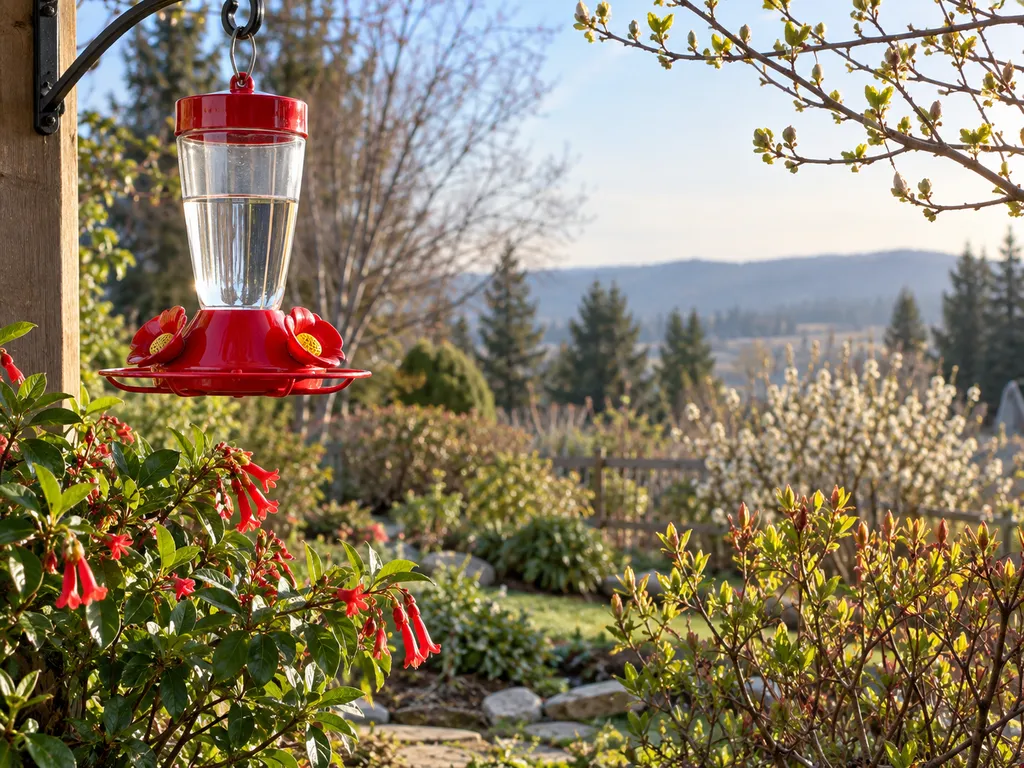
In midwinter, much of the eastern and northern United States has no regular hummingbird traffic. Do not hang a feeder just because the calendar says a new year has begun. The exception is wherever hummingbirds are already present: Anna's Hummingbird can be year-round along much of the Pacific Coast, and Cornell says Anna's Hummingbirds do not migrate much, so all-year feeder visits are normal in their range: https://www.allaboutbirds.org/guide/Annas_Hummingbird/overview. Winter visitors also turn up along parts of the Gulf Coast, in the Southwest, in south Florida, and occasionally farther north. Cornell notes that Rufous, Allen's, Anna's, and a few others have wintered farther north in recent years, and that a bird already present has a better chance if it can keep finding food: https://www.allaboutbirds.org/news/theres-a-hummingbird-at-my-feeder-in-the-dead-of-winter-will-he-be-okay/. If you feed in freezing weather, your main job is reliability: keep the standard 4:1 ratio, replace frozen or spoiled nectar, and avoid stronger mixes as a winter rule.
March: watch the South, the Gulf Coast, and early western movement
March is the month many eastern readers start checking local sightings. Ruby-throated Hummingbirds winter mostly south of the United States, with some in southern Florida, and return northward in spring. The National Wildlife Federation describes Ruby-throated Hummingbirds as summering throughout the eastern United States and migrating to Central America in autumn: https://www.nwf.org/Educational-Resources/Wildlife-Guide/Birds/Ruby-Throated-Hummingbird. In practice, Gulf Coast and southern states often prepare first, while northern yards can wait. Western readers should also pay attention: Rufous Hummingbirds travel north along the Pacific Coast in spring, according to Cornell: https://www.allaboutbirds.org/guide/Rufous_Hummingbird/maps-range. Put feeders up a little before birds normally reach your county, not months before they are expected.
April and May: spring arrivals turn into nesting season
April is feeder setup month across much of the East, Midwest, and interior West. In cool northern areas, early April may still be too soon, while late April can be right on time. By May, many regular breeding areas are active. Cornell says Ruby-throated Hummingbirds are common in suburbs and towns, visit flowering gardens and woodland edges at the height of summer, and are eastern North America's only breeding hummingbird: https://www.allaboutbirds.org/guide/ruby-throated_hummingbird. This is when the feeder becomes one part of a larger yard plan. Keep nectar fresh, but also support natural food by growing tubular flowers and avoiding pesticide use where hummingbirds forage. Hummingbirds also take small insects and spiders, and the National Wildlife Federation says Ruby-throated Hummingbirds rely on those invertebrates for their young: https://www.nwf.org/Educational-Resources/Wildlife-Guide/Birds/Ruby-Throated-Hummingbird.
June and July: keep nectar fresh through heat and heavy use
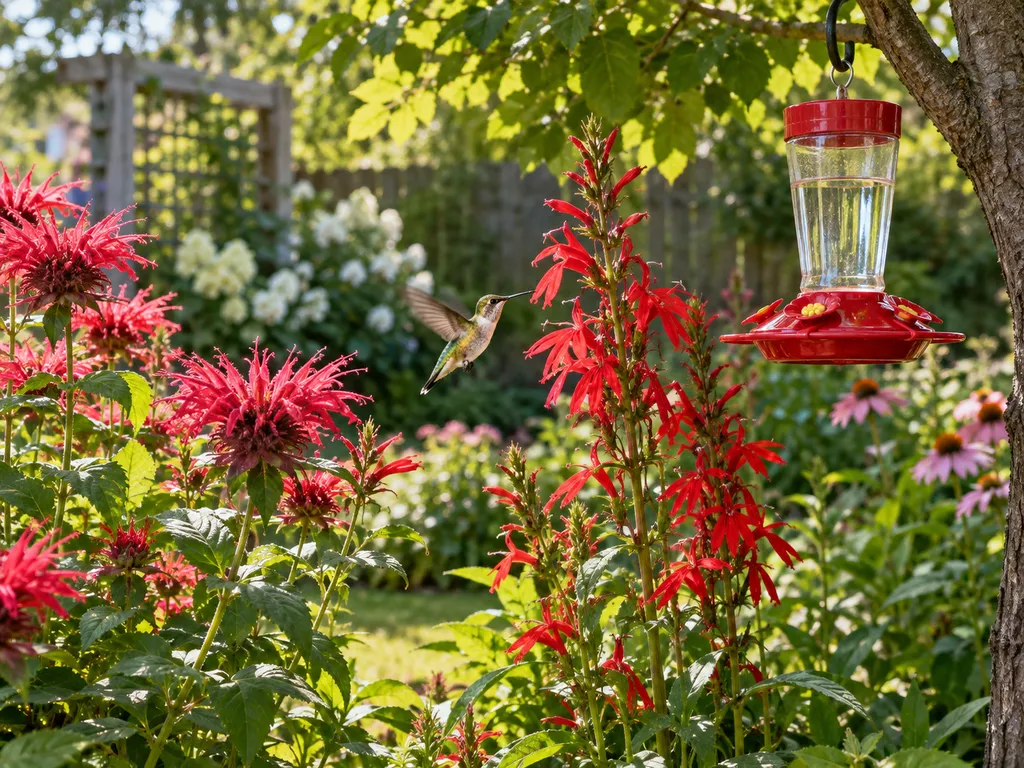
June and July are the months when many feeders are busiest, but they are also the months when nectar spoils fastest. Shade can slow warming, but it does not replace frequent changes. In hot weather, small batches are usually better than filling a large reservoir that sits for days. If birds empty a feeder quickly, refill it. If they leave nectar behind, use less next time so each batch is fresh. Keep the 4:1 ratio even in heat. A stronger mix is not a standard summer shortcut and can create a sticky residue around ports. This is also the best time to let flowers do more work. Ruby-throated Hummingbirds are attracted to native nectar flowers such as trumpet creeper, coral honeysuckle, bee balm, buckeye, and cardinal flower, according to the National Wildlife Federation: https://www.nwf.org/Educational-Resources/Wildlife-Guide/Birds/Ruby-Throated-Hummingbird.
August and September: migration begins before many people expect it
By August, do not assume a quieter feeder means something is wrong. Male Ruby-throated Hummingbirds may begin migration by early August, according to Cornell: https://www.allaboutbirds.org/guide/ruby-throated_hummingbird. Females and young birds may follow later, and migrants from farther north can pass through yards that had fewer local birds in July. In the West, movement can be especially complex. Cornell says Rufous Hummingbirds travel north along the Pacific Coast in spring and return south by the Rocky Mountains in late summer and fall: https://www.allaboutbirds.org/guide/Rufous_Hummingbird/maps-range. Calliope Hummingbirds also follow an elliptical route, more coastal in spring and more interior along the Rockies in fall: https://www.allaboutbirds.org/guide/Calliope_Hummingbird/overview. For a deeper seasonal page, see Feeding Hummingbirds During Fall Migration.
October through December: leave food for late birds, then switch to winter logic
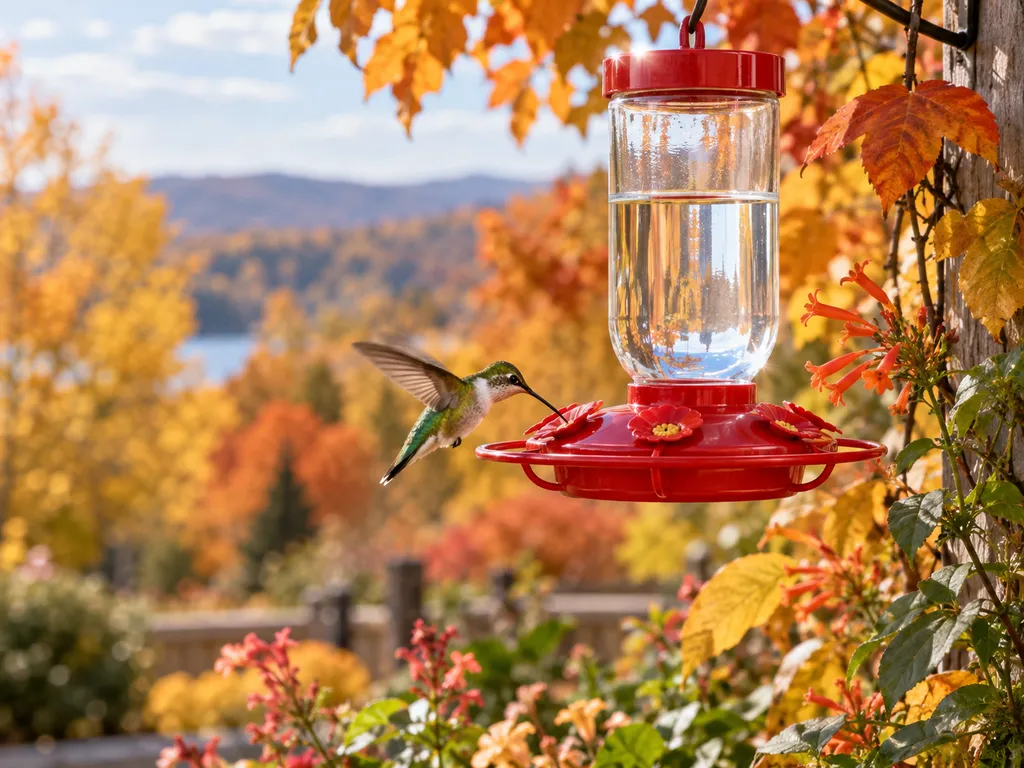
October is a transition month. In much of the East, it is late-migrant time; in warm coastal and southern areas, it can still be normal hummingbird time; and on the Pacific Coast, Anna's Hummingbirds may keep visiting through the season. Leave feeders up for about two weeks after your last sighting, as Audubon recommends, instead of removing them on a fixed date: https://www.audubon.org/community-science/hummingbirds/how-create-hummingbird-friendly-yard. In November and December, most northern and eastern yards can put feeders away once no birds have appeared for that two-week window. If a bird continues to visit, keep the feeder clean and reliable. Cornell says wintering hummingbirds can occur farther north than many people expect, especially Rufous and Anna's Hummingbirds: https://www.allaboutbirds.org/news/theres-a-hummingbird-at-my-feeder-in-the-dead-of-winter-will-he-be-okay/.
A simple month-by-month checklist
- January: Feed only if hummingbirds are present; keep nectar from freezing without changing the 4:1 ratio.
- February: Pacific Coast and southern yards may continue feeding; most northern yards can wait.
- March: Southern and Gulf Coast readers start watching local sightings; western migration can already be underway.
- April: Many eastern and central yards put feeders out; northern readers should follow local arrival records.
- May: Keep nectar fresh as nesting season builds, and add native tubular flowers where possible.
- June: Expect heavy use in many breeding areas; make smaller batches if heat or low traffic leaves nectar sitting.
- July: Change nectar often in hot weather and watch for young birds joining adults at flowers and feeders.
- August: Treat this as the start of fall movement, not the end of feeding.
- September: Keep feeders fresh for migrants moving through from farther north.
- October: Leave feeders up for late migrants and use the two-weeks-after-last-sighting rule.
- November: In most cold regions, store feeders after the final two-week window; keep feeding where birds remain.
- December: Winter feeding is regional and bird-dependent, especially for Anna's and unusual late visitors.
How to adjust the calendar for your region
The eastern half of the United States is simpler than the West because Ruby-throated Hummingbird is the main breeding hummingbird there. Even so, the calendar differs between the Gulf Coast, the Mid-Atlantic, New England, the Great Lakes, and the Upper Midwest. The West has more species and more routes. A yard in coastal California with Anna's Hummingbirds can be active in January, while a mountain yard that hosts Calliope Hummingbirds may be more seasonal. Desert, coastal, mountain, and inland locations can be only a few hours apart and still have different timing. That is why the best monthly plan has two layers: the broad month-by-month pattern above, plus local sightings from bird groups, eBird, or nearby nature centers.
What not to change during migration
Migration makes people want to help, but the best help is consistency. Do not make nectar stronger for travel fuel. Do not add vitamins, minerals, red dye, honey, or commercial boosters. Do not remove feeders early out of fear that birds will stay too long. Cornell is clear that feeders do not stop fall migration, and that birds may use feeders in early spring or late fall when flowers are not blooming: https://www.allaboutbirds.org/news/youre-seeing-fewer-hummingbirds-at-your-feeder-should-you-worry/. The right migration routine is ordinary and steady: fresh clear nectar, clean ports, nearby flowers when available, and a feeder left up long enough for late travelers.
When nests, chicks, or birds need help
Feeding season overlaps with nesting season, but feeders are not a reason to interfere with nests. In the United States, the Migratory Bird Treaty Act prohibits taking protected migratory birds without authorization from the U.S. Fish and Wildlife Service: https://www.fws.gov/law/migratory-bird-treaty-act-1918. Do not raise, keep, hand-feed, or move a hummingbird, nest, egg, or chick. If a live bird truly needs human help, contact a licensed wildlife rehabilitator through your state wildlife agency and keep the bird warm, dark, and quiet only until professional guidance is available.
The Bottom Line
A good hummingbird feeding calendar starts before the birds arrive, holds steady through nesting and heat, stays open for fall migrants, and becomes selective in winter. Use local sightings to fine-tune the month, but keep the same nectar rule all year: clear 4:1 sugar water made with plain white table sugar and clean water. Freshness matters more than volume. In spring, put feeders out a bit ahead of arrivals. In summer, change nectar more often as temperatures climb. In fall, leave feeders up for late travelers because they will migrate when their internal timing says to go. In winter, feed only where hummingbirds are actually present.
Frequently Asked Questions
What month should I put hummingbird feeders out?
Put feeders out about two weeks before hummingbirds usually arrive in your local area. In the southern United States that can be March, while many northern areas are closer to April or early May. Use local sightings rather than a single national date.
Should I feed hummingbirds every month of the year?
Only feed every month if hummingbirds are actually present where you live. All-year feeding can make sense in parts of the Pacific Coast and some southern or coastal areas. In most cold northern and eastern yards, winter feeders are unnecessary once birds have left.
Do I change the nectar ratio for migration or winter?
No. Keep the 4:1 ratio in every season: 1 part plain white table sugar to 4 parts water. Stronger nectar is not the standard recommendation for migration or winter, and additives are not needed.
When should I take hummingbird feeders down in fall?
A common rule is to take feeders down about two weeks after your last hummingbird sighting. Leaving them up longer does not stop migration, and it can help late migrants that pass through after your local breeding birds have already left.
Why did my hummingbirds disappear in August?
Late summer changes are often normal. Some males leave early, females and young may move later, flowers may temporarily pull birds away from feeders, and migrants can appear in waves. Keep fresh nectar available if hummingbirds are still possible in your region.
Sources
This guide was researched using these sources.
- https://www.audubon.org/community-science/hummingbirds/how-create-hummingbird-friendly-yard
- https://www.allaboutbirds.org/news/youre-seeing-fewer-hummingbirds-at-your-feeder-should-you-worry
- https://www.allaboutbirds.org/news/theres-a-hummingbird-at-my-feeder-in-the-dead-of-winter-will-he-be-okay
- https://www.allaboutbirds.org/guide/ruby-throated_hummingbird
- https://www.allaboutbirds.org/guide/Rufous_Hummingbird/maps-range
- https://www.allaboutbirds.org/guide/Annas_Hummingbird/overview
- https://www.allaboutbirds.org/guide/Calliope_Hummingbird/overview
- https://www.fws.gov/law/migratory-bird-treaty-act-1918
- https://www.nwf.org/Educational-Resources/Wildlife-Guide/Birds/Ruby-Throated-Hummingbird