
 Pin it
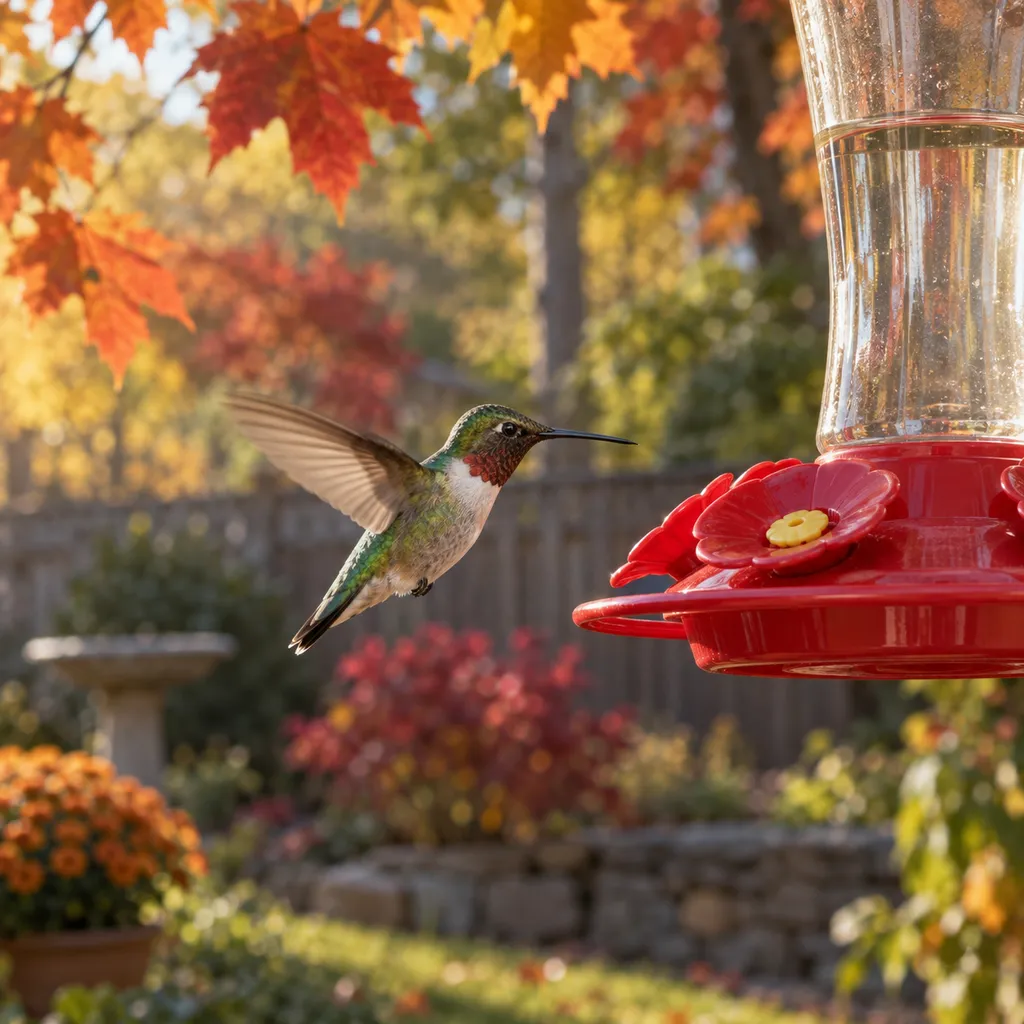
Yes, you can keep feeding hummingbirds in fall. A clean feeder with fresh 4:1 nectar can help late migrants and stragglers, and it will not make normal migrants stay behind. The Cornell Lab of Ornithology explains that keeping feeders up does not influence whether birds begin migrating; day length is one of the main cues that starts the journey south according to All About Birds. The practical answer is simple: keep nectar available while birds are still visiting, then consider leaving it up for about two more weeks in case later birds pass through. Fall feeding is not about changing the recipe or trying to “fuel them harder.” It is about consistency: clear homemade nectar, the standard 4:1 ratio, prompt replacement when it spoils, and flowers or habitat that still offer natural nectar and small insects.
The Fall Rule Is Simple
Keep a hummingbird feeder going in fall if you can maintain it well. That last clause matters. A neglected feeder is not helpful, even when the intent is kind. Audubon says native flowering plants are the best nectar source, while a well-tended sugar-water feeder can supplement what birds find during nesting season and migration according to its hummingbird feeding FAQ. In fall, flowers may be fading in one yard while still blooming a few blocks away, and migrants may appear on days when your local birds seem to have vanished. A feeder that stays clean and fresh gives passing birds one more reliable stop without replacing their wider search for flowers, insects, spiders, and shelter.
The common timing guideline is to leave the feeder up until activity has stopped, then keep it available for roughly two more weeks. Cornell phrases this as “several weeks” after the last hummingbird leaves, to help a straggler that may still need energy before continuing south on All About Birds. That timing is more useful than a fixed calendar date because fall movement varies by region, elevation, weather pattern, species, and year. A northern yard may quiet down in September, while Gulf Coast, desert Southwest, Pacific Coast, or southern Florida yards may still host hummingbirds much later.
Leaving Nectar Out Does Not Delay Migration
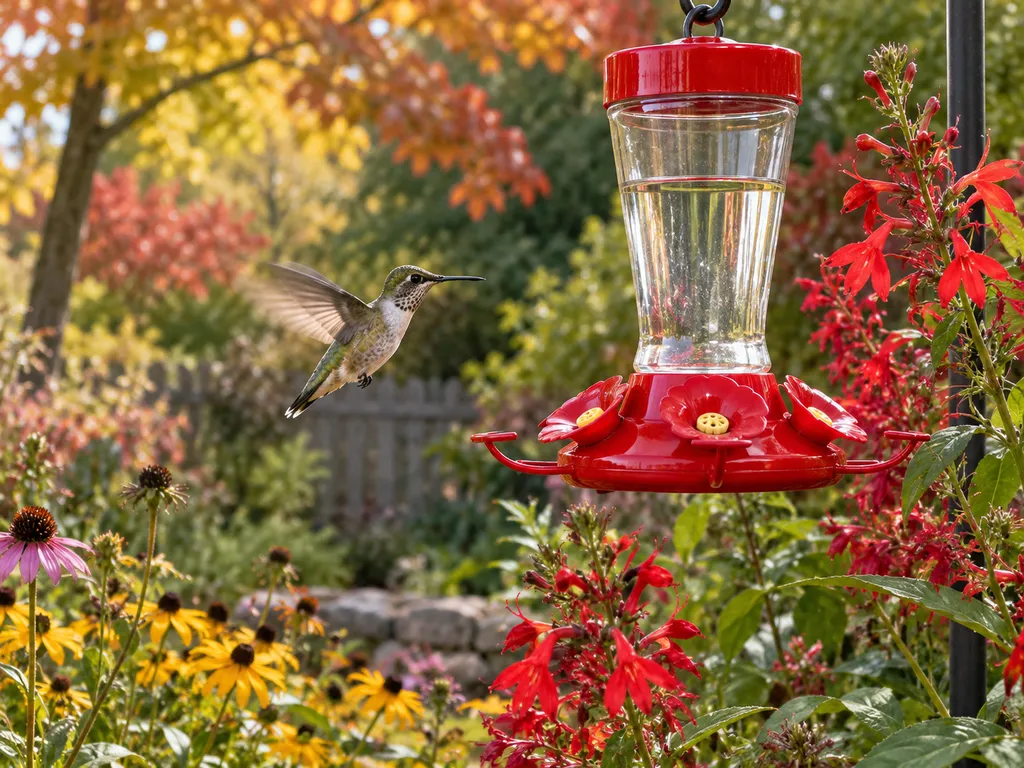
One of the most persistent fall myths is that a feeder will tempt hummingbirds to ignore migration. The best available guidance says otherwise. Cornell states that feeders do not influence whether a bird starts south, and Audubon says hummingbirds know when to leave from changes in day length and the angle of the sun, not from a lack of nectar or colder weather as summarized by Audubon. Food still matters because migration uses energy, but food availability is not the switch that turns migration on or off.
This distinction helps readers make a calm decision. If you enjoy feeding and can keep up with the maintenance, leaving nectar available into fall can help late birds. If you need to stop, you are not personally forcing every hummingbird away from your area; they continue to use flowers and other food sources. What you should not do is keep a dirty feeder out because you feel guilty about taking it down. In fall, good feeding means fresh nectar or no nectar, not old nectar left “just in case.”
Keep The Same 4:1 Ratio
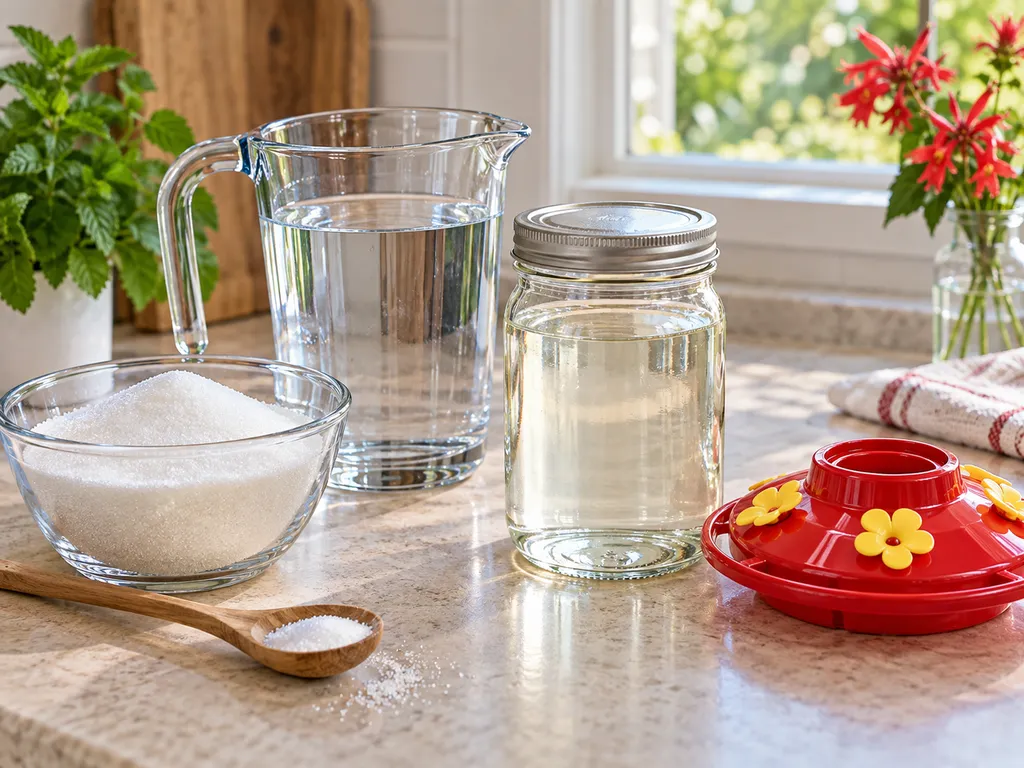
Do not strengthen the nectar for fall migration. The standard hummingbird nectar remains the 4:1 ratio: 4 parts water to 1 part plain white table sugar. The Smithsonian National Zoo gives the same basic formula and says not to add red dye in its nectar recipe. Audubon also recommends refined white sugar and tap water, with the solution cooled before the feeder is filled in its feeding FAQ. Boiling is optional; it can help sugar dissolve, but the finished nectar must be cool before it goes outside.
A stronger mix is not a better migration mix. Hummingbirds are adapted to taking frequent small meals from flowers and other sources, and the site standard stays the same in every season. Clear nectar is what belongs in the feeder. Red feeder parts can attract attention; colored liquid is unnecessary. Avoid red dye, food coloring, honey, brown sugar, raw sugar, turbinado sugar, organic sugar, powdered sugar, molasses, maple syrup, agave, fruit juice, sports drinks, artificial sweeteners, and vitamin or “protein” additives. Smithsonian specifically warns against honey, corn syrup, raw or unprocessed sugars, and powdered sugar because it may contain added ingredients on its nectar page.
- Use 4 parts water and 1 part plain white table sugar.
- Stir until fully dissolved; boil only if you prefer or need help dissolving the sugar.
- Let nectar cool completely before filling the feeder.
- Store extra nectar in a clean, covered container in the refrigerator for up to about one week.
- Discard any nectar that turns cloudy, stringy, sour-smelling, moldy, or speckled.
Freshness Changes With Temperature
Fall weather can swing from crisp mornings to hot afternoons, so nectar timing should follow temperature rather than the month printed on the calendar. As a practical schedule, change nectar about every 1 to 2 days above 90°F, every 2 to 3 days in the 80s°F, and every 4 to 6 days in cooler weather. Smithsonian recommends changing and cleaning every other day as a general routine, with at least twice a week in hot weather and once a week in cooler spring or fall weather on its nectar recipe page. Audubon gives a similarly maintenance-focused answer, advising daily or every-other-day cleaning in hot weather and less frequent but still regular cleaning in cooler weather in its FAQ.
Replace nectar immediately if it looks cloudy, forms strings, smells sour, or shows mold or black specks. A feeder that sees few visits still needs fresh nectar because warm sugar water changes even when birds are not emptying it. In low-traffic fall periods, fill only a small amount so less is wasted. At every refill, clean the feeder with hot water and a bottle brush, and clear the ports with a small brush or pipe cleaner. That is enough detail for this food-focused page: the main point is that fresh 4:1 nectar and regular cleaning are one routine, not two separate chores.
Flowers And Insects Still Matter
A feeder is only one part of fall support. Smithsonian notes that hummingbird flowers tend to provide abundant nectar, often have red or orange petals or bracts, and are often long and tubular on its hummingbird page. It lists examples such as bee balm, cardinal flower, trumpet creeper, coral honeysuckle, and columbine. In many yards, late-blooming salvia, penstemon, fuchsia, and other tubular flowers can also help bridge the season when summer blossoms fade. The most useful fall planting is not a single decorative pot by itself, but a sequence of blooms that keeps offering nectar as migration overlaps with cooler weather.
Hummingbirds are not living on sugar water alone. Cornell’s Ruby-throated Hummingbird guide describes birds taking insects in addition to nectar, including insects from spiderwebs and sap wells, and notes that they visit tube-shaped flowers and feeders in the species account. That matters in fall because a tidy feeder cannot replace the rest of the yard. Leaving some pesticide-free plant structure, tolerating small spiderwebs where they are not in your way, and keeping late flowers available can make the yard more useful than nectar alone.
If A Hummingbird Appears Very Late
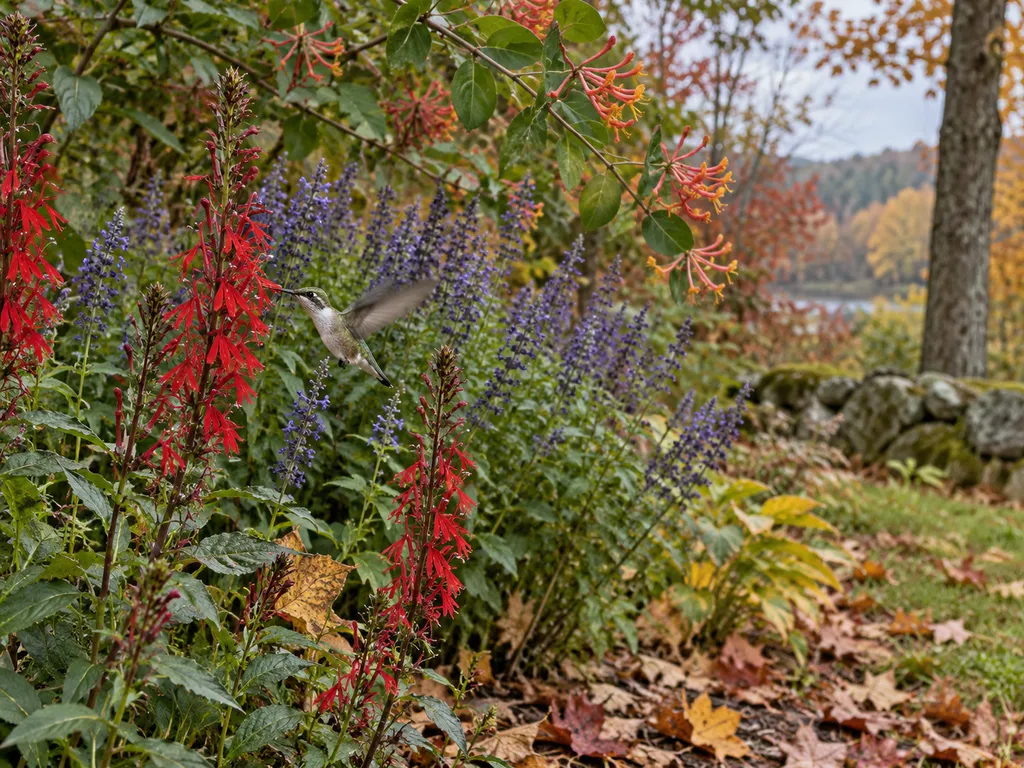
A late hummingbird is not always a local bird that “missed the memo.” Audubon notes that late migrants or out-of-range species can appear into early winter, and that some areas of the United States normally have hummingbirds in winter, including parts of the Gulf Coast, southern Arizona, south Florida, and the Pacific Coast range of Anna's Hummingbird according to its FAQ. If a hummingbird is still visiting after your usual season, you can keep offering fresh 4:1 nectar as long as you can maintain the feeder. In places with freezing nights, the challenge becomes keeping nectar liquid and fresh, but that belongs to winter feeding rather than ordinary fall migration.
If you are unsure what species you are seeing, avoid turning the feeder area into a handling situation. Do not try to catch, hold, or hand-feed a hummingbird. Watch from a distance, take photos if you can do so without disturbing the bird, and check with a local Audubon chapter, state wildlife agency, or birding group if the sighting seems unusual. The feeder’s job is simple: fresh clear nectar in the standard ratio, available without fuss.
A Practical Fall Feeding Plan
The best fall plan is deliberately boring. Keep the same recipe. Reduce waste by filling less nectar if visits slow down. Check the feeder daily during warm spells. Replace nectar before it has a chance to spoil. Keep nearby flowers going if your climate allows it. Then, once you have gone about two weeks without seeing a hummingbird, take the feeder down, clean it well, let it dry, and store it for the next season unless your region regularly hosts winter birds.
This approach also prevents two common mistakes. The first is taking the feeder down too early because you worry it will hold birds back. The second is leaving nectar out too long between changes because fall “feels cool.” A September heat wave can spoil nectar quickly, while an October cold front may slow visits. The birds are responding to a whole landscape of daylight, weather, flowers, insects, and instinct. Your role is narrower and easier: offer a clean supplemental food source when you can do it well.
The Bottom Line
Feeding hummingbirds in fall is helpful when it is consistent and clean. Leave nectar available while birds are visiting, and commonly for about two weeks after the last sighting, because late migrants may still pass through. Do not change the recipe for migration: use the 4:1 ratio, clear nectar made from 4 parts water and 1 part plain white table sugar. Skip dyes and all alternative sweeteners. Replace nectar on a temperature-based schedule, clean at every refill, and remember that fall flowers, insects, and spiders remain part of the hummingbird food picture.
Frequently Asked Questions
Should I stop feeding hummingbirds in September?
Not automatically. If hummingbirds are still visiting and you can keep the nectar fresh, continue feeding. Many readers use the two-week-after-last-sighting guideline rather than a fixed September date.
Will my feeder keep hummingbirds from migrating?
No. Cornell and Audubon both explain that feeders do not make normal migrants stay behind. Changing day length is a major cue for migration, so a clean feeder can support late birds without delaying the journey.
Should fall nectar be stronger than the normal mix?
No. Use the same 4:1 ratio in fall: 4 parts water to 1 part plain white table sugar. Stronger nectar is not recommended as a standard migration mix.
How long after the last hummingbird should I leave the feeder up?
A common guide is about two weeks after your last sighting, as long as you keep cleaning and replacing the nectar. This gives late migrants a chance to find fresh food if they pass through.
What if nectar is barely being used in fall?
Fill the feeder only partway so less nectar is wasted, but keep the same replacement schedule. Nectar can spoil even when birds are not emptying the feeder.
What flowers help hummingbirds in fall?
Late tubular flowers are useful, especially red, orange, pink, or purple blooms such as bee balm, cardinal flower, salvia, coral honeysuckle, penstemon, fuchsia, columbine, and trumpet vine where they suit the region.
Sources
This guide was researched using these sources.
- https://www.allaboutbirds.org/news/should-i-stop-feeding-birds-in-fall-so-they-can-start-their-migration
- https://www.nationalzoo.si.edu/migratory-birds/hummingbird-nectar-recipe
- https://www.audubon.org/magazine/hummingbird-feeding-faqs
- https://nationalzoo.si.edu/migratory-birds/hummingbirds
- https://www.allaboutbirds.org/guide/Ruby-throated_Hummingbird/id