
 Pin it
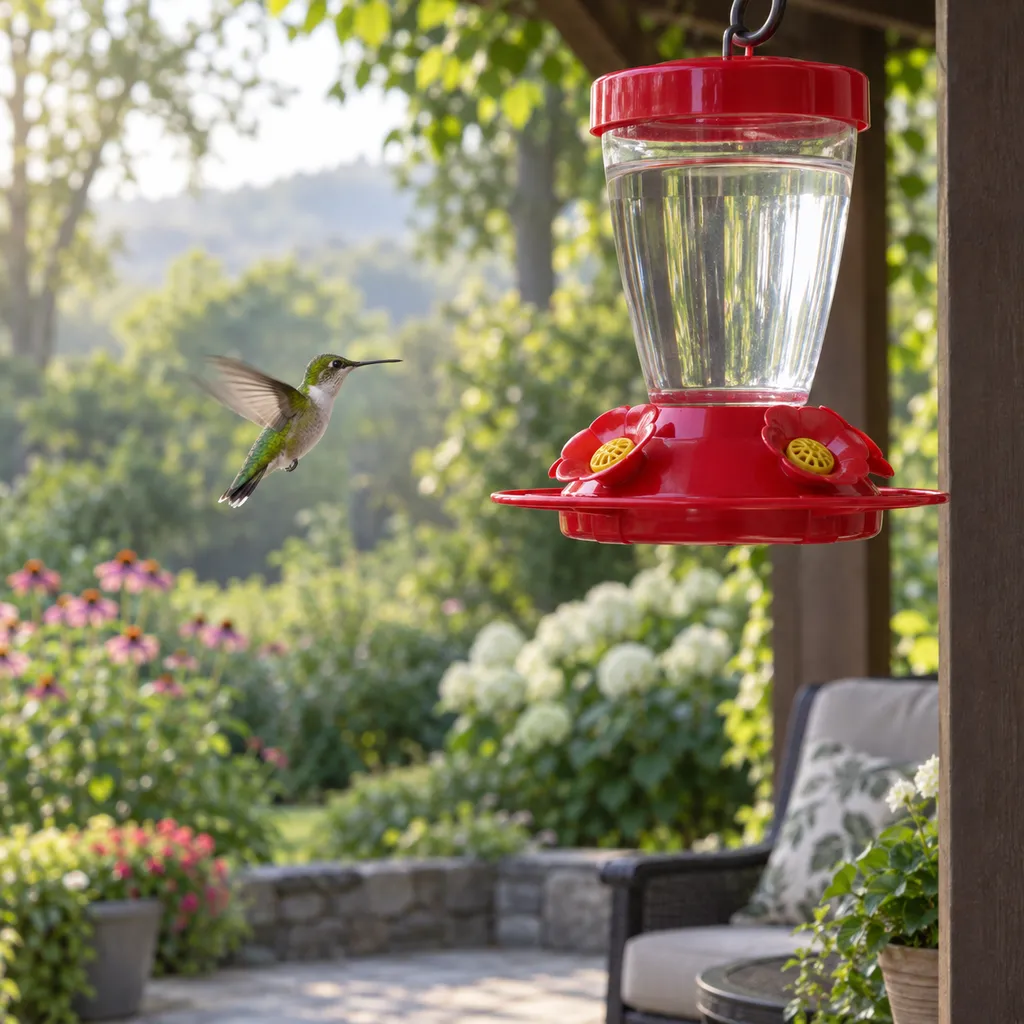
The practical answer is simple: change hummingbird nectar every 1-2 days above 90 degrees F, every 2-3 days in the 80s, and every 4-6 days in cooler weather. Replace it immediately if it looks cloudy, smells sour, turns stringy, or shows mold or black specks. Fresh nectar matters because sugar water can spoil faster in heat, sun, and heavy use. At every refill, empty the old nectar and clean the feeder before adding fresh, cooled 4:1 nectar.
The Short Answer by Temperature
Temperature is the best starting point because heat speeds up spoilage in sugar water. Cornell Lab's Project FeederWatch notes that bacteria and fungi grow more rapidly as temperatures rise, and its hummingbird guide says to refill every 3 days when the thermometer reaches 80 degrees F and that nectar may spoil in 2 days or less above 90 degrees F (Project FeederWatch). Smithsonian's National Zoo gives a simple baseline of changing feeders every other day and thoroughly cleaning each time, with at least twice weekly changes in hot weather and weekly changes in cooler weather (Smithsonian).
Use this schedule as your everyday rule:
- Above 90 degrees F: change nectar every 1-2 days, and daily if the feeder is in sun or the nectar looks questionable.
- 80-89 degrees F: change nectar every 2-3 days.
- 70s or cooler: change nectar every 4-6 days, or sooner if the feeder sits in direct sun.
- Any temperature: change it immediately if it is cloudy, stringy, sour-smelling, moldy, or dotted with black specks.
Why Warm Weather Shortens the Nectar Window
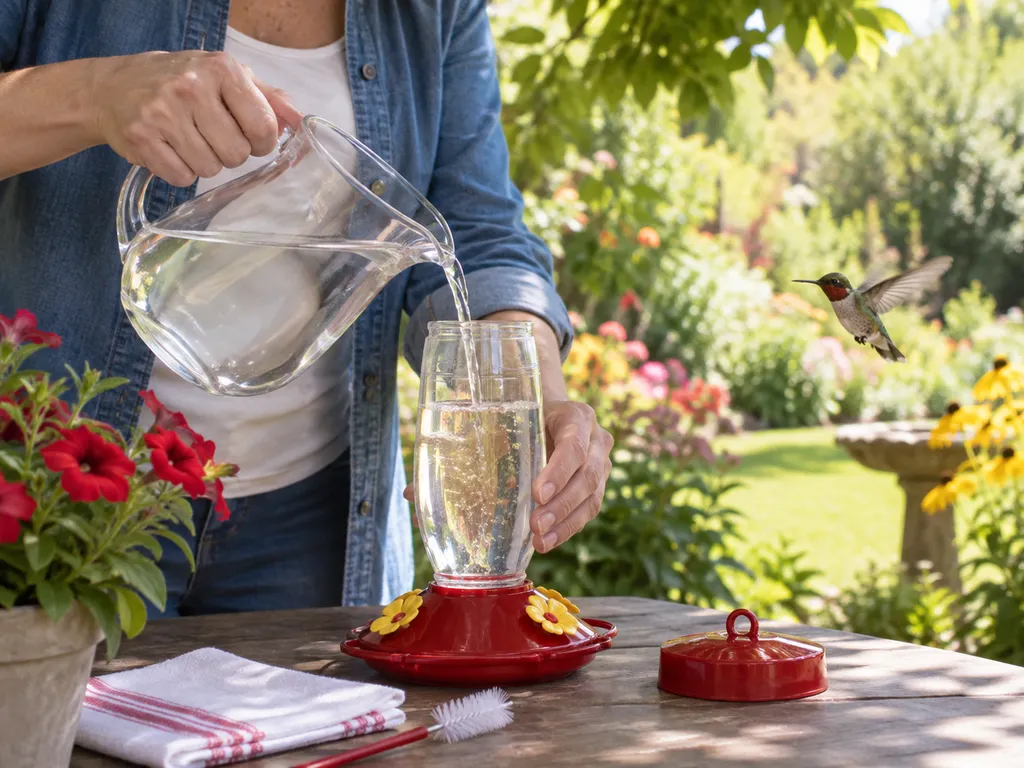
Hummingbird nectar is only sugar and water, which is exactly why it does not stay fresh outdoors for long. It is exposed to warm air, sunlight, insects, rain splash, and microorganisms introduced as birds feed. Project FeederWatch explains that mold and fungi readily grow in sugar water, especially in warm temperatures, and recommends cleaning hummingbird feeders ideally every time they are refilled (Project FeederWatch).
Placement also affects timing. Audubon recommends hanging feeders in shade to slow fermentation and cleaning every 2-3 days, or daily in particularly hot conditions (Audubon). A feeder that gets full afternoon sun, leaks sticky nectar, or has many bird and insect visits should be treated like a hot-weather feeder even if the general forecast feels mild.
Change It Immediately If You Notice Spoilage
The calendar is only a guide. The nectar itself has the final say. Empty and clean the feeder right away if you notice any of these signs:
- Cloudiness: clear nectar that has turned hazy should be discarded.
- Stringy texture: threads or slime mean the nectar is no longer fresh.
- Sour or fermented smell: fresh 4:1 nectar should smell neutral or lightly sweet.
- Mold or black specks: check the reservoir, seams, base, and feeding ports.
- Dead insects or debris: empty the feeder, clean all parts, and refill with fresh nectar.
Do not try to rescue questionable nectar by topping it off. Topping off mixes fresh nectar into old nectar and leaves residue in the feeder. Empty, clean, rinse, and start over.
Keep the 4:1 Ratio in Every Season
Freshness and ratio are separate decisions. The standard nectar formula is the 4:1 ratio: 1 part plain white table sugar to 4 parts water. Smithsonian lists refined white sugar and water as the ingredients, says not to add red dye, and says boiling is not required as long as the sugar fully dissolves (Smithsonian). If you do heat the water, let the nectar cool completely before filling the feeder.
Do not make a stronger winter or migration mix as a rule. Cornell's All About Birds notes that table sugar and water are enough, that nectar in flowers is clear, and that feeders use red parts to attract attention rather than colored liquid (All About Birds). The safest routine is consistent: clear 4:1 nectar, changed often, in a clean feeder.
Ingredients That Should Stay Out
Use plain white table sugar only. Avoid red dye, food coloring, honey, brown sugar, raw sugar, turbinado sugar, organic sugar with molasses, powdered sugar, molasses, maple syrup, agave, fruit juice, sports drinks, artificial sweeteners, protein additives, and vitamin drops. These additions do not improve the nectar routine, and several can spoil differently or fail to provide the simple energy hummingbirds seek from nectar. University of Georgia Extension also advises clear nectar made from 1 part sugar to 4 parts water and says red feeder parts, not red liquid, attract hummingbirds (UGA Extension).
A Simple Refill Routine That Works
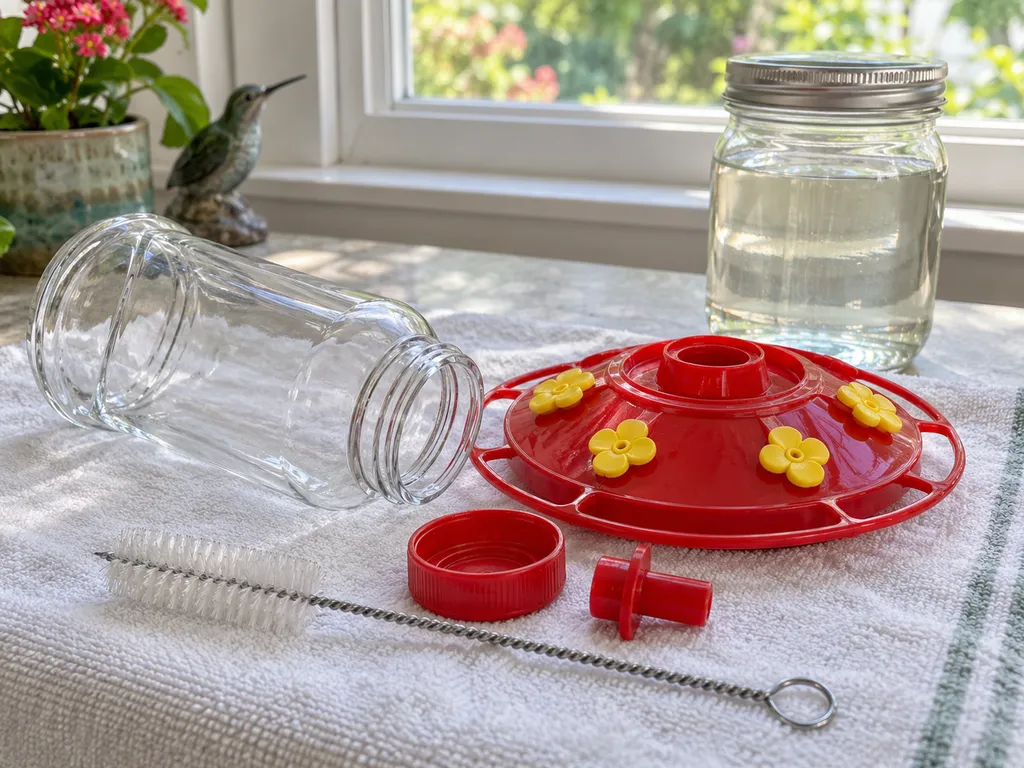
Every refill should be a cleaning, not just a pour. Empty old nectar, take the feeder apart, scrub the reservoir and base with hot water and a bottle brush, and clean the ports with a small brush or pipe cleaner. FeederWatch says hummingbird feeders need more frequent cleaning than seed or suet feeders and should be taken apart and washed thoroughly; it also notes that dish soap is acceptable when the parts are rinsed thoroughly (Project FeederWatch).
For deeper cleaning, Audubon recommends a diluted white vinegar cleaning solution and thorough rinsing before refilling (Audubon). FeederWatch describes diluted bleach as an option for disinfecting feeders, followed by careful rinsing and complete drying. If you use bleach, use it separately from vinegar, rinse very thoroughly, and let parts dry before adding nectar.
How Much Nectar to Put Out
Freshness is easier when the feeder holds only what birds can use quickly. If nectar regularly sits untouched for several days, fill the feeder only partway or use a smaller feeder. Cornell's All About Birds suggests that the best-sized feeders are those emptied every day or two by the hummingbirds you have, because sugar water should not sit for long in warm conditions (All About Birds).
Heavy traffic is different. If hummingbirds empty a feeder before your normal change day, clean it and refill it when it is empty. Do not wait for the schedule if the feeder has already been drained, and do not refill over residue. A small amount of fresh nectar in a clean feeder is better than a large reservoir that lingers in the heat.
Where Shade Fits Into the Schedule
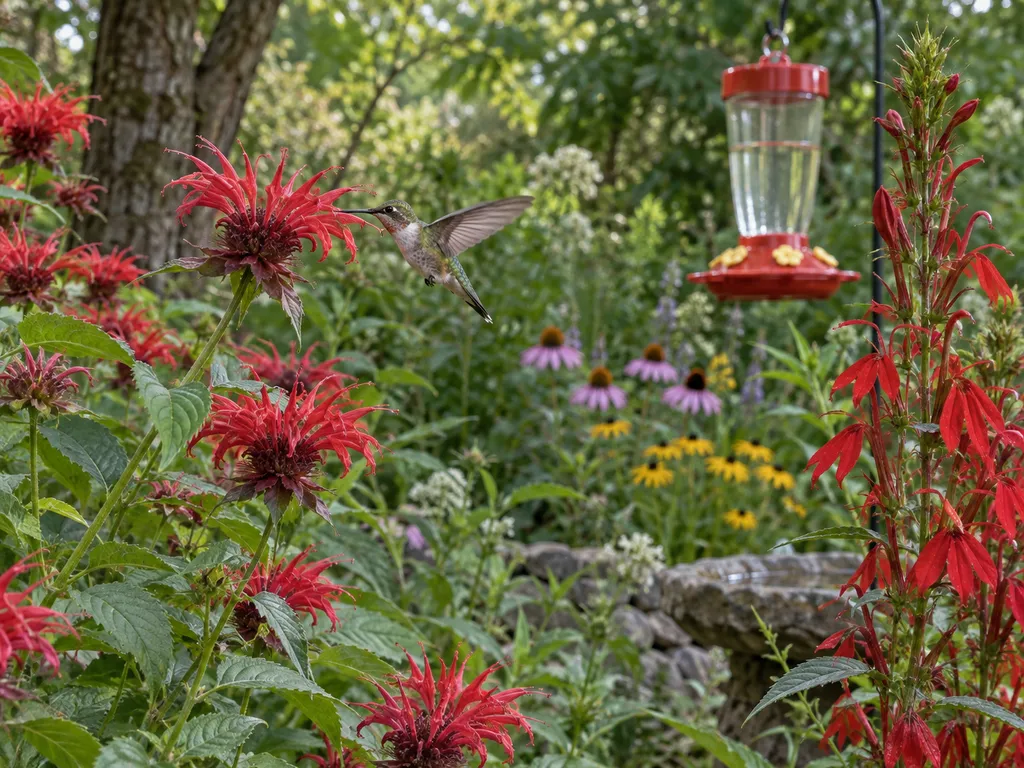
Shade does not remove the need to change nectar, but it can buy a little margin. A feeder under bright all-day sun warms faster, and bottle-style feeders may also leak as air expands in the reservoir. If possible, place the feeder where it gets morning light and afternoon shade, while still being visible and reachable for refills. Audubon specifically recommends shade to help prevent fermentation (Audubon).
Do not solve spoilage by hiding the feeder so well that you forget it. The best location is one you can check often. If the only convenient spot is sunny, use the hot-weather schedule and change nectar more often.
What to Do If You Miss a Change
If you miss the schedule, do not panic and do not top off the feeder. Empty the old nectar, inspect the parts, scrub all surfaces and ports, rinse thoroughly, and refill with fresh, cooled 4:1 nectar. If there is mold, black specking, or a sour smell, use a deeper cleaning routine before refilling. When you cannot keep up with the needed schedule during a heat wave or a busy week, it is better to take the feeder down clean than to leave old nectar outside.
Hummingbirds also use flowers, insects, spiders, and tree sap as part of their food sources. University of Illinois Extension notes that hummingbirds feed on flower nectar and also eat insects or spiders, especially when feeding young (University of Illinois Extension). A feeder is helpful only when it is fresh and clean.
The Bottom Line
For most homes, the habit to build is simple: check the feeder daily, change nectar every 1-2 days above 90 degrees F, every 2-3 days in the 80s, and every 4-6 days in cooler weather, and clean the feeder at every refill. Keep the nectar clear, plain, and at the 4:1 ratio. When in doubt, throw old nectar out, wash the feeder, and make a fresh batch.
The Bottom Line
Fresh hummingbird nectar is a temperature-based routine. In very hot weather, replace it every 1-2 days; in the 80s, every 2-3 days; and in cooler weather, every 4-6 days. Replace it sooner whenever it looks cloudy, smells sour, turns stringy, or shows mold or black specks. Use only clear 4:1 nectar made with plain white table sugar and water, and clean the feeder every time you refill it.
Frequently Asked Questions
Can hummingbird nectar last a full week outside?
Usually no. A week outside is too long for most feeder conditions, especially in warm weather. Use the temperature schedule instead: every 1-2 days above 90 degrees F, every 2-3 days in the 80s, and every 4-6 days in cooler weather.
Should I change nectar if no hummingbirds have used it?
Yes. Nectar can spoil from heat, sunlight, insects, and ordinary outdoor exposure even when bird traffic is low. If the change day arrives, empty the feeder, clean it, and refill with fresh 4:1 nectar.
Is cloudy hummingbird nectar always bad?
Cloudiness is a warning sign. Empty the feeder and clean it right away rather than waiting to see whether it gets worse. Fresh hummingbird nectar should be clear.
Can I just add fresh nectar to what is left in the feeder?
No. Topping off leaves old nectar and residue in place. Empty the feeder, wash the parts and ports, rinse thoroughly, and refill with fresh, cooled nectar.
How long can homemade nectar stay in the refrigerator?
Smithsonian recommends storing extra sugar water in a clean refrigerator container for no more than one week. Discard it sooner if it looks cloudy or shows any mold.
Does stronger nectar last longer?
No. Do not change the ratio to solve freshness problems. Keep the standard 4:1 ratio and change the nectar more often when temperatures rise or the feeder is in sun.
Sources
This guide was researched using these sources.
- https://www.nationalzoo.si.edu/migratory-birds/hummingbird-nectar-recipe
- https://www.audubon.org/community-science/hummingbirds/how-create-hummingbird-friendly-yard
- https://feederwatch.org/learn/feeding-birds/how-to-clean-your-feeders
- https://feederwatch.org/wp-content/uploads/2016/02/BirdNotes02-Attracting-Hummingbirds.pdf
- https://www.allaboutbirds.org/news/feeding-hummingbirds
- https://site.extension.uga.edu/paulding/2026/02/hummingbirds-will-be-back-soon-are-you-prepared
- https://extension.illinois.edu/sites/default/files/hummingbirds_0.pdf