
 Pin it
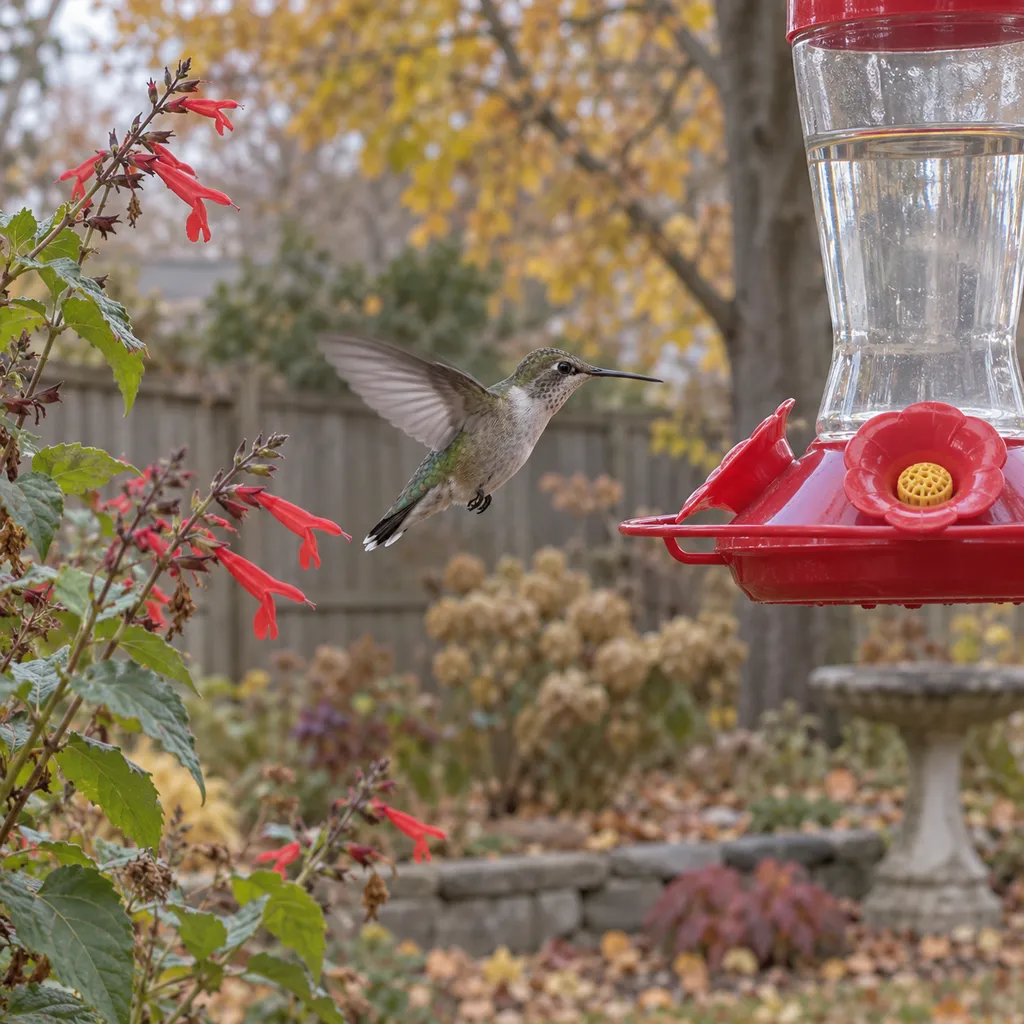
A hummingbird in November is usually not lost because you left nectar available. In most places, it means either a late migrant is passing through, a regional winter visitor is using a food stop, or you live where a species such as Anna’s Hummingbird can occur through the colder months. The most helpful response is simple: keep offering clean, clear nectar at the standard 4:1 ratio while the bird is present, watch the local pattern, and avoid changing the mix for the season. Cornell Lab says keeping feeders up in fall does not stop birds from migrating; shortening day length is one of the strongest migration cues according to All About Birds.
Why November Hummingbirds Surprise People
For many readers, especially in the eastern United States and colder inland regions, hummingbirds feel like a summer signal. Ruby-throated Hummingbirds arrive with spring bloom, crowd feeders and flowers through warm months, then become scarce as fall advances. By November, many gardens have had frost, tubular flowers have faded, and most familiar birds have moved on. That makes one bird at a late feeder feel urgent, even when it may simply be using one more refueling stop on a long journey.
The better question is not “Why is it still here?” but “What is normal for my region?” Project FeederWatch notes that hummingbirds are reported year-round from the Pacific Coast through Arizona, along the Gulf Coast, and into the Southeast, while winter sightings are generally unexpected across much of the rest of the United States according to Cornell’s Project FeederWatch. A November bird in coastal California is a different situation from a November bird in inland New England.
What November Usually Means by Region
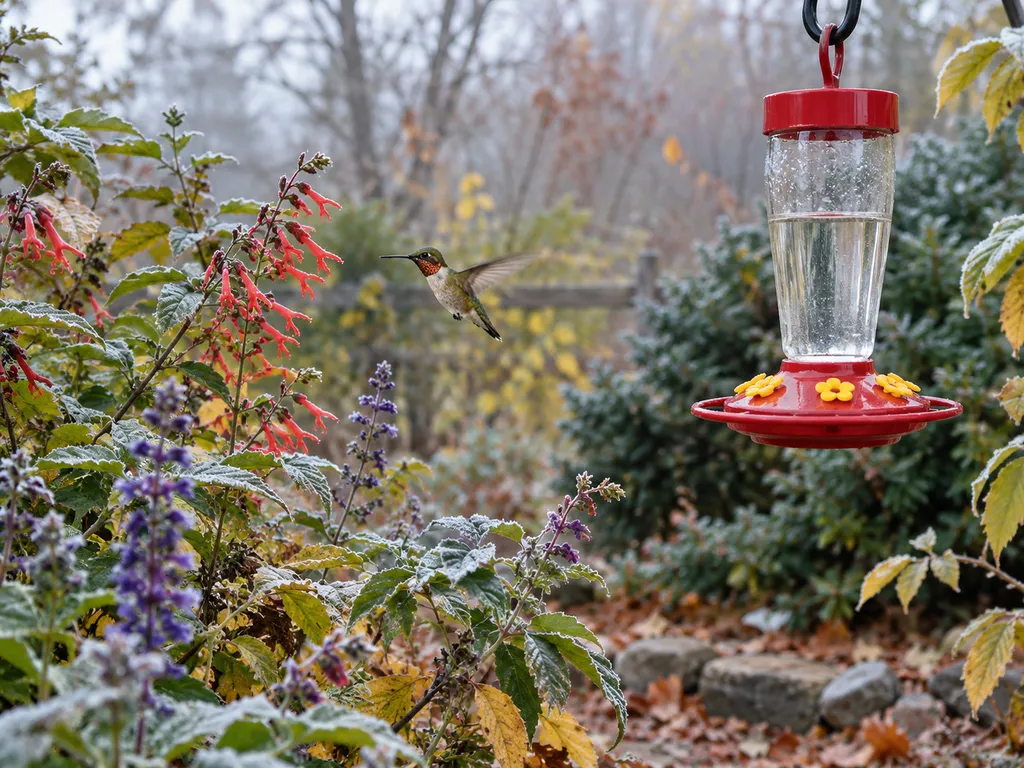
In the eastern United States, the familiar summer hummingbird is usually the Ruby-throated Hummingbird. Cornell’s range map describes it as a medium- to long-distance migrant with Central American wintering grounds; some birds remain in North America along the Gulf Coast, parts of the southern Atlantic coast, and the tip of Florida, often birds from farther north according to the Cornell Lab range account. That matters because a November Ruby-throated Hummingbird in the East is not automatically a local bird that refused to leave. It may be a late bird from elsewhere, and the best support is a reliable, clean food stop until it moves on.
In the West, November can look very different. Anna’s Hummingbird is a year-round presence in much of its range, and Cornell notes that Anna’s Hummingbirds do not migrate much, so year-round feeder visits should not be surprising where the species is established according to All About Birds. Project FeederWatch also reports winter hummingbirds in Arizona and other southern areas, with Anna’s, Costa’s, Black-chinned, Rufous, Allen’s, and other species possible depending on location. Identification can be difficult in late fall, so a cautious description is better than forcing a name from a quick glimpse.
- East and much of the North: a November hummingbird is uncommon and often a late migrant or out-of-range visitor.
- Gulf Coast, southern Atlantic coast, and Florida: late and winter hummingbirds are more plausible, including Ruby-throated Hummingbirds and western visitors.
- Pacific Coast: Anna’s Hummingbirds may be present through November and beyond.
- Arizona and parts of the Southwest: several hummingbird species may appear depending on elevation, habitat, and season.
- Any region: use local bird records or a regional bird group if you want help narrowing the species.
Leaving Nectar Out Will Not Hold Them Back
The most common November worry is that a backyard feeder has tempted a hummingbird to stay too late. The best evidence points the other way. Cornell Lab says feeders do not influence whether a bird begins its southbound journey, and Audubon gives the same practical answer: hummingbirds know when to move because of seasonal cues, not because a cup of sugar water is still available according to Audubon’s hummingbird feeding FAQ. A late feeder can be a stopover, not a trap.
That does not mean every late bird will survive every cold spell, and it does not mean a feeder solves all seasonal challenges. It means the feeder is not the reason migration happens late. If a bird is actively visiting in November, removing its food source abruptly may make the yard less useful at the very moment flowers and insects are harder to find. Continue only if you can keep the nectar fresh and the feeder clean at every refill; unattended sugar water is worse than no help at all.
Use the Same 4:1 Ratio in November
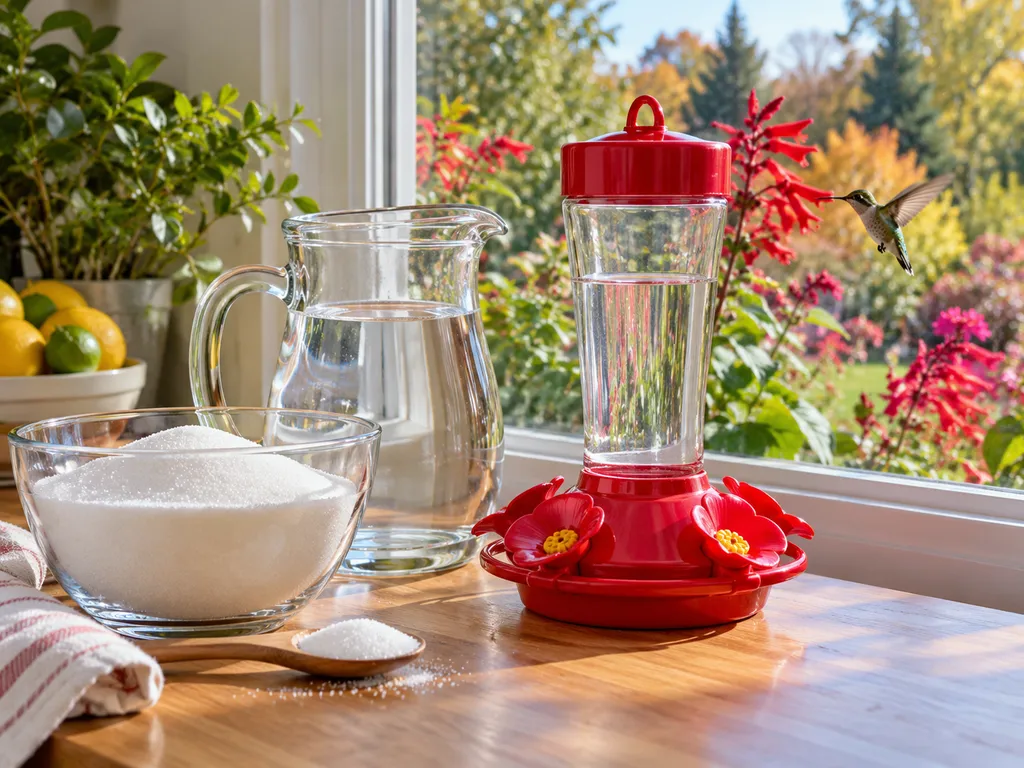
For this site, the standard nectar stays the same all year: the 4:1 ratio, meaning four parts water to one part plain white table sugar. Do not make a stronger winter blend as a rule, and do not add dye, honey, brown sugar, raw sugar, powdered sugar, molasses, maple syrup, fruit juice, sports drinks, artificial sweeteners, vitamins, or protein additives. Cornell’s feeding guidance uses table sugar and water, says boiling is not needed for small fresh batches, and notes that natural nectar is clear, not red according to All About Birds.
Boiling is optional. It can help sugar dissolve, especially when you make a larger batch, but the nectar must cool before it goes outside. Extra nectar can be kept in a clean, covered container in the refrigerator for up to about a week. In November, people sometimes assume cool air means nectar can be ignored for long stretches, but sugar water still needs attention. Change it about every 4 to 6 days in cooler weather, every 2 to 3 days in the 80s°F, and every 1 to 2 days above 90°F. Replace it at once if it turns cloudy, stringy, sour-smelling, or shows mold or black specks. Cornell also advises changing sugar water more often in heat and replacing it when quality declines in its feeder guidance.
Flowers and Tiny Prey Still Matter
Nectar is only part of the November picture. Hummingbirds also take small insects and spiders for protein, especially during periods of growth and heavy energy use. Cornell’s feeding page points out that wildflower gardens give hummingbirds access to natural nectar and the tiny insects they use for protein in its backyard guidance. Even after the main bloom season, late native flowers, sheltered shrubs, leaf edges, and spider webs can matter. A neat yard with every spent stem removed may offer fewer places for tiny prey than a garden with some structure left standing.
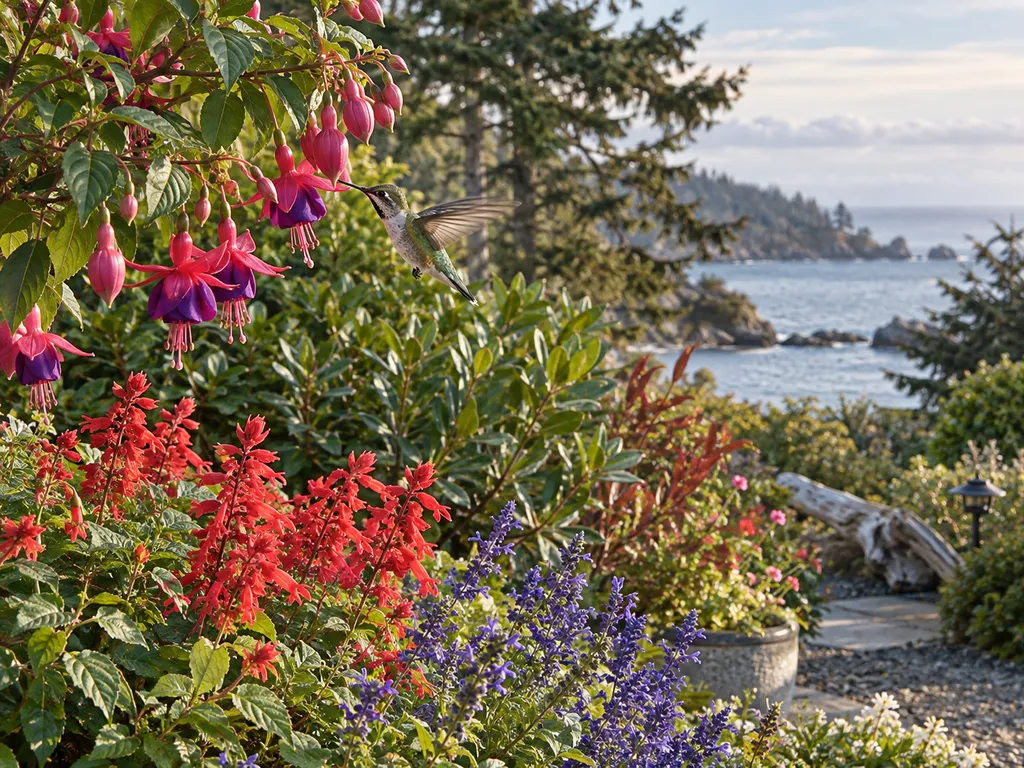
In November, the best hummingbird garden is not a perfect-looking one. Leave late-blooming tubular flowers where they still have nectar, avoid spraying insecticides around feeding areas, and keep seed heads and stems where they do not create a hazard. Hummingbirds are quick and easy to notice at a red feeder, but much of their foraging happens away from the obvious places. If you still have salvia, coral honeysuckle, penstemon, fuchsia, bee balm, cardinal flower, or other tubular flowers in bloom, let them finish the season.
If One Bird Keeps Coming Back
A single November hummingbird can settle into a routine for days or weeks. Watch without crowding it. Note the date, time, behavior, and weather; if you can photograph it from a distance without chasing it, a local bird group may be able to help with identification. Do not try to catch, hand-feed, house, move, or keep a hummingbird. Wild hummingbirds, their nests, eggs, and chicks are protected under the Migratory Bird Treaty Act; U.S. Fish and Wildlife Service guidance explains that the law protects migratory birds and their nests or eggs from unauthorized take or possession in its 2025 nest memorandum. If a bird appears unable to leave danger, contact a licensed wildlife rehabilitator or your state wildlife agency for local direction.
If cold nights arrive while the bird is still visiting, focus on reliability rather than tricks. Keep the standard 4:1 ratio. Put out only as much nectar as the bird can use before the next change. If the feeder freezes where you live, editors may add a separate feeder-equipment guide, but the food rule remains the same: clear sugar water, no dye, no honey, no stronger seasonal formula as a default. The goal is a dependable stop, not a new experiment.
What Not to Change in November
Late-season concern can lead to well-meant mistakes. Red dye is unnecessary because the feeder’s red parts and nearby flowers provide the visual signal; the nectar itself should look clear like water. Honey ferments and supports fungal growth when diluted, so it does not belong in hummingbird nectar. Brown, raw, organic, turbinado, and molasses-containing sugars add minerals or residues that hummingbirds do not need. Artificial sweeteners provide sweetness without the useful fuel birds seek from sugar water. Additives marketed as vitamins or protein are also unnecessary in backyard nectar.
Do not use oil, petroleum jelly, grease, sticky barriers, or insecticides around ports, hangers, or nectar. Cornell specifically warns against oil or sticky substances near feeding ports because they can contaminate nectar or soil feathers in its feeding-practice notes. If ants or wasps are still active in warm November weather, keep the solution fresh and let editors cover hardware fixes elsewhere; this article’s food point is simpler: keep contaminants away from anything the bird touches or drinks.
A Practical November Checklist
- Use the standard 4:1 ratio: four parts water to one part plain white table sugar.
- Keep nectar clear; never add red dye or colored commercial mix.
- Refresh nectar on the cool-weather schedule, sooner if it looks or smells off.
- Clean the feeder at every refill with hot water and a bottle brush.
- Keep late tubular flowers available where they still bloom.
- Leave some natural garden structure so tiny insects and spiders remain available.
- Record sightings by date and location if November hummingbirds are unusual where you live.
- Do not handle birds, nests, eggs, or chicks; contact a licensed rehabilitator or state wildlife agency if expert help is needed.
When to Take Things Down
If hummingbirds are seasonal where you live, a common guide is to keep nectar available for about two weeks after your last sighting. Cornell recommends keeping feeders up for several weeks after the last hummingbird leaves in case a straggler needs energy for the remaining trip in its fall feeding answer, and Audubon says late migrants or out-of-range species can appear into early winter in its FAQ. If no bird returns during that window and you do not live in a year-round hummingbird area, it is reasonable to stop for the season.
If you live where Anna’s Hummingbirds or other local species remain through winter, there may be no “take-down” date. In that case, November is not an emergency month; it is simply part of the regular calendar. The responsibility becomes consistency. Offer fresh nectar only when you are willing to maintain it, and let natural flowers and tiny prey support the birds alongside any sugar-water stop you provide.
The Bottom Line for November
A November hummingbird is a reason to pay attention, not a reason to panic. In northern and eastern areas, it may be a late migrant or a less common visitor. In the West, Southwest, Gulf Coast, and parts of the Southeast, November hummingbirds may be expected. Keep the nectar plain, clear, fresh, and at the 4:1 ratio; do not make a stronger seasonal mix; do not add dye or honey; and keep observing until the bird moves on or your local winter pattern becomes clear.
The Bottom Line
November hummingbirds are explained best by region. Most do not stay because a feeder is available; migration timing is tied to seasonal cues, and late nectar can help a bird passing through. Use the same 4:1 ratio, keep nectar fresh, protect late flowers and tiny prey sources, and stop about two weeks after the last sighting unless hummingbirds normally remain in your area.
Frequently Asked Questions
Is it bad to see a hummingbird in November?
Not necessarily. In some regions, especially parts of the Pacific Coast, Southwest, Gulf Coast, and Southeast, November hummingbirds can be expected. In colder northern or eastern areas, a November bird is less common and may be a late migrant or an out-of-range visitor.
Will my feeder stop a hummingbird from migrating?
No. Cornell Lab and Audubon both explain that migration is driven by seasonal cues such as day length, not by whether nectar is still available. A clean late feeder can help a bird refuel, but it is not what makes migration begin or stop.
Should I make stronger nectar in November?
No. Keep the standard 4:1 ratio: four parts water to one part plain white table sugar. Stronger seasonal mixes are not recommended here as a rule. Do not add dye, honey, brown sugar, artificial sweeteners, or supplements.
When should I stop offering nectar in fall?
If hummingbirds leave your region for winter, a practical guide is to continue for about two weeks after your last sighting. If hummingbirds are present year-round where you live, you can continue as long as you keep the nectar fresh and the feeder clean.
What if I cannot identify the November hummingbird?
That is common. Late-season hummingbirds can be hard to identify, especially females and young birds. Note the date and location, take a distant photo if possible, and ask a local bird group or regional expert rather than guessing from one quick look.
Sources
This guide was researched using these sources.
- https://www.allaboutbirds.org/news/should-i-stop-feeding-birds-in-fall-so-they-can-start-their-migration
- https://feederwatch.org/learn/articles/hummingbirds-in-winter
- https://www.allaboutbirds.org/guide/Ruby-throated_Hummingbird/maps-range
- https://www.allaboutbirds.org/guide/Annas_Hummingbird/overview
- https://www.allaboutbirds.org/news/feeding-hummingbirds
- https://www.audubon.org/magazine/hummingbird-feeding-faqs
- https://www.allaboutbirds.org/news/youre-seeing-fewer-hummingbirds-at-your-feeder-should-you-worry
- https://www.fws.gov/sites/default/files/documents/2025-01/mbpm-2-nest-memorandum-2025.pdf