
 Pin it
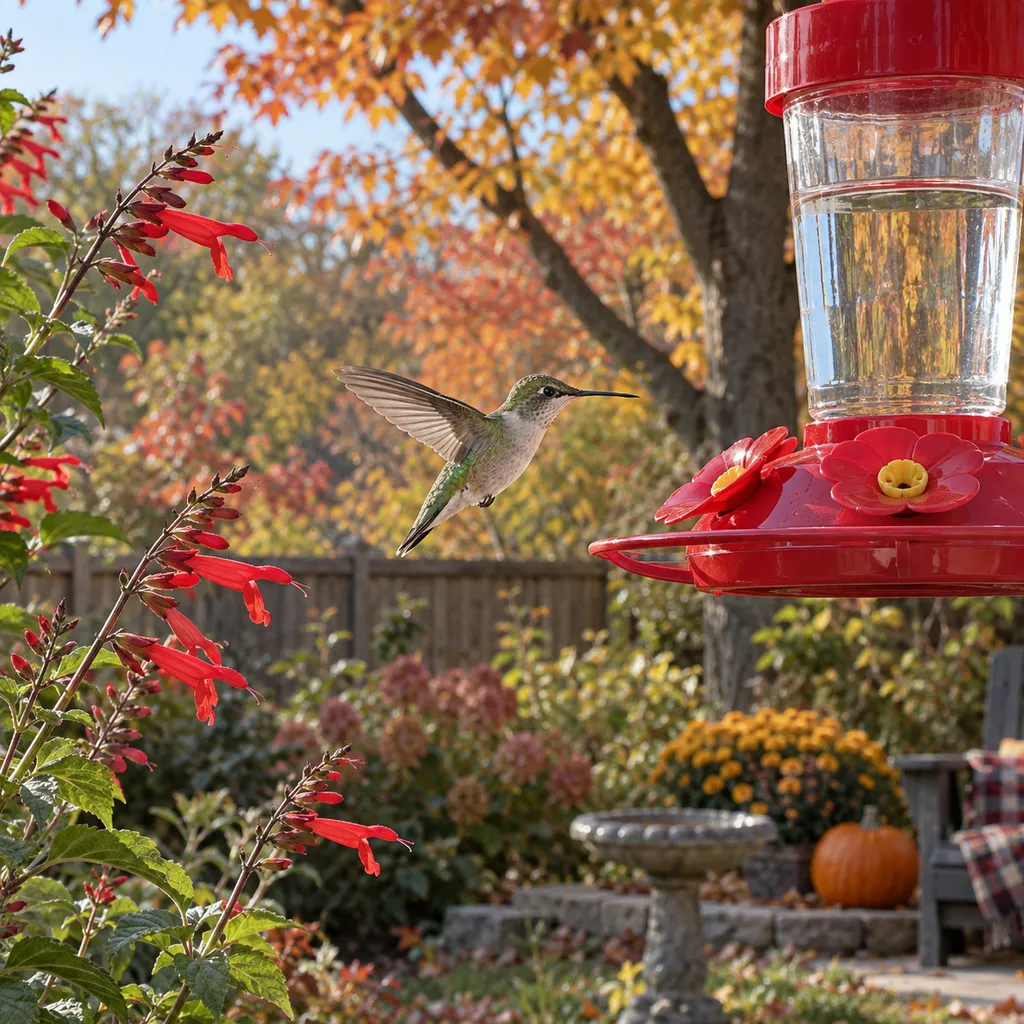
If you see a hummingbird in October, the short answer is: keep the nectar fresh and do not assume the bird is lost. October can still bring late migrants, especially young Ruby-throated Hummingbirds in the East, while some western and southern areas naturally have hummingbirds later in the year or all year. Leaving a feeder up will not stop migration; Audubon explains that fall movement is tied to seasonal cues such as day length, not simply the presence of sugar water. A clean feeder can help a late traveler refuel while it continues moving.
Why October Hummingbirds Surprise People
October feels late because many backyard watchers see their busiest hummingbird activity in summer or early fall. By October, blooming patterns have changed, chilly nights are more common in northern states, and many familiar birds have already left. That does not mean every October hummingbird is in trouble. Cornell Lab notes that Ruby-throated Hummingbirds are bound for Central America by early fall, but their timing is not identical from one bird to the next. Males may leave early, adult females may follow, and young birds often move later after they have grown enough to travel.
The exact meaning of an October sighting depends heavily on region. In the eastern United States and eastern Canada, the bird people expect is usually a Ruby-throated Hummingbird, the only breeding hummingbird across much of that region according to Cornell Lab. In the West, the calendar is more layered. Rufous Hummingbirds make a broad circuit through western North America, and Cornell describes them as moving through the Rocky Mountains in fall. Along the Pacific Coast, Anna's Hummingbirds may be present all year, so an October bird there may be a local resident rather than a migrant.
Late Migrant, Winter Visitor, or Resident?
A helpful first step is to sort the sighting into one of three broad possibilities. It may be a late migrant passing through. It may be an out-of-range visitor, such as a western hummingbird showing up in the East during fall. Or it may be a year-round bird in a place where hummingbirds normally remain through winter. Audubon's feeding FAQ says several species regularly overwinter along the Gulf Coast, southern Arizona, and south Florida, and that Anna's Hummingbirds are resident from northwestern Baja California along the Pacific Coast to British Columbia.
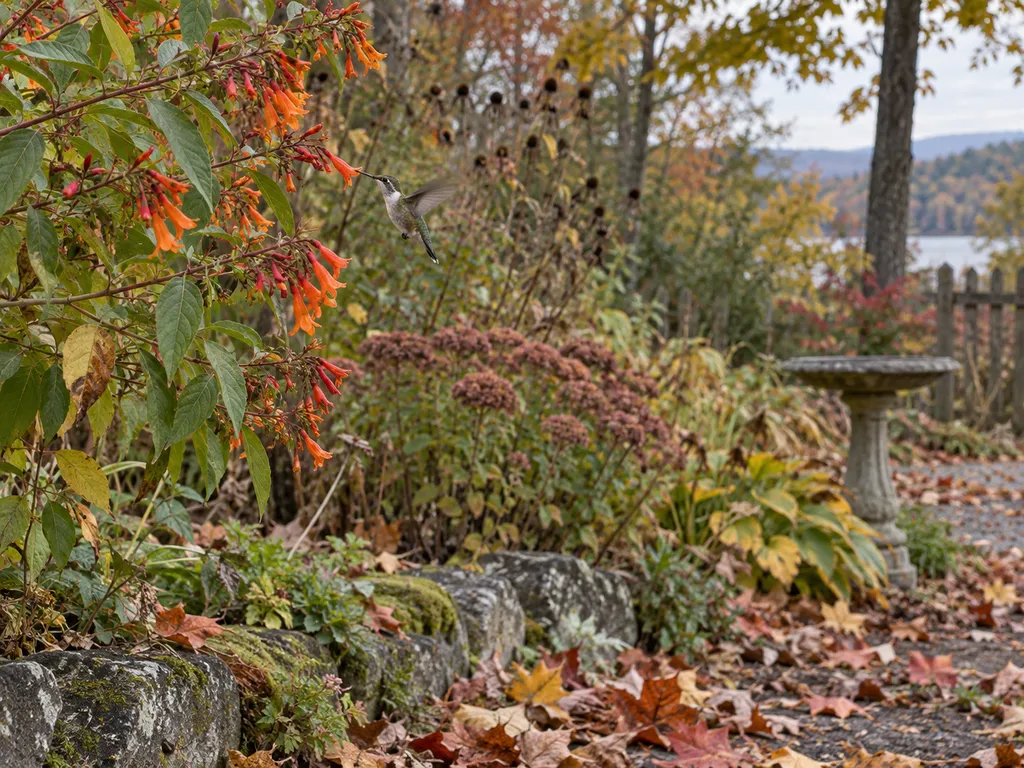
In the East, Cornell's All About Birds article on flocking says a late October straggler is often an immature Ruby-throated Hummingbird from farther north. It also points out that hummingbirds migrate individually, not as a flock. That matters for backyard interpretation: one bird lingering after the busy period does not mean the local group has failed to leave. It may simply be one individual on its own timetable, using scattered flowers and feeders as rest stops.
What To Do If One Is Still Visiting
The most useful October response is simple: keep the food source clean, clear, and predictable for as long as the bird is using it. Audubon says feeders can stay up as long as hummingbirds are around, and that late migrants or out-of-range species can appear into early winter. If hummingbirds do not usually winter where you live, a practical guide is to keep the feeder available for about two weeks after the last bird uses it, then put it away clean.
- Use the standard 4:1 ratio: 4 parts water to 1 part plain white table sugar.
- Keep the nectar clear; do not add red dye, honey, brown sugar, raw sugar, powdered sugar, syrups, fruit juice, or artificial sweeteners.
- Let warm nectar cool before filling, and store extra in a clean, covered container in the refrigerator for up to about a week.
- Change nectar about every 1-2 days above 90°F, every 2-3 days in the 80s°F, and every 4-6 days in cooler weather.
- Replace it at once if it turns cloudy, stringy, sour-smelling, moldy, or speckled with dark debris.
- Clean the feeder at every refill with hot water and a bottle brush, including the ports.

Why Feeders Do Not Hold Them Back
One common worry is that a feeder left up in October will convince a hummingbird to stay too late. Audubon directly answers that concern: hummingbirds are migratory and respond to seasonal cues, including changes in day length and sun angle. A feeder is a supplement, not a command. If the bird is ready to move, it will move; if it is still building reserves or waiting out weather, a clean feeder can be a useful stopover.
Research summarized by Cornell on Ruby-throated Hummingbird migration found birds moving through southern Alabama from late August into late October, with older birds generally passing earlier than younger birds. That pattern helps explain why October can look uneven. Your summer birds may be gone, but another bird from farther north can still pass through later. A feeder may look quiet for days, then suddenly host one fast visitor at sunrise or late afternoon.
October Is Also About Natural Food
Nectar is only part of what supports hummingbirds. Audubon recommends yards with flowers, perches, small arthropods, and water, noting that spiders and insects are an important part of an adult hummingbird's food sources and especially important for young birds in nests. For an October yard, that means the best help is not just a feeder. Late-blooming tubular flowers, leaf-litter edges that support small insects, and avoiding pesticide use can all make the yard more useful during migration.
Good fall flowers vary by region, but the shape and timing matter. Hummingbirds often use tubular red, orange, pink, or purple blooms such as bee balm, cardinal flower, salvia, coral honeysuckle, penstemon, columbine, trumpet vine, and fuchsia. If your local growing season is winding down, even a container of late salvia near a window can help make a small stopover area easier to find. Native plants are especially valuable because they can support both nectar visits and the tiny prey hummingbirds also use.
Regional Clues For October Sightings
In the Northeast, Midwest, and much of the inland East, a hummingbird in October is most often treated as a late migrant unless local bird reports suggest otherwise. Ruby-throated Hummingbirds dominate the breeding season there, but fall sometimes brings odd records, including Rufous Hummingbirds. In the Southeast and along the Gulf Coast, the line between late migration and winter presence is softer. Some birds may continue moving through, while others may stay in suitable pockets where flowers, insects, and tended feeders remain available.
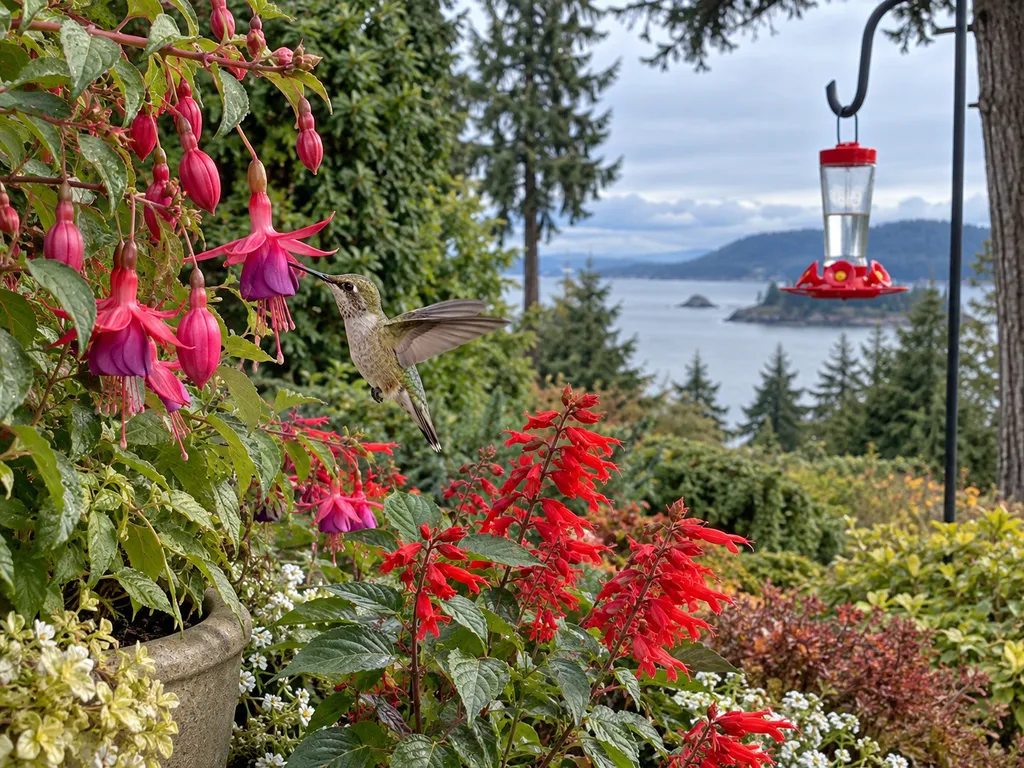
In the West, October is not a single story. Rufous Hummingbirds are famous for long movement, and Cornell describes their yearly route as a clockwise circuit through western North America. Anna's Hummingbirds are different: Cornell says they do not migrate much and may visit feeders all year. That is why a Seattle, coastal California, or Vancouver-area October hummingbird may call for a different response than a late October bird in Maine or Michigan. Local reporting tools from eBird, local Audubon chapters, and state bird records can help you understand what is typical where you live.
When To Stop For The Season
If hummingbirds leave your area for winter, do not take the feeder down simply because the calendar says October. Watch the birds, then count about two weeks from your last confirmed visit. This gives late migrants a chance to use the stopover without requiring you to maintain nectar all winter. If you live where hummingbirds are expected year-round, you can keep feeding year-round, but the same freshness rules apply. Cooler weather slows spoilage, but it does not make old nectar useful.
If you are unsure whether the bird is the same individual or a new migrant, treat the feeder as active. A quiet feeder can still matter to a traveler that visits briefly when you are not watching. Keep volumes small so less nectar is wasted, and use the 4:1 ratio each time. The goal is not to keep birds in place; it is to make a safe stop available while their own seasonal timing continues.
A Calm October Plan
For most readers, the plan is straightforward. Leave one clean feeder up while sightings continue. Use clear 4:1 ratio nectar and refresh it on a temperature-based schedule. Keep a few late flowers if your region allows it. Notice whether the bird is appearing daily, only during a cold snap, or only once. After two weeks with no sightings, clean and store the feeder unless your region normally hosts hummingbirds through winter.
October hummingbirds are easy to overthink because they seem too small for the season. The evidence points in a calmer direction. They migrate individually, they use feeders as supplements, and their departure is not controlled by whether a backyard feeder remains available. Your job is not to manage the migration. It is to offer clean nectar while the bird is present, keep the mix simple, and let the season unfold.
The Bottom Line
Seeing hummingbirds in October is usually normal. In the East, it often means a late migrant, especially a young Ruby-throated Hummingbird. In parts of the West and South, October can also mean a regular fall visitor or a year-round resident such as Anna's Hummingbird. Keep one feeder fresh while birds are still visiting, use only clear 4:1 ratio nectar, and take it down about two weeks after the last sighting if hummingbirds do not winter in your area.
Frequently Asked Questions
Is it normal to see a hummingbird in October?
Yes. In many areas, October sightings are late migrants moving south. In some western and southern regions, hummingbirds may also be expected in fall or even year-round.
Will leaving my feeder up in October stop hummingbirds from migrating?
No. Audubon explains that hummingbirds respond to seasonal cues such as day length and sun angle. A feeder can help a bird refuel, but it does not make the bird ignore migration.
How long should I keep a hummingbird feeder up after my last October sighting?
A common guide is to keep it up for about two weeks after the last sighting, as long as you keep the nectar fresh and the feeder clean. In year-round hummingbird areas, feeding can continue with the same care routine.
Should October nectar be stronger than the normal mix?
No. Keep the standard 4:1 ratio: 4 parts water to 1 part plain white table sugar. Do not add red dye, honey, syrups, fruit juice, or artificial sweeteners.
What flowers help hummingbirds in October?
Late tubular flowers are most useful, especially red, orange, pink, or purple blooms such as salvia, bee balm, cardinal flower, coral honeysuckle, penstemon, trumpet vine, and fuchsia where they suit the region.
Sources
This guide was researched using these sources.
- https://www.audubon.org/magazine/hummingbird-feeding-faqs
- https://www.audubon.org/community-science/hummingbirds/how-create-hummingbird-friendly-yard
- https://www.allaboutbirds.org/news/do-hummingbirds-migrate-in-flocks
- https://www.allaboutbirds.org/news/tiny-hummingbirds-incredible-migration
- https://www.allaboutbirds.org/guide/Ruby-throated_Hummingbird/overview
- https://www.allaboutbirds.org/guide/Annas_Hummingbird/overview
- https://www.allaboutbirds.org/guide/Rufous_Hummingbird/overview
- https://www.allaboutbirds.org/news/feeding-hummingbirds