
 Pin it
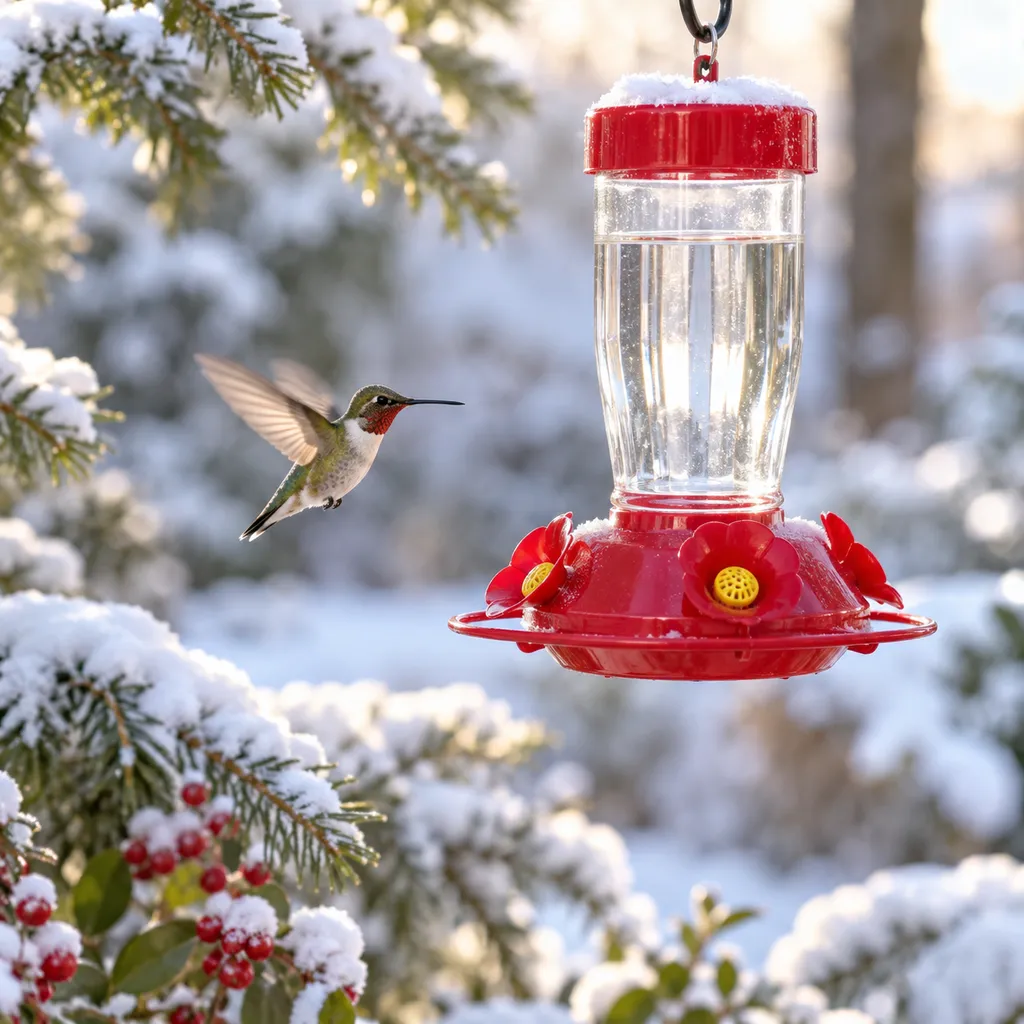
Feeding hummingbirds in winter is okay when hummingbirds are still visiting and you can keep fresh nectar available. The key is not a special winter formula. Use the same 4:1 ratio all year: 1 part plain white table sugar to 4 parts water, cooled before it goes outside. Winter feeding is most useful for year-round species such as Anna's Hummingbird in parts of the West, for Gulf Coast and South Florida birds, and for late or out-of-range visitors that find fewer flowers in cold weather. Leaving nectar out will not force hummingbirds to stay; migration is driven mainly by seasonal cues such as day length, not by your feeder.
The Short Winter Answer
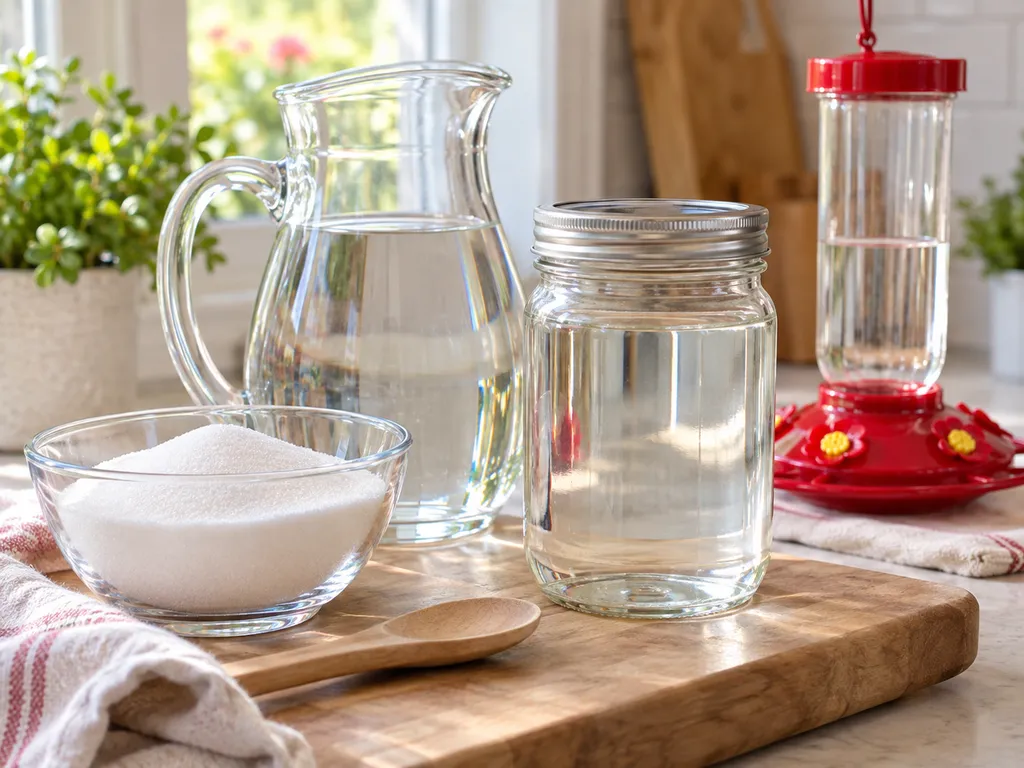
If hummingbirds are present in your area, winter nectar can be a useful supplement, especially when blooms are scarce. Audubon says feeders can stay out as long as hummingbirds are around and that some late migrants or out-of-range birds may appear into early winter. Cornell's All About Birds also notes that feeders do not delay migration and may help birds during early spring or late fall gaps in flowers. The food itself should stay plain and clear: Project FeederWatch gives the basic nectar approach as one part sugar to four parts water, cooled before filling.
- Keep the 4:1 ratio in winter, spring, summer, and fall.
- Use only plain white table sugar and clean water.
- Let heated water or boiled nectar cool before filling.
- Change nectar on a cool-weather schedule and immediately if it turns cloudy, stringy, sour-smelling, moldy, or speckled.
- Clean the feeder at every refill; the feeder itself is only a delivery tool for fresh nectar.
Why Some Hummingbirds Are Around In Winter
Winter hummingbirds are not all the same situation. In much of the eastern and central United States, the familiar Ruby-throated Hummingbird is mostly a migrant, but Cornell's range account says some birds remain in North America along the Gulf Coast, parts of the southern Atlantic coast, and the tip of Florida. In the West, Anna's Hummingbird is different: Cornell describes it as a species that either does not migrate or moves only short distances to better feeding grounds, and its overview notes that it may visit feeders all year long.
There are also winter surprises. Cornell reports that individuals of Rufous Hummingbird, Allen's Hummingbird, Anna's Hummingbird, and others have been found farther north in winter in recent years, and the National Wildlife Federation describes winter hummingbird observations and banding work across the Southeast. Those sources do not mean every yard should expect winter hummingbirds. They do mean that a bird at a feeder in December or January is not automatically a mistake, a trapped bird, or proof that the feeder caused the timing.
Keep The 4:1 Ratio, Even When It Is Cold
The most common winter mistake is trying to make nectar richer because the weather is cold. For this site, the rule is simple: keep the 4:1 ratio. Audubon recommends refined white sugar and water for hummingbird feeders, and Project FeederWatch gives the same one-part-sugar-to-four-parts-water guidance. A stronger mix may sound helpful, but it is not the standard recommendation and should not be treated as a normal winter upgrade. Hummingbirds are adapted to nectar-like sugar water as one part of their daily food intake, not as a syrup experiment.
Freshness Still Matters In Cool Weather
Cold slows spoilage, but it does not make nectar permanent. A practical cool-weather schedule is to replace nectar about every 4-6 days, and sooner any time it looks cloudy, stringy, sour, moldy, or dotted with black specks. Audubon gives a cool-weather cleaning interval of about twice per week, while Cornell advises changing sugar water every 3-5 days and more often during very hot weather. Those recommendations are close enough for a winter routine: do not leave nectar outside for weeks simply because few birds are visiting.
Small batches make winter feeding easier. A half-full feeder that is refreshed regularly is better than a large reservoir that sits untouched. Extra nectar can be stored in a clean, covered container in the refrigerator for up to about a week, then brought back to outdoor-use temperature before refilling. If you heat water to dissolve sugar, let the nectar cool fully. Clear nectar should look like water; red dye is not needed because the red parts of a feeder can attract birds without coloring the food.
What To Do When Nectar Freezes
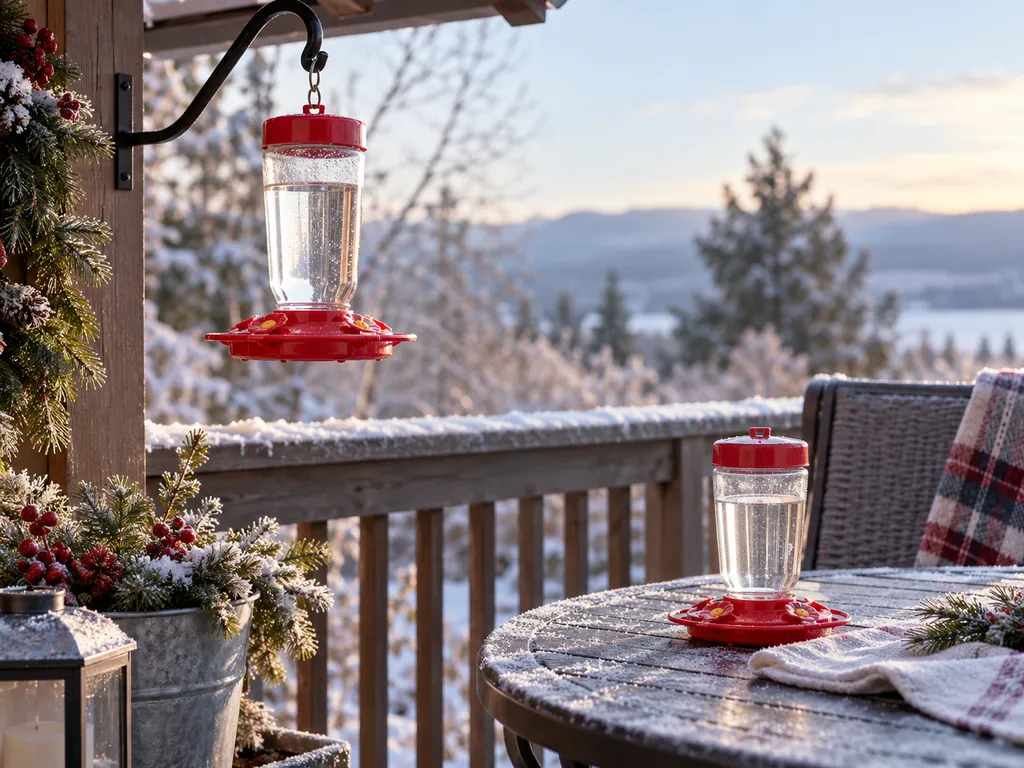
Frozen nectar is unavailable nectar. In places where nights dip slightly below freezing, Audubon notes that sugar water may not freeze as quickly as plain water, but regular hard freezes require a plan. The food-side decision is straightforward: offer fresh 4:1 nectar only when you can keep it thawed and clean. Some people rotate a thawed feeder in the morning and bring a frozen one in to thaw, using smaller amounts to reduce waste. If you cannot reliably keep nectar liquid, clean, and accessible, it is better to pause than to leave a frozen or neglected feeder outside.
Do not solve freezing by adding anything to the nectar. No honey, molasses, maple syrup, agave, fruit juice, sports drink, brown sugar, raw sugar, turbinado sugar, powdered sugar, artificial sweetener, or vitamin mix belongs in a hummingbird feeder. Honey can ferment and support fungal growth; less-refined sugars can add minerals or residues hummingbirds do not need; artificial sweeteners provide no usable energy. The winter adjustment is your maintenance routine, not the recipe.
Leaving Nectar Out Does Not Stop Migration
One of the most persistent winter-feeding worries is that a feeder will make hummingbirds ignore migration. Cornell is clear that keeping feeders up does not control whether birds begin moving south; day length is a major seasonal signal. Audubon gives the same answer for hummingbirds, saying they are prompted by seasonal changes rather than by a missing feeder. If a bird is still coming after the usual local season, your feeder is more likely serving a late migrant, a winter resident, or an out-of-range visitor than creating the situation.
A common fall-to-winter practice is to leave nectar available for about two weeks after your last sighting, then take the feeder down if no birds return. In a place with regular winter hummingbirds, you can keep feeding year-round as long as the routine stays consistent. The ethical question is not whether winter nectar is allowed; it is whether you can keep offering it responsibly. A neglected winter feeder is not helpful just because the weather is cold.
Support More Than Sugar Water
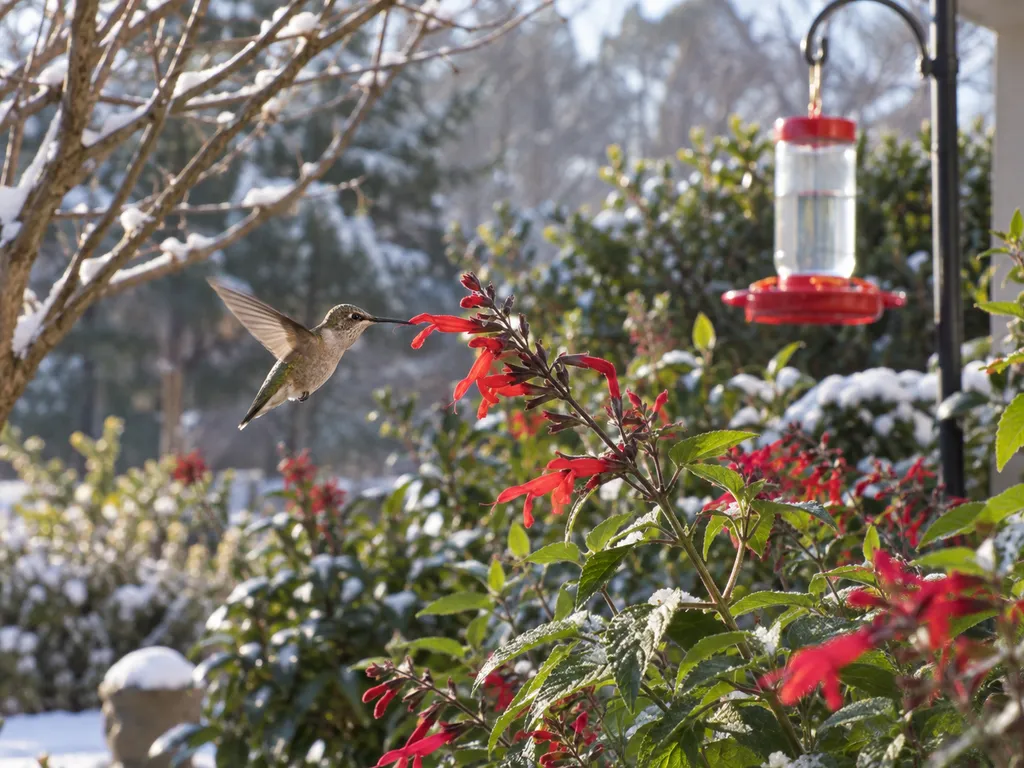
Nectar is only one part of how hummingbirds get through the day. In winter articles from the National Wildlife Federation, banders describe cold-season hummingbirds using feeders, gleaning tiny insects from leaves and bark, catching gnats during warmer periods, and visiting sapsucker wells for sap and trapped insects. American Bird Conservancy also emphasizes that native plants support insects and spiders that birds use as protein-rich food. For a winter yard, that means the best long-term support is not more sugar in the feeder; it is a yard with pesticide-free habitat, sheltering shrubs, and plants that support small invertebrates when the season allows.
A Simple Winter Routine
Use a winter routine you can repeat without guessing. Mix the 4:1 ratio, fill with a modest amount, and check the feeder daily when temperatures swing above and below freezing. Replace the nectar on schedule, clean the feeder at every refill with hot water and brushes that reach the ports, and rinse thoroughly. If nectar freezes overnight, swap in thawed nectar in the morning. If you travel, have a reliable person maintain the feeder or bring it in clean and empty before you go. Consistency matters more than putting out a large amount.
Watch the bird's behavior without trying to handle it. A winter hummingbird may feed often in the morning, disappear for periods, perch in a sheltered spot, and return before dusk. That can be normal. What you should not do is try to catch, keep, hand-feed, or move a hummingbird. If a bird appears unable to fly or is trapped in an unsafe place, contact a licensed wildlife rehabilitator or your state wildlife agency for local instructions.
When To Stop Winter Feeding
Stop when the birds stop coming and the two-week follow-up window has passed, when you cannot keep nectar thawed, or when you cannot keep the feeder clean. Also stop temporarily if local wildlife officials issue feeding guidance for your area. Otherwise, the presence of winter hummingbirds is enough reason to keep a small, fresh supply available. In mild coastal, desert, or southern regions, that may mean year-round nectar. In colder interior regions, it may mean a short extension after fall migration or a careful response to an unusual visitor.
The Bottom Line
Winter hummingbird feeding is not complicated, but it is less forgiving than summer feeding because a bird may have fewer nearby options. Keep the nectar clear, plain, and standard strength. Keep the feeder clean. Do not add color or alternative sweeteners. Do not assume a winter bird is being held back by your feeder. If hummingbirds are present and you can maintain the setup, fresh 4:1 nectar can be a useful cold-season supplement. If you cannot maintain it, clean the feeder and put it away until you can.
The Bottom Line
Feeding hummingbirds in winter is appropriate when birds are present and the nectar routine stays reliable. Keep the same 4:1 ratio of plain white table sugar to water; winter is not a reason to thicken the mix or add extras. Replace nectar about every 4-6 days in cool weather, sooner if it shows any spoilage sign, and keep it thawed during freezes. Leaving nectar out does not stop migration, but a winter feeder does become a responsibility: fresh food, clean ports, and no shortcuts.
Frequently Asked Questions
Should I make hummingbird nectar stronger in winter?
No. Keep the 4:1 ratio: 1 part plain white table sugar to 4 parts water. The winter adjustment is keeping nectar fresh, thawed, and available, not making a richer mix.
Will feeding hummingbirds in winter keep them from migrating?
No. Cornell and Audubon both explain that migration is guided mainly by seasonal cues such as day length. A feeder may help a late migrant or winter resident, but it does not force a hummingbird to stay.
How often should winter hummingbird nectar be changed?
In cool weather, replace it about every 4-6 days, or sooner if it becomes cloudy, stringy, sour-smelling, moldy, or speckled. Clean the feeder at every refill even if little nectar was used.
What if the nectar freezes overnight?
Frozen nectar is not useful to a hummingbird. Offer smaller amounts, swap in thawed 4:1 nectar when needed, and continue only if you can keep the feeder clean and the nectar liquid during the hours birds are using it.
What should I feed a winter hummingbird besides nectar?
Do not add extras to the feeder. Hummingbirds also use natural foods such as tiny insects, spiders, sap, and flower nectar when available. The best support beyond nectar is a yard with pesticide-free habitat and plants that support small invertebrates.
Sources
This guide was researched using these sources.
- https://www.audubon.org/magazine/hummingbird-feeding-faqs
- https://www.allaboutbirds.org/news/youre-seeing-fewer-hummingbirds-at-your-feeder-should-you-worry
- https://feederwatch.org/food_type/sugar-water
- https://www.allaboutbirds.org/news/should-i-stop-feeding-birds-in-fall-so-they-can-start-their-migration
- https://www.allaboutbirds.org/news/theres-a-hummingbird-at-my-feeder-in-the-dead-of-winter-will-he-be-okay
- https://www.allaboutbirds.org/guide/Annas_Hummingbird/maps-range
- https://www.allaboutbirds.org/guide/Ruby-throated_Hummingbird/maps-range
- https://www.allaboutbirds.org/guide/Annas_Hummingbird/overview
- https://www.nwf.org/Magazines/National-Wildlife/2010/Hummingbirds-in-Winter
- https://abcbirds.org/news/birdfeeding-tips