
 Pin it
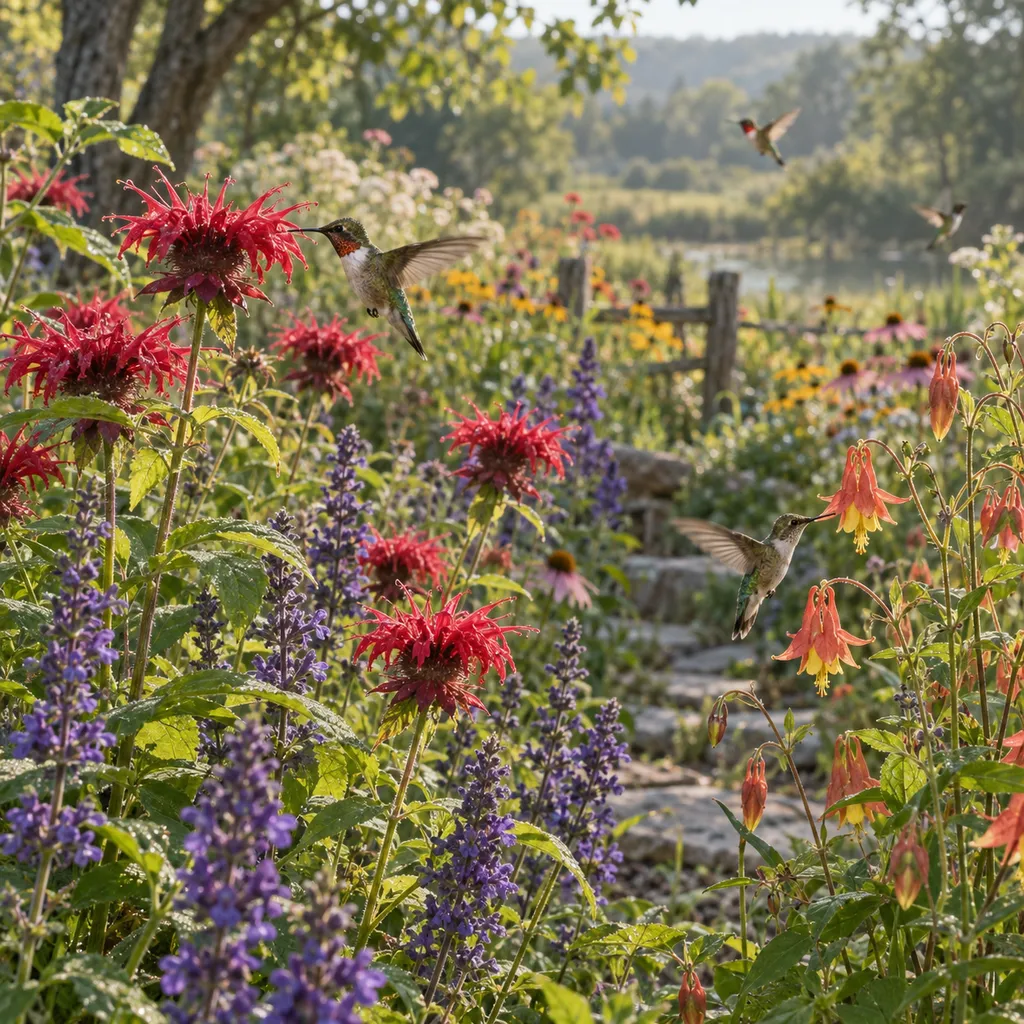
The main types of hummingbirds in North America are not spread evenly across the map. Ruby-throated Hummingbird is the expected summer breeder across most of the East, while the West and Southwest host a richer mix that includes Anna's, Black-chinned, Rufous, Broad-tailed, Allen's, Costa's, Calliope, Broad-billed, and several more localized visitors. The fastest way to narrow an identification is to combine place, month, behavior, and a few visible field marks instead of relying on color alone. The U.S. Fish & Wildlife Service notes that hummingbirds occur only in the Western Hemisphere and lists 366 species in the Americas, but a much smaller set is commonly encountered in the United States and Canada according to its North American overview.
Start With the Big Picture
North America has both widespread hummingbirds and highly regional ones. Cornell's All About Birds shape guide lists 15 North American hummingbird profiles, including familiar yard visitors and specialty species of the Southwest in its hummingbird group page. That does not mean every yard has 15 realistic choices. A feeder in Maine, Georgia, or Ontario is usually a Ruby-throated Hummingbird question in spring and summer. A feeder in Arizona, New Mexico, coastal California, Colorado, Oregon, or British Columbia can involve several overlapping species, especially during migration.
A practical identification sequence looks like this:
- Region: eastern, western, mountain, desert, Pacific Coast, or Lower Rio Grande Valley.
- Season: breeding season, migration, winter, or a year-round coastal pattern.
- General look: green-backed, orange-tailed, coppery, grayish, tiny, or long-billed.
- Behavior: high perch, territorial chasing, display dives, wing trills, or quiet visits to flowers.
- Food source: tubular native flowers, small flying insects, tree sap, or clear sugar water in the 4:1 ratio.
Ruby-throated Hummingbird: The Eastern Default
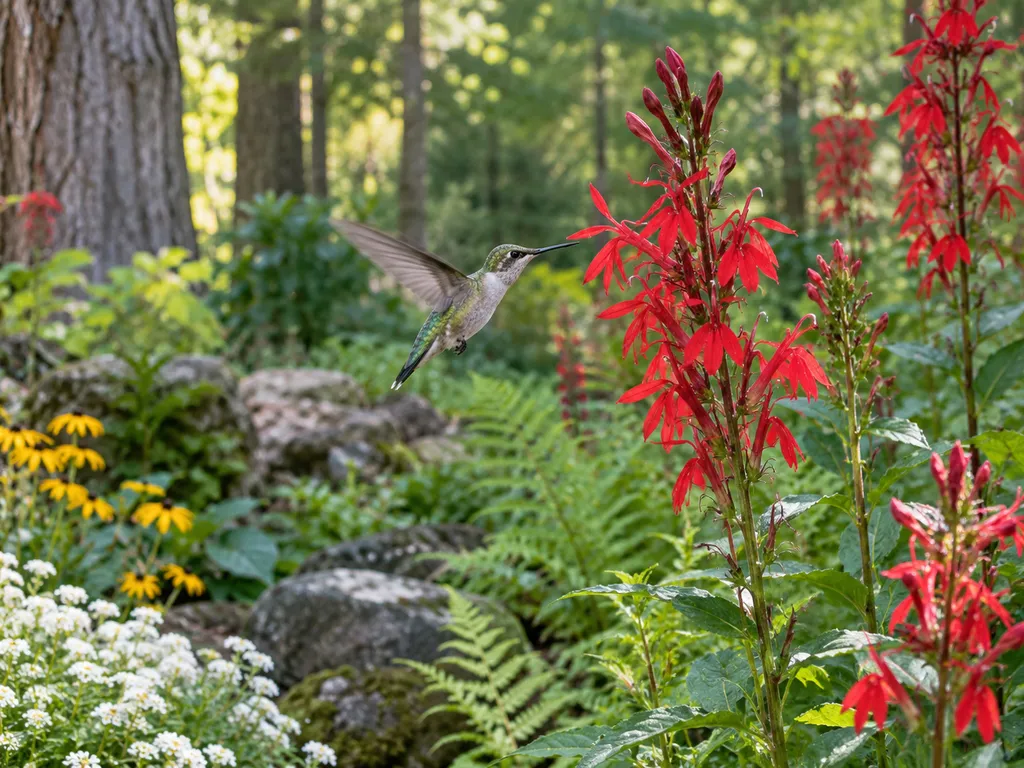
For much of eastern North America, the first likely answer is Ruby-throated Hummingbird. Cornell describes it as eastern North America's only breeding hummingbird and says it has the largest breeding range by area of any North American hummingbird in its species account. Males can flash a ruby-red gorget when the angle of light is right, while females and young birds usually look green above and pale below. Because color can vanish in shade, do not rule out Ruby-throated just because the bird looks dark at one glance.
In yards, Ruby-throated Hummingbirds often use red or orange tubular flowers and feeders. They also defend rich food sources, which can make one bird seem like the owner of the whole garden. For readers maintaining nectar, the same food rule applies regardless of species: use plain white table sugar and water in the 4:1 ratio, skip dye, and keep it fresh. If you need the recipe details, see How to Make Hummingbird Food: The 4:1 Nectar Ratio.
Anna's Hummingbird: The Year-Round Western Regular
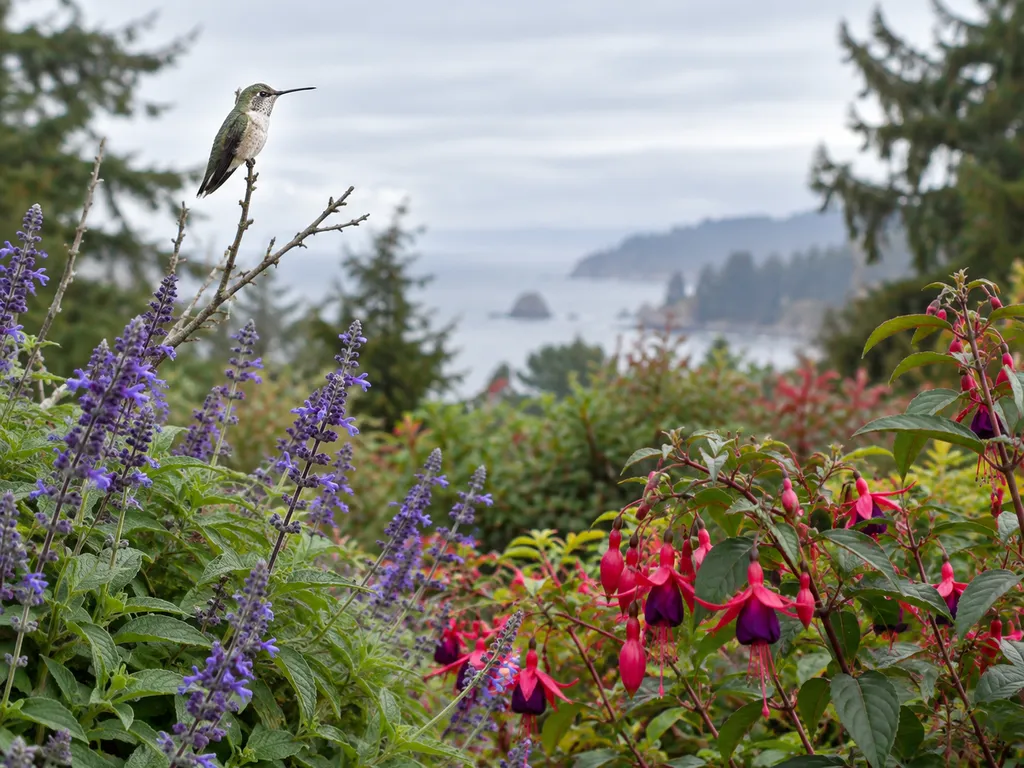
Anna's Hummingbird is one of the most familiar western species because it can remain present through the year in many coastal and urban areas. Cornell notes that Anna's Hummingbirds are easy to see at feeders, colorful blossoms, eucalyptus, and cultivated gardens, and that they do not migrate much compared with many other hummingbirds in its overview. Males can show a rose-pink head and gorget, while females may show a smaller patch. In cool months, their continued presence can surprise people who expect all hummingbirds to leave.
For identification, Anna's often announces itself with sound and posture as much as color. A male may perch high in a small tree or bush and sing, then launch into a steep display flight. In a backyard context, it is also one of the species most likely to make people ask why a hummingbird is still visiting in winter. The answer is regional: in parts of the West Coast, winter flowers, insects, landscape plantings, and feeders can support regular activity.
Rufous Hummingbird: Small, Orange, and Widely Traveled
Rufous Hummingbird is famous for migration and attitude. Cornell describes it as a wide-ranging western species that breeds farther north than any other hummingbird, reaching southeastern Alaska, and makes a clockwise circuit through the West in its overview. Males are often bright orange, while females and young birds can be trickier, mixing green and rusty tones. During migration, Rufous can also appear away from expected western routes, which is why a late-season hummingbird far outside the usual range deserves careful documentation rather than a quick guess.
Behavior can be a clue. Rufous Hummingbirds are famously territorial around flowers and feeders, and Cornell notes they may attack other hummingbirds, including larger species. Still, aggressive behavior alone is not a species mark because many hummingbirds defend food. Use behavior as supporting evidence, then check location, season, tail color, and size. If you are feeding late migrants, the safer rule is to keep nectar clean and at the standard 4:1 ratio rather than making a stronger mix. For seasonal context, see Feeding Hummingbirds During Fall Migration.
Black-chinned and Broad-tailed Hummingbirds: Common Western Confusion Points
Black-chinned Hummingbird is a widespread western species found from deserts to mountain forests, according to Cornell's species overview for Black-chinned Hummingbird. The male's purple band can be hard to see unless light catches it, leaving the bird looking dark-chinned or plain. Females and young birds are even more subtle. One useful habit is perching on tiny exposed twigs between feeding visits, which gives observers a chance to compare shape and posture.
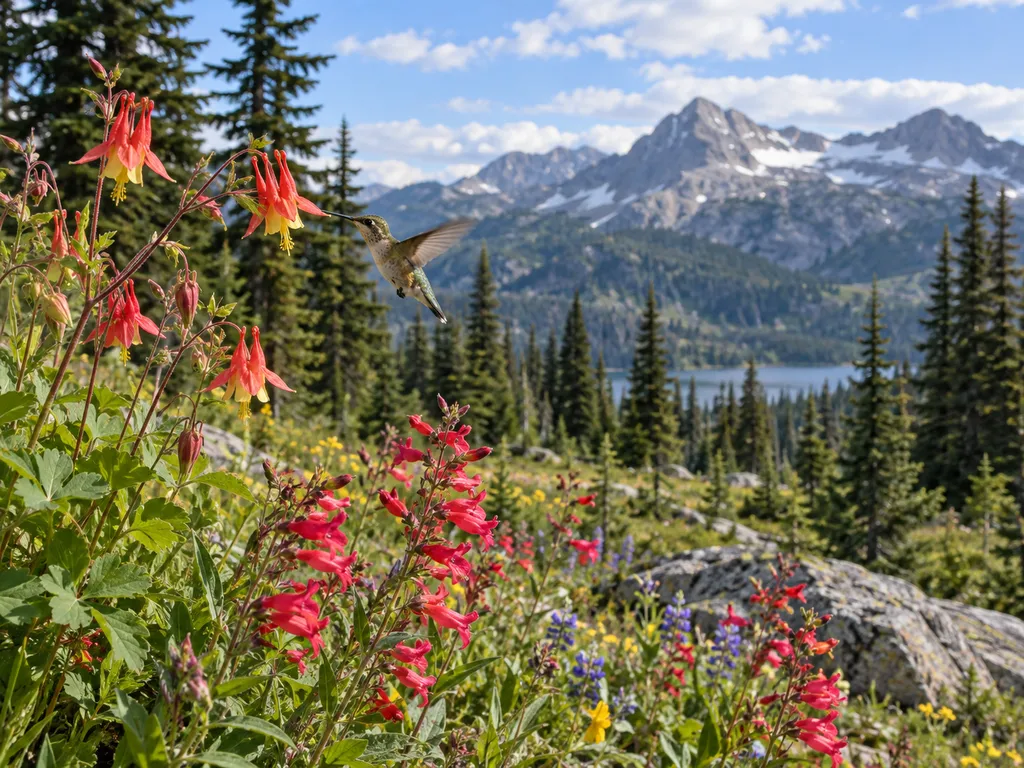
Broad-tailed Hummingbird is more tied to mountain meadows and open forests. Cornell describes males giving loud metallic wing trills and breeding at high elevations, including places with cold nights in its Broad-tailed Hummingbird account. In the interior West, especially in mountain towns and high-elevation gardens, a trilling hummingbird can be a strong Broad-tailed clue. But again, sound, location, and timing should work together. A silent, brief feeder visit is often not enough for certainty.
Allen's, Costa's, and Calliope: Smaller Ranges, Strong Clues
Allen's Hummingbird is closely associated with coastal scrub and chaparral along the Pacific Coast. Cornell says it appears early, with northbound birds reaching breeding areas as early as January, and notes that some remain in southern California year-round in its overview. Allen's can be difficult to separate from Rufous in many views, so location and season matter. A coastal California bird in early spring is a different puzzle from an inland mountain migrant in late summer.
Costa's Hummingbird belongs to desert and coastal scrub settings. Cornell places it in the Sonoran and Mojave Deserts as well as cooler coastal scrub, with males showing dramatic purple feathering and performing looping displays in its Costa's Hummingbird account. Calliope Hummingbird is another western specialist and Cornell calls it the smallest bird in the United States, breeding in northwestern mountain meadows and open forests while traveling to Mexico and back each year in its species account. With both species, habitat is a major clue: desert bloom for Costa's, mountain openings and migration corridors for Calliope.
Southwestern and Gulf Coast Species to Know
The Southwest adds hummingbirds that many casual guides barely mention. Broad-billed Hummingbird is a good example. Cornell describes the species as mostly Mexican in range but reaching mountainous canyons of the southwestern United States during the breeding season in its overview. The U.S. Fish & Wildlife Service also lists Broad-billed, Buff-bellied, Violet-crowned, White-eared, Lucifer, Blue-throated Mountain-gem, and Rivoli's among North American hummingbirds that occur in particular U.S. regions in its species roundup. If you live in southern Arizona, southwestern New Mexico, far west Texas, or the Lower Rio Grande Valley, a regional checklist is far more useful than a national top-five list.
Some of these birds are regular only in limited areas, while others are uncommon or local. That is why a good identification should include where the bird was seen, the date, the habitat, and several photos if possible. For example, a green hummingbird with a colorful bill in a shaded Arizona canyon is a different possibility than a green hummingbird at a porch feeder in Ohio. Place and season do much of the work before color even enters the discussion.
What Hummingbirds Eat Across Species
All hummingbirds need high-energy sugars, but nectar is not the whole story. Flower nectar and properly mixed sugar water fuel hovering and migration, while small insects and spiders supply body-building nutrients, especially for young birds. The U.S. Fish & Wildlife Service repeatedly lists nectar plus insects and spiders in its species summaries, including Broad-tailed, Allen's, Rufous, Broad-billed, and other hummingbirds in its North American hummingbird page. This is the reason a yard with native flowers, shrubs, and reduced pesticide use can support hummingbirds better than a feeder alone.
Freshness matters because hummingbirds drink from tiny ports where heat and sugar can create trouble quickly. Cornell species pages for Ruby-throated, Rufous, and Black-chinned Hummingbirds all warn that sugar water should be changed before it grows cloudy or discolored, with hotter weather requiring faster replacement. For temperature-based timing, see How Often to Change Hummingbird Nectar by Temperature. For ingredient safety, see What Sugar Is Safe for Hummingbirds?.
Why Color Alone Can Mislead
Hummingbird colors are angle-dependent. A male gorget can look brilliant one second and nearly black the next. Females and immature birds often lack the dramatic color patches people expect, and several species share green backs, pale undersides, and quick feeder visits. Even the same bird can look different in shade, full sun, rain, or a backlit window. That is why careful observers look for repeated clues: bill length and shape, tail pattern, wing sound, perch choice, display behavior, location, and date.
For difficult western birds, especially Rufous versus Allen's or female and immature hummingbirds, a single blurry image may not be enough. Watch whether the bird returns to the same perch, whether it fans its tail, whether it gives a wing trill, and which flowers or feeder stations it favors. If you report a rare hummingbird, include multiple angles and avoid handling the bird, nest, or young. In the United States, hummingbirds, nests, and eggs are protected under the Migratory Bird Treaty Act, so injured or orphaned birds belong with licensed wildlife rehabilitators, not home care.
How to Make Your Yard Useful to More Than One Species
The best hummingbird yard offers layers: tubular native flowers, small trees or shrubs for perching and nesting cover, clean clear nectar when feeders are used, and a healthy insect community. Choose regional plants that bloom at different times, such as bee balm, cardinal flower, coral honeysuckle, columbine, penstemon, salvia, fuchsia, or trumpet vine where they are appropriate. Avoid treating flowers and feeder areas with insecticides, and do not use oil, grease, petroleum jelly, sticky barriers, or sprays on or near feeders. Those shortcuts can harm birds and contaminate feathers.
Finally, leave room for normal seasonal changes. A yard may host one dominant bird in June, several migrants in August, and none for part of winter. Western yards may shift from Anna's to Rufous or Allen's depending on coast, elevation, and month. Mountain yards may be busy for a short window when Broad-tailed or Calliope Hummingbirds are present. A changing feeder does not automatically mean something is wrong; it often means migration, nesting, weather, or flower availability has changed.
The Bottom Line
Types of hummingbirds are best understood by region. Ruby-throated Hummingbird dominates the eastern breeding season, while western and southwestern observers may see Anna's, Black-chinned, Rufous, Broad-tailed, Allen's, Costa's, Calliope, Broad-billed, and more localized species. To identify one, start with your location and date, then add repeated field clues instead of relying on a single color flash. To support any species, keep nectar clear and fresh at the 4:1 ratio, plant tubular flowers suited to your region, and protect the small insects and spiders hummingbirds also need.
Frequently Asked Questions
How many types of hummingbirds are there in North America?
It depends on whether you count only regular breeders, common visitors, or rare vagrants. Cornell's North American hummingbird shape guide lists 15 profiles, while the U.S. Fish & Wildlife Service highlights common and regional species seen in the United States. For backyard identification, your location and season matter more than a continent-wide number.
What hummingbird am I most likely to see in the eastern United States?
During spring and summer, Ruby-throated Hummingbird is the expected breeding hummingbird across most of the East. Rare western hummingbirds can appear, especially outside the breeding season, but Ruby-throated should be the starting point for most eastern yard sightings.
Which hummingbirds stay year-round?
Anna's Hummingbird is the classic year-round hummingbird in many West Coast and western urban areas. Some other species can remain in limited southern regions, but most North American hummingbirds migrate. Always check a current regional bird guide or local sightings for your exact area.
Can I identify a hummingbird by throat color alone?
Not reliably. Iridescent color changes with light, and females or immature birds often lack the bright patches shown in guidebook males. Use several clues together: range, date, size, tail pattern, sound, behavior, and the habitat where the bird appears.
Do different hummingbird species need different nectar recipes?
No. Use the same clear 4:1 ratio for feeder nectar: 1 part plain white table sugar to 4 parts water. Do not make stronger mixes for migration or winter as a rule, and do not add dye, honey, raw sugars, artificial sweeteners, or supplements.
Sources
This guide was researched using these sources.
- https://www.fws.gov/story/hummingbirds-north-america
- https://www.allaboutbirds.org/guide/browse/shape/Hummingbirds
- https://www.allaboutbirds.org/guide/Ruby-throated_Hummingbird
- https://www.allaboutbirds.org/guide/Annas_Hummingbird/overview
- https://www.allaboutbirds.org/guide/Rufous_Hummingbird/overview
- https://www.allaboutbirds.org/guide/Black-chinned_Hummingbird/overview
- https://www.allaboutbirds.org/guide/Broad-tailed_Hummingbird/overview
- https://www.allaboutbirds.org/guide/Allens_Hummingbird/overview
- https://www.allaboutbirds.org/guide/Costas_Hummingbird/overview
- https://www.allaboutbirds.org/guide/Calliope_Hummingbird/overview
- https://www.allaboutbirds.org/guide/Broad-billed_Hummingbird/overview