
 Pin it
Homemade hummingbird nectar is usually the best choice: it is simple, inexpensive, fresh, and easy to verify. The standard is the 4:1 ratio: one part plain white table sugar to four parts water. Store-bought nectar is only worth considering when it is clear, uncolored, and made from the same basic sugar-and-water idea. If a product is red, dyed, honey-based, raw-sugar based, artificially sweetened, or loaded with extras, skip it. Hummingbirds do not need a special bottled formula; they need clean, fresh nectar in the correct ratio.
The Short Answer: Homemade Wins for Most Feeders
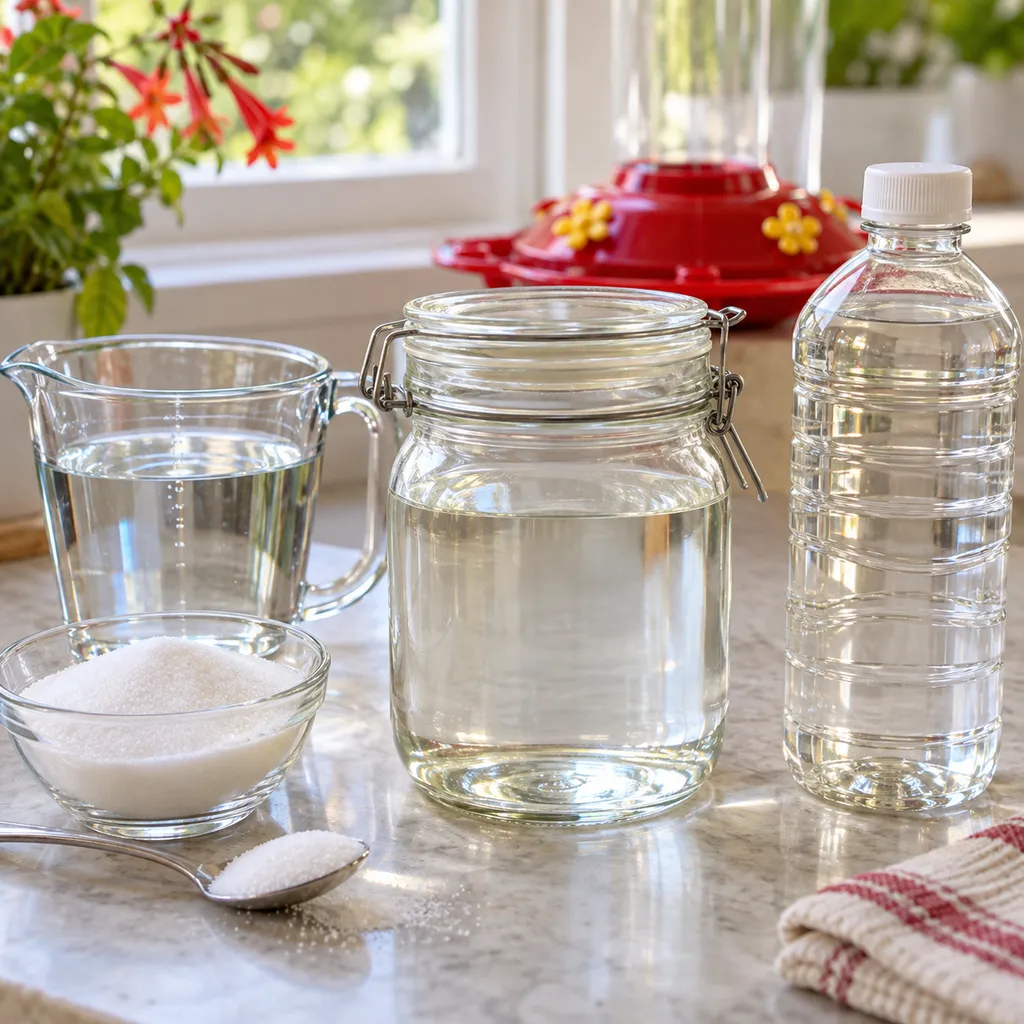
For most backyards, homemade nectar is the practical winner because the ingredient list is obvious. The Smithsonian National Zoo gives the basic formula as refined white sugar plus water, mixed at one part sugar to four parts water, and says red dye should not be added (Smithsonian National Zoo). That is the same everyday standard this site uses in its full guide to how to make hummingbird food with the 4:1 nectar ratio.
The comparison is not really homemade versus commercial as a matter of pride. It is simple nectar versus questionable nectar. A clear, plain, ready-to-use product that follows the 4:1 ratio is closer to homemade nectar than a bright red concentrate with dye. A homemade batch made with brown sugar, honey, or a too-strong sugar mix is worse than a carefully chosen clear store product. The deciding question is always: does this nectar match what reliable bird organizations recommend?
What Good Homemade Nectar Has Going for It
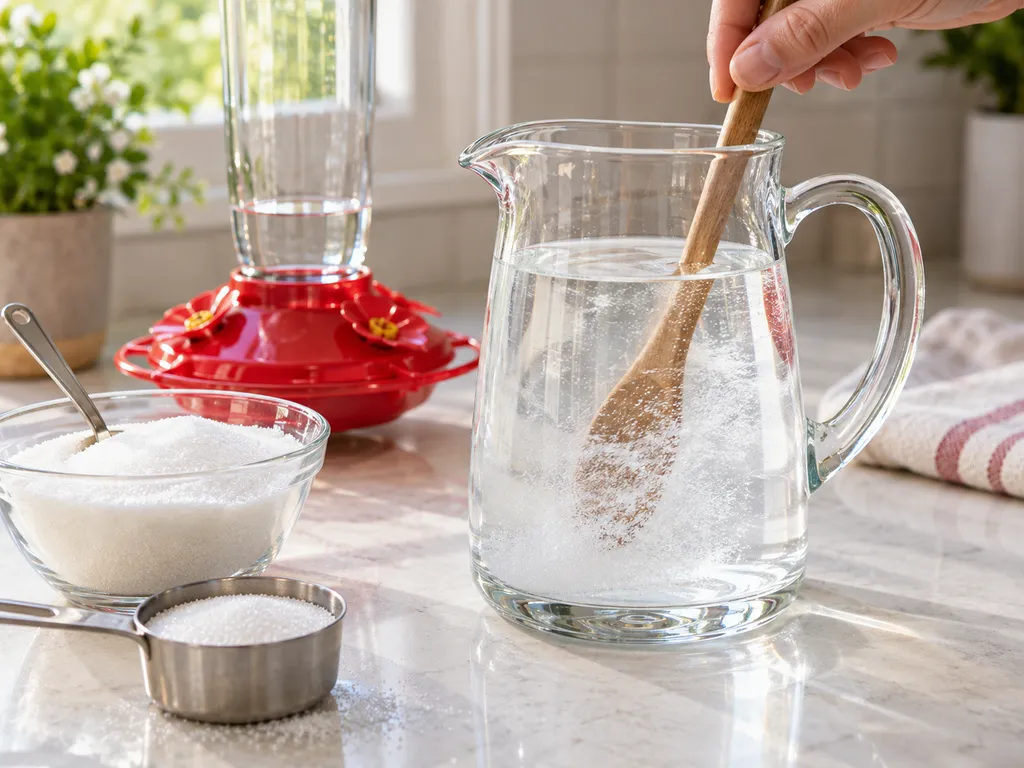
Homemade nectar lets you control the three things that matter most: the sugar, the water, and the freshness. Use plain white table sugar, mix it with clean water at the 4:1 ratio, stir until fully dissolved, and let it cool before filling. Boiling is optional for small fresh batches; Cornell Lab notes that small amounts mixed every day or two do not need boiling, while boiling can make sense for larger batches that will be stored (Cornell Lab, All About Birds). Smithsonian also says boiling is not required if the sugar fully dissolves.
Homemade nectar also removes the mystery from the label. You know there is no dye, no flavoring, no preservative, no sweetener blend, and no color packet. That matters because both Cornell and Audubon explain that flower nectar is clear and that the red parts of a feeder, not red liquid, are what help birds notice the feeding spot (Audubon hummingbird feeding FAQs). If you are already buying plain white sugar for the pantry, homemade nectar is also easy to make in small batches, which helps keep waste low.
When Store-Bought Nectar Can Be Reasonable
Store-bought nectar can be useful when convenience truly matters. A clear ready-to-use bottle may help someone who has limited kitchen access, needs a small emergency refill, or is caring for feeders while away from home. It can also help a neighbor follow your instructions without measuring. The key is that convenience does not change the standard. The nectar should still be clear, simple, and compatible with the 4:1 ratio.
Powdered or concentrate products need more caution because the final strength depends on how they are mixed. If the directions do not clearly produce the 4:1 ratio, or if the product depends on color packets, flavor claims, or extra ingredients, leave it on the shelf. The Cornell Bird Academy migration discussion reinforces the same basic ratio and cautions against making a stronger sugar mix as a routine shortcut (Cornell Bird Academy). More sugar is not automatically better.
The Store Label Checklist
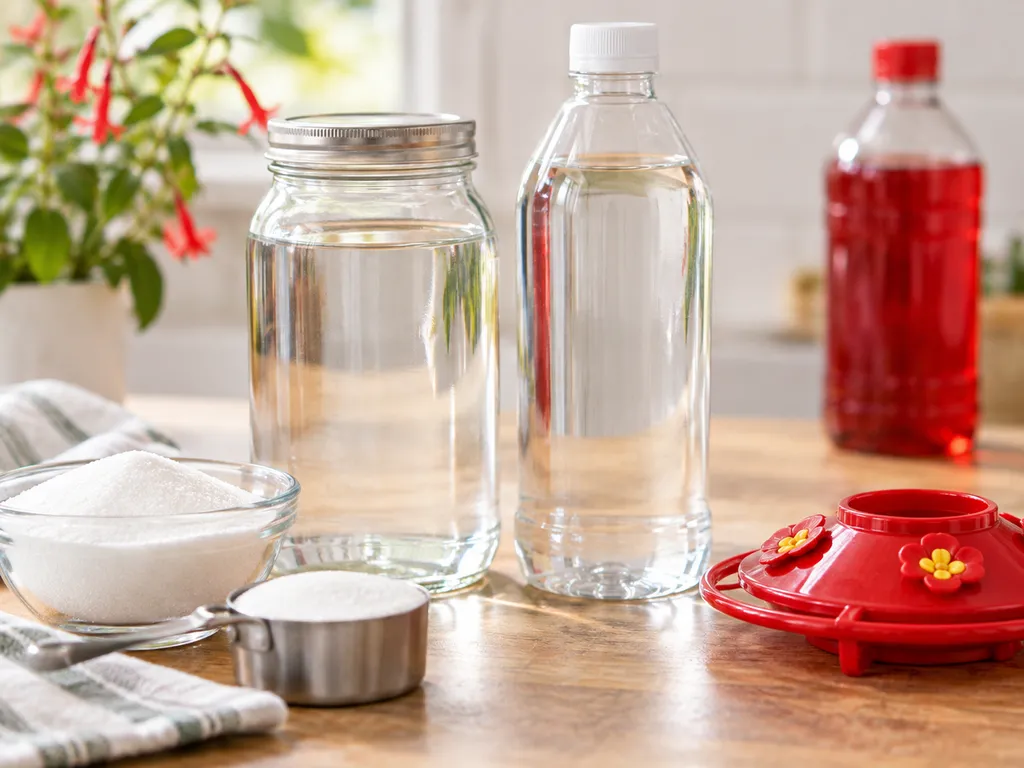
Before buying any commercial nectar, read the front and back as if you were checking a recipe. The best product is usually the least dramatic one. A good label should not need claims about special energy, red attraction, vitamins, flavor enhancers, or rare sugars. Hummingbirds are already adapted to use nectar sources; your job at the feeder is to offer a clean sugar-water supplement, not to redesign their food supply.
Use this quick checklist before any store-bought purchase:
- Accept: clear ready-to-use nectar that is essentially plain sugar and water, or a plain mix that clearly makes the 4:1 ratio.
- Avoid: red dye, red coloring packets, honey, corn syrup, molasses, maple syrup, agave, fruit juice, brown sugar, raw sugar, turbinado sugar, organic brown-style sugars, powdered sugar, and artificial sweeteners.
- Question: any product that advertises additives, special boosts, strong seasonal blends, or vague proprietary ingredients.
- Remember: the feeder can be red; the nectar should be clear.
Smithsonian specifically recommends refined white sugar and says not to use honey, corn syrup, raw or unprocessed sugars, or powdered sugar with added ingredients. Audubon likewise recommends refined white sugar and warns against brown sugar, honey, molasses, artificial sweeteners, and red coloring. For a deeper ingredient breakdown, see what sugar is safe for hummingbirds.
Red Nectar Is the Biggest Reason to Skip Many Products
Red liquid is common in marketing, but it is not needed. Audubon’s 2026 article on red attraction explains that natural nectar is clear and that red, yellow, or orange features on the feeder are enough to help draw attention (Audubon on red dye and hummingbirds). The same article notes that some retail products still use artificial dyes or include packets for coloring sugar water. That is a strong reason to choose homemade nectar or a clear commercial product instead.
This is where homemade nectar has an advantage that is hard for store-bought products to beat. A homemade jar of clear nectar may look plain to a person, but plain is exactly the point. The birds can see the feeder’s red ports or cap. They do not need the liquid itself to be colored. If a commercial product’s main selling point is its red color, that feature is not a benefit.
Freshness Matters More Than the Package
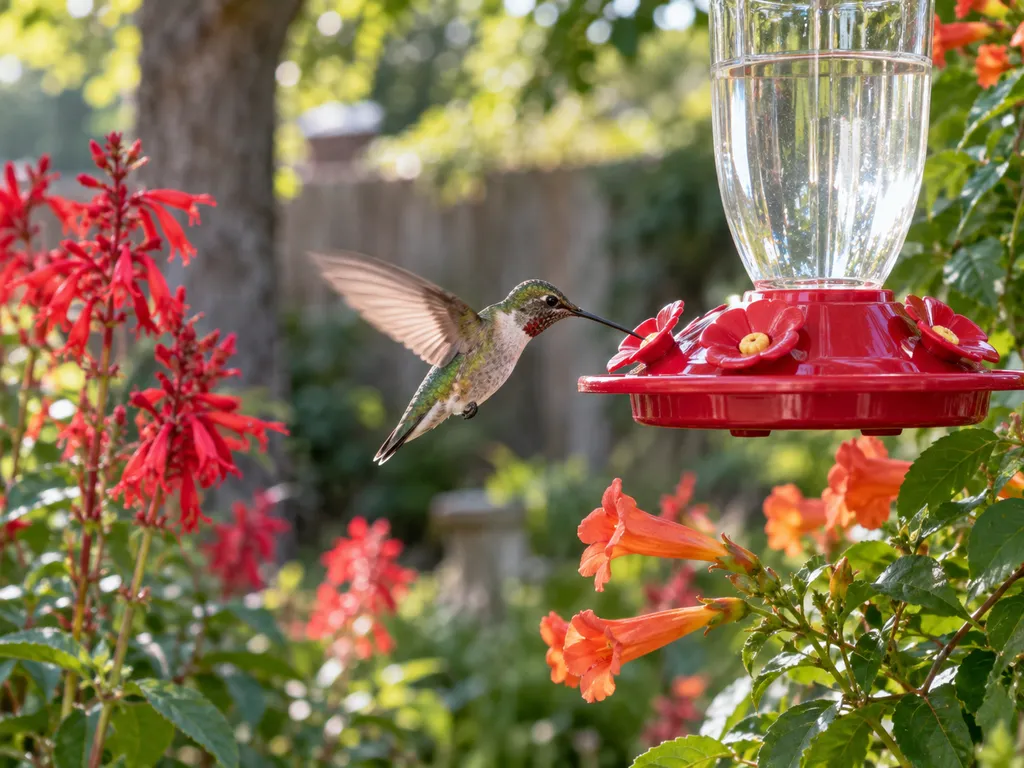
A fresh homemade batch is better than an old bottle sitting in a warm feeder. A clear store-bought nectar is better than a homemade batch that has gone cloudy, stringy, sour-smelling, or speckled with mold. Freshness is where many well-meaning people lose the comparison. Nectar is sugar water, and warm sugar water changes quickly outdoors.
Smithsonian recommends changing feeders every other day and cleaning them each time, with extra refrigerated nectar kept no longer than one week. Cornell says sugar water should not be left out for more than two or three days and should be changed daily in very hot weather. Audubon gives a practical weather-based rhythm: daily or every other day in hot weather, every three days in temperate weather, and twice per week in cooler weather. This site’s more detailed schedule is here: how often to change hummingbird nectar by temperature.
A useful rule is to make or buy only what you can use while it is still fresh. If you have one small feeder and a few visiting birds, a giant jug of ready-to-use nectar may not be a bargain if most of it sits too long. If you have heavy activity and refill often, homemade batches are usually easier to scale because you can mix exactly what you need.
Cost and Waste: The Plain Sugar Advantage
Current store prices change too often to quote responsibly, but the structure of the cost comparison is simple. Homemade nectar uses a common pantry ingredient and tap or filtered water. Store-bought nectar adds packaging, shipping, shelf space, and marketing. That does not automatically make every product unreasonable, but it means the commercial option has to earn its place through real convenience.
Waste is also part of the decision. Premixed nectar often comes in plastic bottles. Powdered mixes can reduce liquid weight but may still include single-use packets or dye packets you should not use. Homemade nectar can be mixed in a reusable measuring cup and stored in a clean covered jar in the refrigerator. If you make small amounts, you are less likely to pour out unused nectar at the end of the week.
Boiling, Cooling, and Storing: Where the Advice Differs
Reliable organizations do not all phrase the boiling advice the same way. Smithsonian says the water does not need to be boiled as long as the sugar fully dissolves. Cornell says boiling is not necessary for small batches mixed every day or two, but is wise for larger batches that will be refrigerated. Audubon’s FAQ says to bring the solution to a boil and let it cool before filling. The shared point is more important than the difference: the sugar must dissolve, the nectar must cool before it goes outside, and extra nectar should stay covered in the refrigerator.
That means a practical home routine can be flexible. For a small same-day batch, warm water and thorough stirring are usually enough. For a larger batch, hot or briefly boiled water can help dissolve sugar evenly before storage. Never pour hot nectar into a feeder. Let it return to room temperature first, then fill only a clean feeder.
What Store-Bought Nectar Cannot Fix
Buying nectar does not remove the need for good feeder care. A bottled product can still spoil outdoors. A concentrate can still be mixed incorrectly. A clean-looking feeder can still have residue around the ports. The food side and the feeder-care side work together: fresh nectar belongs in a clean feeder, and any nectar should be replaced immediately if it looks cloudy, stringy, sour, or moldy.
Keep the feeder line in this article simple: clean the feeder at every refill with hot water and brushes that reach the bottle, base, and ports. That is enough to understand the nectar decision without turning this food article into a feeder-maintenance guide. The important comparison is that homemade and store-bought nectar follow the same freshness rules once they are in the feeder.
Nectar Is Only a Supplement
Even perfect nectar is not the whole picture. Audubon’s yard guidance notes that hummingbirds also use insects and spiders, especially around nesting, and recommends native flowering plants, fewer pesticides, and blooms that provide nectar through the season. Feeders can be helpful, but flowers and small arthropods make the yard more complete for hummingbirds than any bottle of commercial nectar can be.
This matters when store-bought nectar is marketed as if it solves everything. It does not. The best support is boring and consistent: clear 4:1 nectar, frequent changes, clean feeders, and a yard with useful flowers and insect life. A feeder should be a supplement to habitat, not a replacement for it.
Bottom Line
Use homemade nectar as your default. It is transparent in every sense: you know what is in it, you can keep it fresh, and it follows the 4:1 ratio without extra claims. Use store-bought nectar only when it is clear, simple, and convenient enough to justify the package. Skip red products, sweetener blends, honey-based mixes, raw-sugar mixes, and anything that tries to improve on plain white sugar and water. For hummingbirds, the best nectar is not fancy. It is correct, clear, fresh, and cleanly served.
The Bottom Line
Homemade hummingbird nectar is the best everyday option for most people because it uses the proven 4:1 ratio with plain white table sugar and water. Store-bought nectar can be acceptable if it is clear, uncolored, and simple, but it should not include dye, honey, raw sugars, artificial sweeteners, or additives. Whatever you choose, freshness is the real test: replace nectar on a temperature-aware schedule and discard it immediately if it changes appearance or smell.
Frequently Asked Questions
Is homemade hummingbird nectar better than store-bought nectar?
Usually, yes. Homemade nectar is easy to verify because it uses plain white table sugar and water at the 4:1 ratio. Store-bought nectar is acceptable only when it is clear, uncolored, and based on the same simple standard.
Can I use clear store-bought hummingbird nectar?
Yes, if the ingredients are appropriate and the nectar is fresh. Choose clear products that avoid dye, honey, raw sugars, molasses, artificial sweeteners, and extra additives. Once opened or poured into a feeder, follow the same freshness rules as homemade nectar.
Why should I avoid red store-bought nectar?
Hummingbirds do not need red liquid. Natural nectar is clear, and the red parts of a feeder can provide visual attraction. Authoritative bird organizations recommend avoiding red coloring in the nectar itself.
Is powdered hummingbird nectar mix a good idea?
It depends on the label and directions. A plain mix that clearly makes the 4:1 ratio can be reasonable for convenience. Avoid powders with red dye packets, unclear sweeteners, flavoring, or claims that suggest a stronger or enhanced formula.
Does store-bought nectar last longer in the feeder?
No. Once nectar is in the feeder, heat, sunlight, bird use, and outdoor conditions matter more than whether the nectar began homemade or bottled. Replace it on a temperature-aware schedule and sooner if it turns cloudy, stringy, sour-smelling, or moldy.
Sources
This guide was researched using these sources.
- https://www.nationalzoo.si.edu/migratory-birds/hummingbird-nectar-recipe
- https://www.allaboutbirds.org/news/feeding-hummingbirds
- https://www.audubon.org/magazine/hummingbird-feeding-faqs
- https://www.audubon.org/magazine/are-hummingbirds-really-attracted-red-and-dyeing-their-food-safe
- https://academy.allaboutbirds.org/live-event/practical-ways-to-help-birds-during-migration
- https://www.audubon.org/community-science/hummingbirds/how-create-hummingbird-friendly-yard