
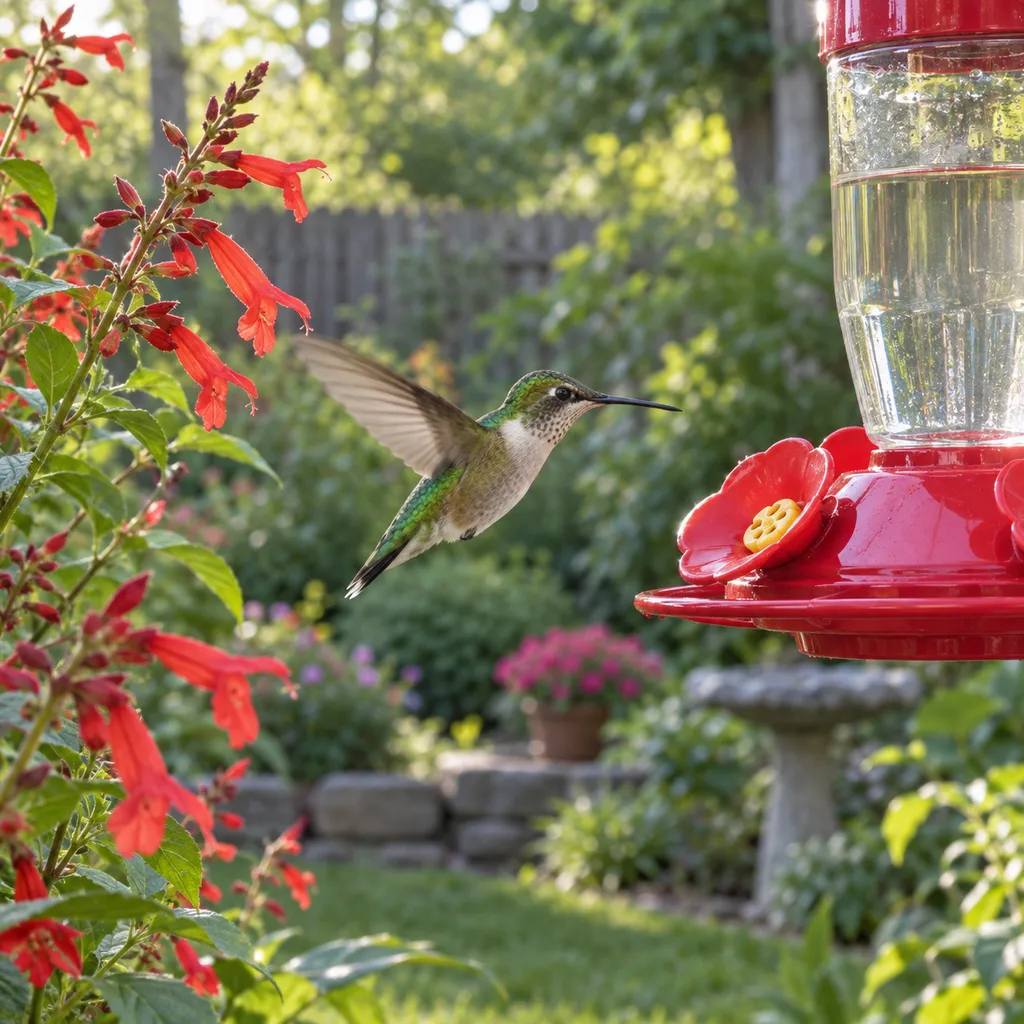
 Pin it
No, you do not have to boil water for hummingbird nectar. The most important things are using the 4:1 ratio, fully dissolving plain white table sugar, letting the nectar cool before filling, and changing it often. The Smithsonian National Zoo says nectar water does not need to be boiled if the sugar is fully dissolved, while Cornell says boiling is a sensible step when you are making extra nectar to store in the refrigerator. That means boiling is a tool, not a rule. If warm tap water dissolves the sugar completely and you are making a small amount for immediate use, boiling adds little. If you make a larger batch, start with boiling or very hot water, cool it, cover it, and refrigerate the extra.
The Short Answer: Boiling Is Optional, Not Required
For everyday hummingbird nectar, you can use clean tap water, filtered water, or previously boiled water. The standard mixture is the 4:1 ratio, which means 1 part plain white table sugar to 4 parts water by volume. Smithsonian National Zoo gives that same ratio and says the water does not need to be boiled; the sugar just needs to be fully dissolved. Cornell Lab of Ornithology adds useful nuance: if you mix small quantities every day or two, there is no need to boil, but if you make a larger batch and refrigerate part for later, using boiling water is wise.
Why So Many Instructions Still Mention Boiling
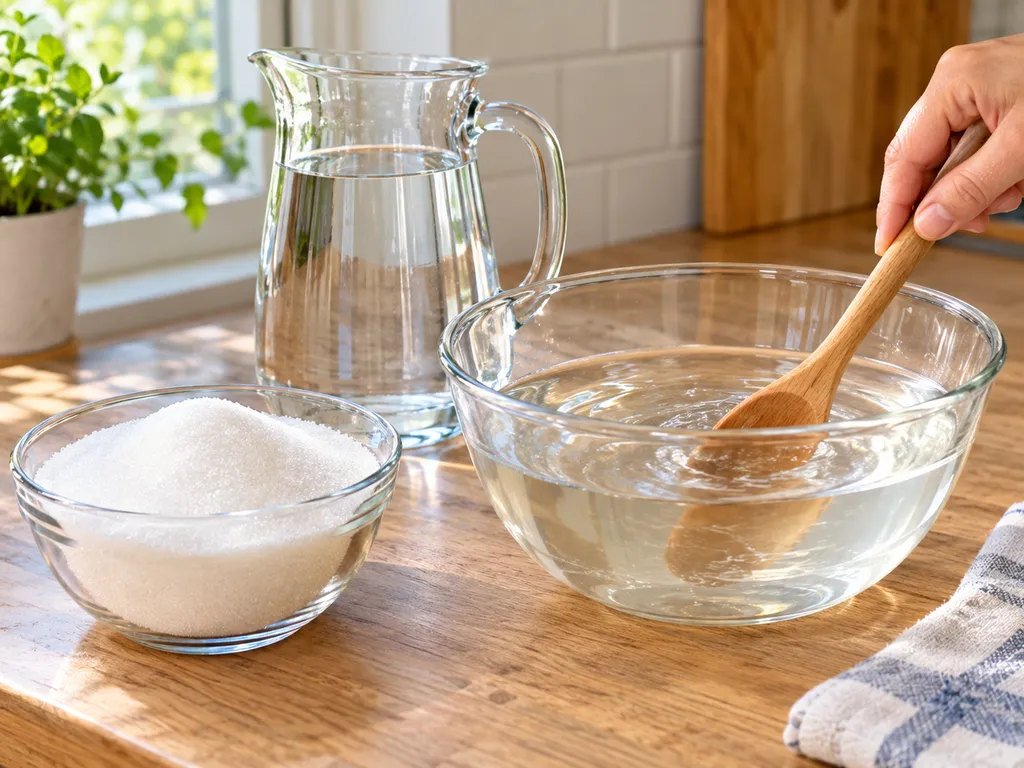
Boiling appears in many hummingbird nectar directions because it solves two practical problems. First, hot water dissolves sugar quickly, so the finished nectar is clear and even. Second, it is a conservative habit when someone is preparing extra nectar to store. Audubon, for example, gives a simple method that brings the sugar-water solution to a boil and then cools it before filling the feeder. That does not mean boiling is the only safe way to make nectar. It means different authorities write for different situations: quick small batches, stored batches, beginner instructions, or public education handouts.
The practical takeaway is simple: use heat when it helps, but do not treat heat as a substitute for freshness. Once a feeder is outdoors, hummingbirds use it, air reaches it, and warm weather speeds spoilage. Boiling the original water does not make outdoor nectar last indefinitely. Fresh nectar and a clean feeder at every refill matter more than whether the first mixing bowl started with boiling water.
When You Should Use Hot or Boiling Water
Hot or boiling water is useful in a few specific cases. It is especially helpful if your kitchen is cool, your sugar dissolves slowly, or you are making enough nectar for several refills. If you boil, boil the water first, remove it from the heat, stir in the sugar until the liquid is clear, and let it cool completely before filling. Do not pour hot nectar into a feeder and put it outside. Warm nectar can also expand in some feeder designs and leak.
A good decision rule looks like this:
- Small batch for today: Boiling is optional if the sugar dissolves fully.
- Large batch for the fridge: Use very hot or boiling water, then cool and cover the extra.
- Sugar still visible: Warm the water and stir longer until the nectar is clear.
- Uncertain water quality: Use water you normally trust for kitchen use, or use filtered water.
- After boiling: Measure carefully so evaporation does not make the nectar stronger than the 4:1 ratio.
When Room-Temperature Water Is Fine
Room-temperature or cool water can work if you are patient and the sugar fully dissolves. The finished nectar should look clear, with no grainy layer on the bottom of the pitcher or jar. Shaking in a clean covered container can help, but stirring in a bowl or pitcher is easier to check. If you still see crystals after a minute or two, use warmer water next time rather than adding extra sugar.
The ratio matters more than the temperature of the mixing water. Do not thicken the nectar because birds are migrating, because the weather is cold, or because you want the feeder to be more attractive. Keep the 4:1 ratio in every season. Hummingbirds also visit flowers and catch tiny insects and spiders; feeder nectar is a supplement, not their entire menu. A stronger mix is not a better mix as a routine practice.
Keep the 4:1 Ratio Exact Even If You Boil
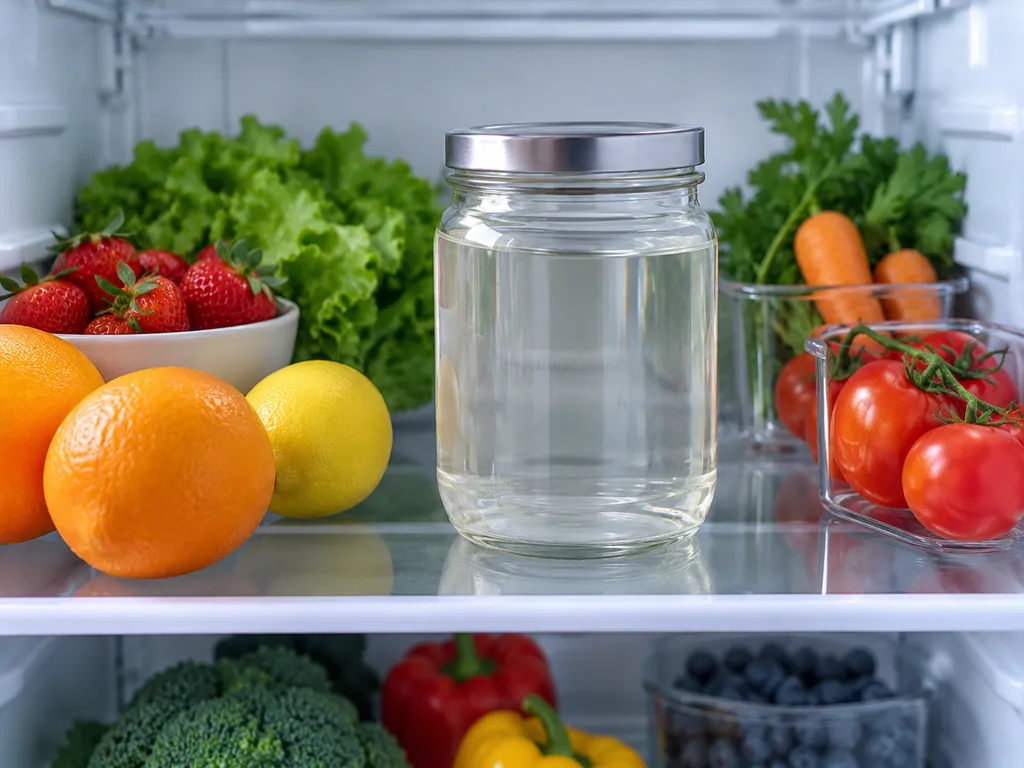
The biggest boiling mistake is letting water evaporate and then measuring from the reduced amount. If you boil four cups of water for several minutes, you may no longer have four cups of water. Adding one cup of sugar to that reduced volume makes the nectar stronger than intended. The easiest fix is to measure the water after boiling, or boil a little extra water and then measure the amount you need before adding sugar.
Use only plain white table sugar. Do not use red dye, honey, brown sugar, raw sugar, turbinado sugar, powdered sugar, molasses, maple syrup, agave, fruit juice, sports drinks, artificial sweeteners, vitamins, or protein additives. Smithsonian specifically recommends refined white sugar and says not to use honey, corn syrup, or raw unprocessed sugars; it also notes that powdered sugar often contains added ingredients such as cornstarch. Natural flower nectar is clear, and feeders already use red parts to catch a hummingbird's attention, so colored nectar is unnecessary.
Freshness Matters More Than Boiling
Freshness is the part of nectar care that changes from week to week. In hot weather, sugar water spoils faster, especially if the feeder hangs in direct sun. Cornell says sugar water should not be left out more than two or three days and should be changed daily in very hot weather. Smithsonian recommends changing feeders every other day and cleaning them each time. A practical home schedule is every 1 to 2 days above 90 F, every 2 to 3 days in the 80s F, and every 4 to 6 days in cooler weather, with faster changes whenever the feeder is in sun or the nectar is being used heavily.
Replace nectar immediately if it turns cloudy, stringy, sour-smelling, or shows mold or dark specks. Do not top off old nectar with new nectar. Empty the feeder, rinse it, scrub it with hot water and a bottle brush, clean the ports with a small brush, and refill with cooled fresh nectar. This article stays focused on nectar preparation rather than feeder comparisons, but one feeder line matters here: clean the feeder at every refill.
How to Store Extra Nectar
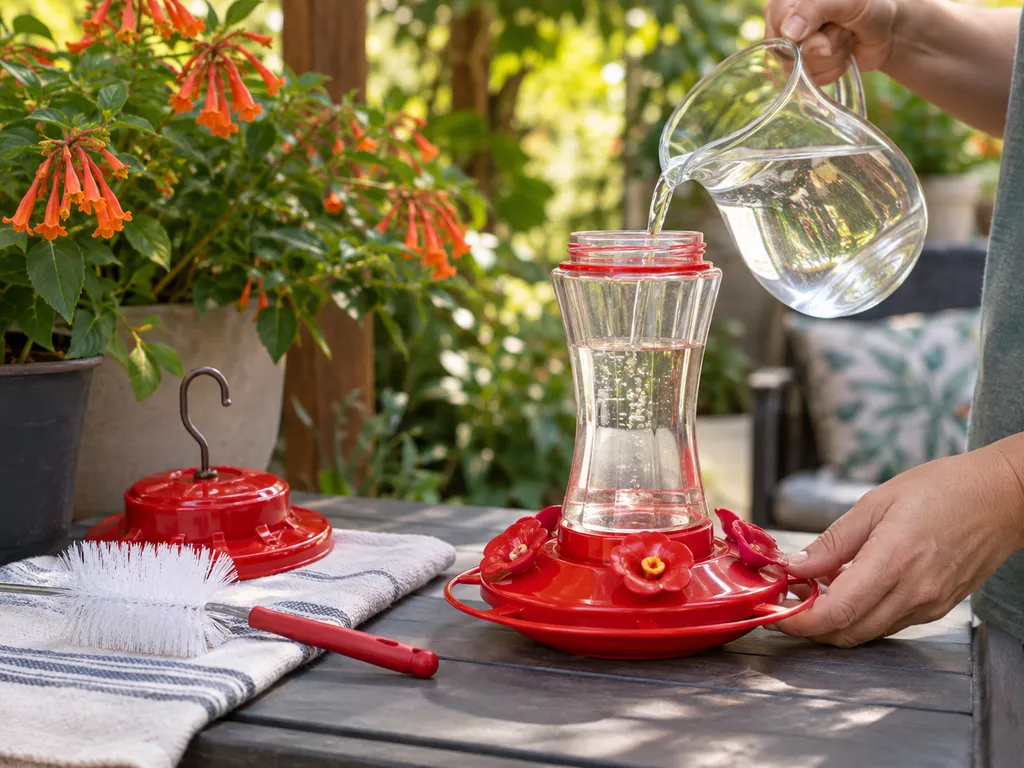
Extra nectar should go into a clean, covered container in the refrigerator after it cools. Smithsonian says extra sugar water can be stored in the fridge for no more than one week and should be discarded if mold appears. A covered glass jar or food-safe pitcher works well because it is easy to see whether the nectar is still clear. Write the date on a separate note outside the fridge if needed, but do not rely on smell alone. If you are unsure how long it has been stored, make a fresh batch.
Stored nectar should still be the same 4:1 ratio. Do not make a concentrate to dilute later unless you are very careful with measurements, because it is easy to forget the dilution step. For most homes, the simplest routine is to make only what you can use in a few refills, refrigerate the extra, and make a new batch before the week is up.
A Simple Boil-or-Not Decision
Use this rule and you will answer the boiling question correctly almost every time: if you are making one small refill and the sugar dissolves completely, boiling is optional. If you are making extra nectar for the refrigerator, use boiling or very hot water. If the sugar will not dissolve, warm the water. If you boiled the water, cool the nectar completely before filling the feeder. In every case, keep the 4:1 ratio and keep the nectar clear, fresh, and free of dye.
That is the whole answer in practical terms. Boiling is not what makes hummingbird nectar appropriate; the right ingredients, the right dilution, complete dissolving, cooling, storage, and prompt replacement do. A careful no-boil batch is better than a boiled batch that sits too long outside. A boiled batch is useful when it helps you dissolve sugar cleanly or prepare a short supply for the refrigerator.
The Bottom Line
You do not have to boil water for hummingbird nectar. Boiling helps dissolve sugar and is a good habit for larger refrigerated batches, but clean water that fully dissolves plain white table sugar is fine for small batches. Keep the 4:1 ratio, let any heated nectar cool before filling, store extra in the refrigerator for up to about a week, and replace outdoor nectar often. Clear, fresh nectar is the goal.
Frequently Asked Questions
Can I make hummingbird nectar without boiling the water?
Yes. If the water is clean and the plain white table sugar dissolves completely, boiling is not required for a small batch. Stir until the nectar is clear, then fill the feeder with fresh nectar.
Is boiling better if I make extra nectar?
Yes, it is a useful precaution for larger batches. Use boiling or very hot water to dissolve the sugar, let the nectar cool, then store the extra in a clean covered container in the refrigerator for up to about one week.
Do I add sugar before or after boiling?
The cleanest method is to boil the water first, remove it from heat, measure the needed amount if evaporation occurred, and then stir in the sugar until dissolved. Let the nectar cool fully before filling.
Does boiling let nectar stay outside longer?
No. Outdoor nectar still needs frequent replacement. Change it faster in hot weather and immediately if it becomes cloudy, stringy, sour-smelling, or shows mold or dark specks.
Should I change the 4:1 ratio in cold weather or migration season?
Keep the 4:1 ratio as the regular standard in every season: 1 part plain white table sugar to 4 parts water. Do not make the mixture stronger as a routine practice.
Sources
This guide was researched using these sources.