
 Pin it
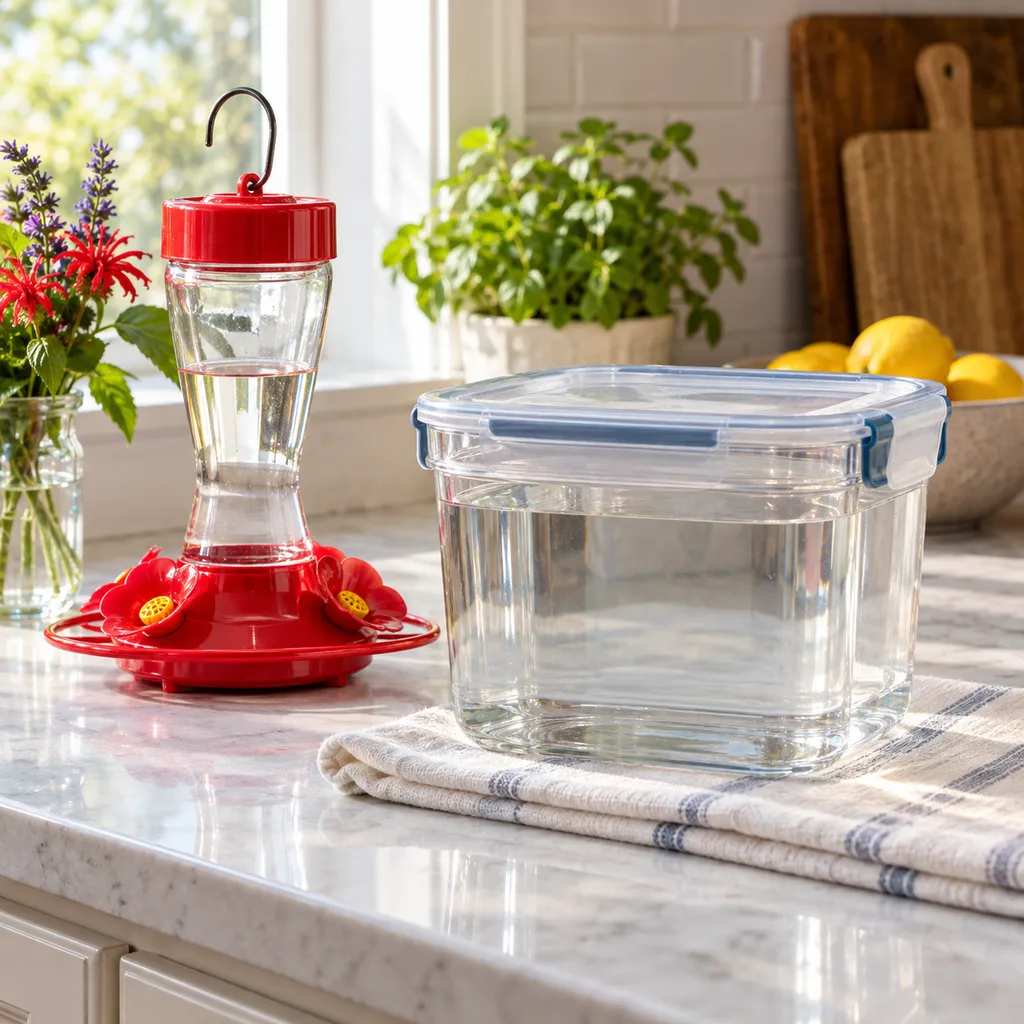
Yes, you can freeze hummingbird nectar, but it should be fresh nectar made with the standard 4:1 ratio: 4 parts water to 1 part plain white table sugar. Freezing is useful when you make more than your feeder can use in a few days, especially during busy spring or summer refills. It is not a way to save old nectar, cloudy nectar, or nectar that has already been outside. The safest routine is to freeze only clean extra nectar, thaw it in the refrigerator, bring it close to room temperature before filling, and keep the same replacement schedule once it goes into the feeder.
The Short Answer: Fresh Nectar Can Be Frozen
Homemade hummingbird nectar is just sugar water, so it freezes well enough for backyard use. The important point is that freezing does not change the recipe. Keep the standard 4:1 ratio every time: 4 parts water to 1 part plain white table sugar. The Smithsonian National Zoo gives the same basic formula, says not to add red dye, and says extra sugar water can be stored in the refrigerator for no more than one week: Smithsonian hummingbird nectar guidance.
Freezing makes the most sense when you prepare a larger batch for convenience. For example, you might make enough nectar for several refills, refrigerate what you will use soon, and freeze the rest in small portions. That keeps you from leaving a half-full pitcher in the refrigerator until you forget when it was made. Once nectar is frozen, label the container with the date, use the oldest batch first, and do not refreeze nectar that has already been thawed and warmed for feeder use.
What Freezing Does and Does Not Do
Freezing is storage, not a reset button. The FDA advises keeping a home freezer at 0°F, and FoodSafety.gov explains that frozen storage at 0°F or below is mostly about quality when items remain continuously frozen: FDA freezer temperature guidance and FoodSafety.gov cold storage chart. For hummingbird nectar, that means the freezer can help you hold clean extra nectar for later, but it does not make neglected nectar suitable for birds.
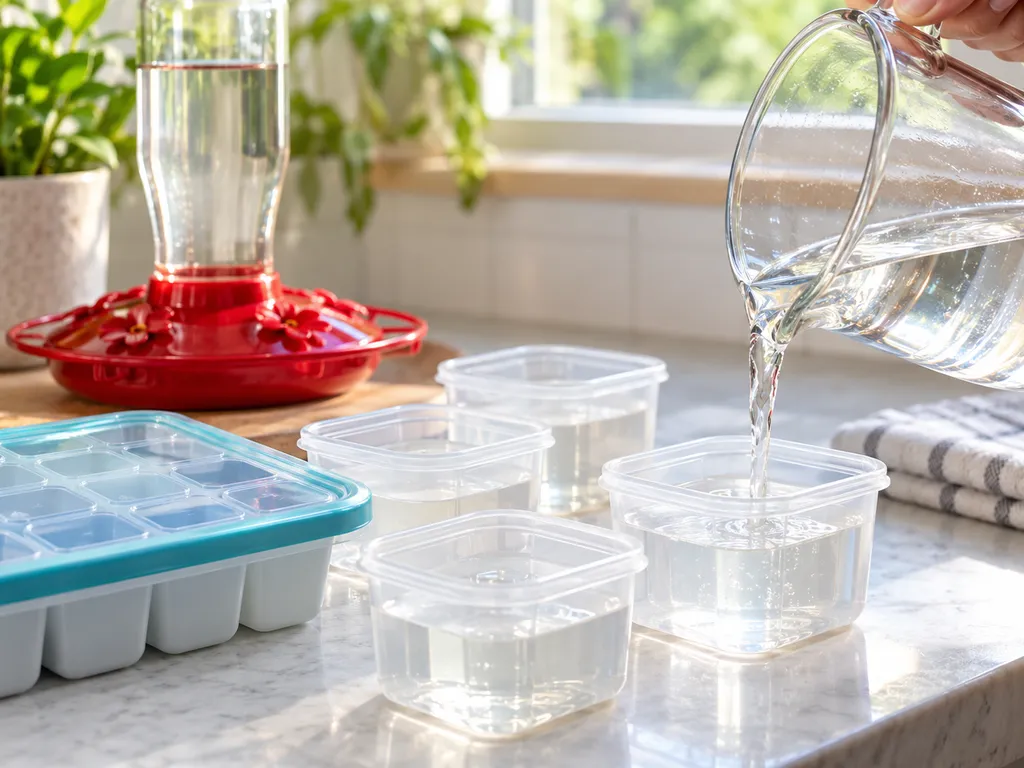
Because water expands as it freezes, leave headspace in every jar or container. A rigid glass jar filled to the very top can crack. A freezer-safe plastic container, a silicone tray with a cover, or a freezer-safe jar with space at the top works better. Small portions are easier to thaw and reduce waste; a few small containers are more practical than one large block if your feeder only needs a cup or two at a time.
A practical freezing routine looks like this:
- Make nectar with the 4:1 ratio and let it cool before storing.
- Pour only unused nectar into clean, freezer-safe containers.
- Leave headspace so the liquid can expand.
- Cover tightly to keep freezer odors and debris out.
- Label with the date made.
- Thaw in the refrigerator, not on a sunny counter.
- Use thawed nectar promptly and discard leftovers that do not look and smell clean.
How Long To Keep Frozen Nectar
There is no widely cited bird-care authority that gives a special freezer deadline for hummingbird nectar. That is why it is better to think in terms of quality and rotation rather than a magic date. For household management, use frozen nectar within the same feeding season when possible, and ideally within two to three months. If the container has freezer burn, a damaged lid, debris, a strange odor after thawing, or any visible growth, do not use it.
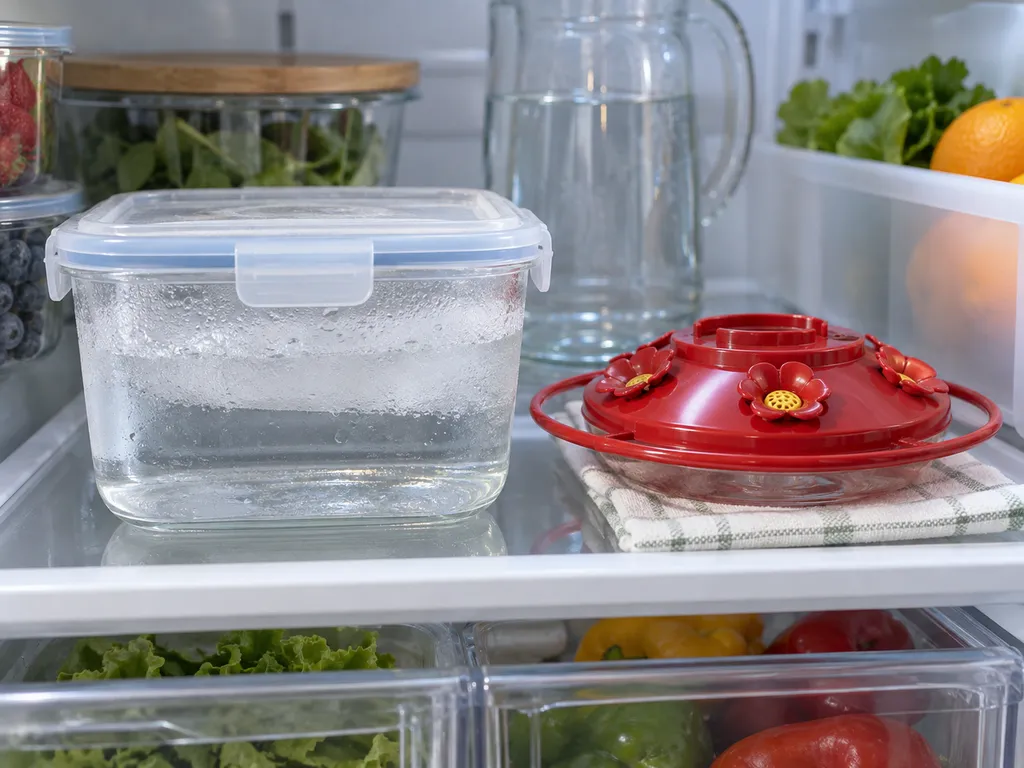
The refrigerator clock still matters. The Smithsonian’s refrigerator guidance is clear: extra nectar should not sit in the refrigerator for more than one week, and it should be discarded if mold appears: Smithsonian hummingbird nectar recipe. A good habit is to freeze nectar the same day you make it if you know you will not use it soon. Do not wait six days, freeze the last bit, and treat it as if it is newly made.
How To Thaw Frozen Hummingbird Nectar
Move the frozen nectar to the refrigerator the night before you expect to refill. Refrigerator thawing is slow, but it keeps the nectar cold while the ice melts. FDA food-storage guidance also favors refrigerator thawing for chilled items because room-temperature thawing can warm the outside long before the center is thawed: FDA cold storage guidance. Once thawed, swirl or stir the nectar so the sugar water is evenly mixed.
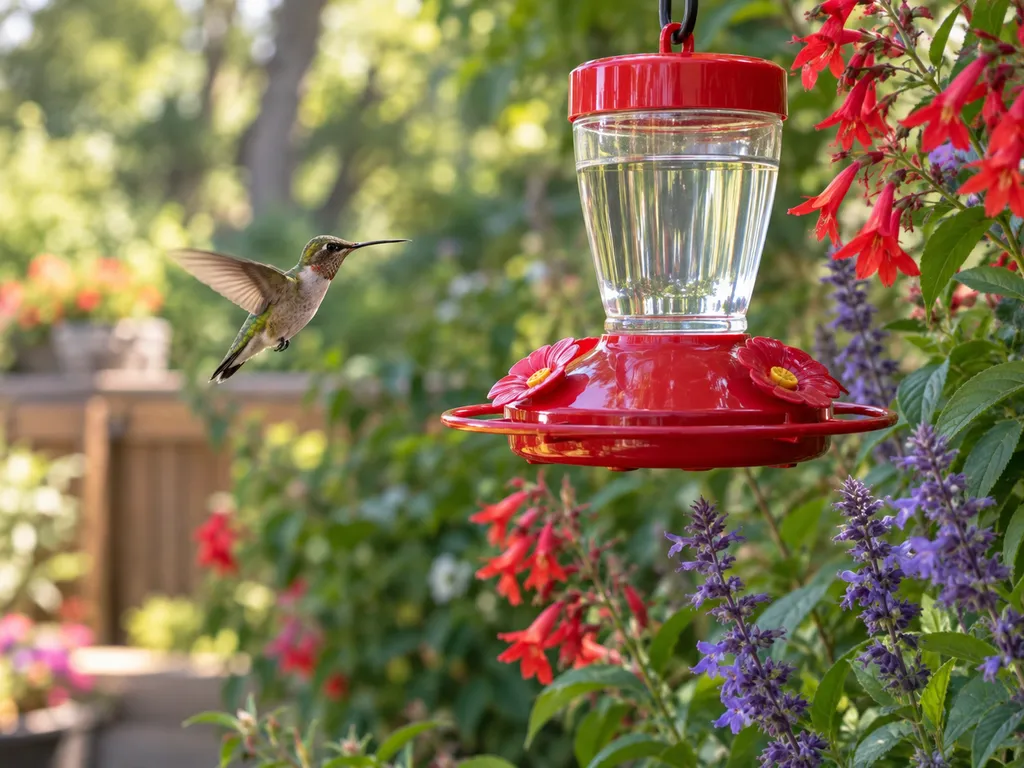
Before filling, let the nectar lose the refrigerator chill for a short time, especially if you are filling a feeder on a cool morning. Audubon notes that refrigerated extra solution can be brought up to room temperature before refilling: Audubon hummingbird feeding FAQs. Do not heat nectar in a dirty pan, do not boil it again in a feeder reservoir, and do not leave it sitting out for hours. Clean the feeder at every refill, fill with clear nectar, and return the unused thawed portion to the refrigerator only if it has stayed clean and cold.
When Freezing Is Worth It
Freezing is most useful for people who refill often but do not want to measure sugar and water every day. It can also help during travel preparation if someone else will be maintaining the feeder while you are away. Pre-portioned frozen nectar gives the helper a clear, low-guesswork supply: thaw one container, fill the clean feeder, and discard anything that is left too long.
Freezing is less useful if you have one small feeder and only occasional hummingbird visits. In that case, making a small batch and refrigerating the extra may be easier. The goal is not to stockpile months of nectar; the goal is to keep the birds’ sugar water fresh. If your feeder usually needs only a small amount, mix smaller batches so less nectar waits in storage.
Do Not Freeze Nectar With Add-Ins
Only freeze the standard 4:1 nectar made from plain white table sugar and water. Do not freeze mixes made with red dye, honey, brown sugar, raw sugar, powdered sugar, maple syrup, agave, fruit juice, sports drinks, artificial sweeteners, or additives. Smithsonian says to use refined white sugar and water, and Audubon also says not to use honey, artificial sweeteners, or red dye: Smithsonian guidance and Audubon hummingbird-friendly yard guidance.
Clear nectar is normal. Hummingbirds are attracted by flowers, feeder color, and reliable fresh nectar; the liquid itself does not need color. If you freeze nectar in an ice cube tray, it should still look like clear ice, not red cubes. If a stored batch is tinted because coloring was added, discard it and return to the plain 4:1 ratio.
Freezing Does Not Change Feeder Care
Once frozen nectar is thawed and poured into a feeder, treat it exactly like freshly made nectar. Hot weather shortens the safe outdoor window. A practical schedule is to change nectar about every 1 to 2 days above 90°F, every 2 to 3 days in the 80s°F, and every 4 to 6 days in cooler weather. Replace it immediately if it becomes cloudy, stringy, sour-smelling, or shows mold or black specks. Audubon advises cleaning every 2 to 3 days, daily under particularly hot conditions, and immediately if nectar appears cloudy: Audubon yard guidance.
Clean the feeder at every refill with hot water and a bottle brush, and use a small brush or pipe cleaner for the ports. This article stays focused on nectar storage, but the refill rule is worth repeating because frozen nectar is only as useful as the feeder it goes into. Fresh nectar in a dirty feeder can still spoil quickly.
A Simple Decision Test
If you are unsure whether to freeze, refrigerate, or discard a batch, ask three questions. Was it freshly made today? Is it clear and free of odor or specks? Can it be stored in a clean, sealed container? If the answer to all three is yes, freezing is reasonable. If any answer is no, discard the nectar and make a smaller fresh batch next time.
Also consider your yard’s actual use. If hummingbirds empty the feeder quickly, freezing may save time. If nectar usually sits outside until you pour most of it away, freezing larger batches will not solve the real problem. A smaller feeder fill, changed more often, is better than a full feeder that stays out too long.
Bottom Line
You can freeze hummingbird nectar, and it is a practical option for fresh extra nectar made with the 4:1 ratio. Use clean containers, leave room for expansion, label the date, thaw in the refrigerator, and use it promptly. Do not freeze nectar that has already been outside, and do not use freezing as a reason to stretch outdoor change schedules. For hummingbirds, freshness matters more than convenience.
The Bottom Line
Freezing hummingbird nectar is fine when the nectar is fresh, clear, and made with the standard 4:1 ratio of water to plain white table sugar. Freeze it in small, clean, sealed containers with headspace, thaw it in the refrigerator, and use it promptly after thawing. Keep refrigerator storage to a short window, clean the feeder at every refill, and discard nectar immediately if it looks cloudy, stringy, sour-smelling, moldy, or speckled. Never freeze or serve nectar made with red dye, honey, brown sugar, raw sugar, powdered sugar, artificial sweeteners, fruit juice, or other add-ins.
Frequently Asked Questions
Can I freeze hummingbird nectar in ice cube trays?
Yes, if the tray is clean and covered. Ice cube portions are handy for small feeders, but keep the cubes sealed in a freezer-safe bag or container after they freeze so they do not pick up freezer odors or debris.
Does freezing change the 4:1 ratio?
No. Freezing may separate ice crystals while the nectar thaws, but it does not mean you should change the recipe. Thaw in the refrigerator, then swirl or stir the nectar before filling the feeder.
Can I freeze nectar that has already been in a feeder?
No. Nectar that has been outside should be discarded when you clean and refill the feeder. Freeze only fresh extra nectar that has stayed clean and covered.
How long should thawed nectar stay in the refrigerator?
Use thawed nectar promptly. For simple home storage, do not let nectar drift beyond the short refrigerator window recommended for extra sugar water, and discard it sooner if it looks cloudy, smells sour, or shows any growth.
Should frozen nectar be warmed before serving?
Let it thaw in the refrigerator first, then let it sit briefly until it is closer to room temperature before filling. Do not leave it out for hours, and do not microwave nectar inside a feeder part.
Sources
This guide was researched using these sources.
- https://www.nationalzoo.si.edu/migratory-birds/hummingbird-nectar-recipe
- https://www.audubon.org/magazine/hummingbird-feeding-faqs
- https://www.audubon.org/community-science/hummingbirds/how-create-hummingbird-friendly-yard
- https://www.fda.gov/food/buy-store-serve-safe-food/refrigerator-thermometers-cold-facts-about-food-safety
- https://www.foodsafety.gov/food-safety-charts/cold-food-storage-charts