
 Pin it
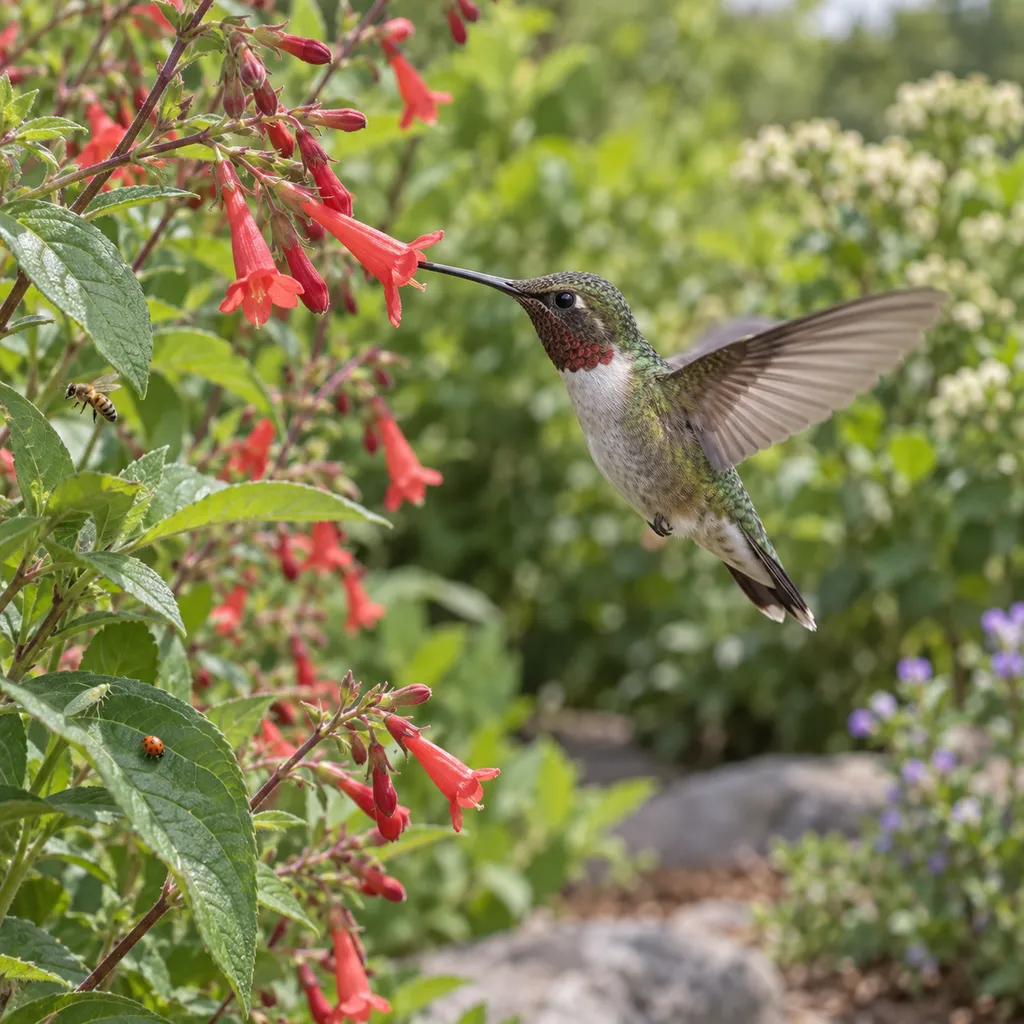
Hummingbirds eat flower nectar for fast energy, but nectar is only part of the answer. They also catch small insects, take spiders from webs, visit sap wells, and use backyard feeders when those feeders contain plain, clear 4:1 sugar-water nectar. Cornell Lab species accounts for Ruby-throated Hummingbirds describe a menu of red or orange tubular flowers, feeder nectar, tree sap, flying insects, spiders, caterpillars and aphids documented by the Cornell Lab of Ornithology. A good yard therefore offers more than a feeder: it offers blooming native plants, cover, clean water nearby, and enough insect life for birds to hunt naturally.
The Short Answer: Nectar Plus Tiny Prey
If you watch a hummingbird at a flower or feeder, it can look as if sugar is the whole story. In reality, hummingbirds use sugary liquids as high-speed fuel and small animals as body-building food. A practical way to think about their diet is this:
- Flower nectar: the main visible energy source, usually taken from tubular blooms.
- Insects and spiders: essential prey that provides protein and fats, especially for nesting females and growing nestlings.
- Tree sap: an occasional substitute or supplement, often taken at sapsucker wells along with insects attracted to the sap.
- Supplemental nectar: plain white table sugar mixed with water at the standard 4:1 ratio, served clear and changed often.
- Pollen: mostly carried from flower to flower during feeding rather than deliberately eaten as a staple.
Why Nectar Matters, But Is Not the Whole Meal
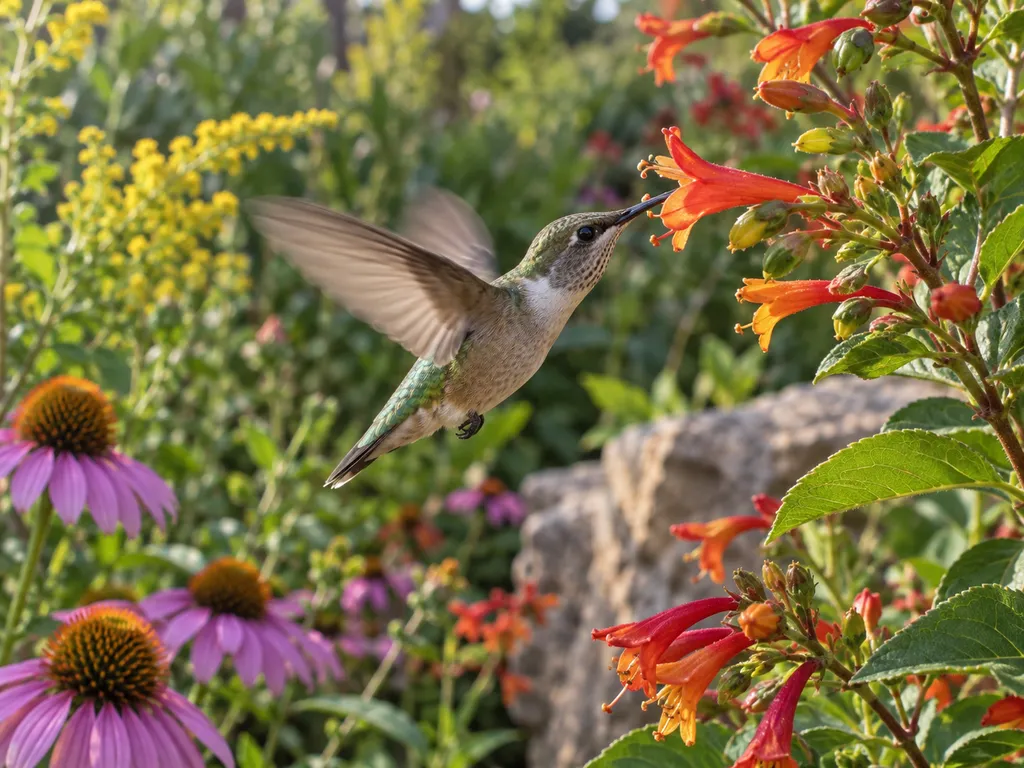
Nectar is valuable because hummingbirds burn energy rapidly while hovering, chasing rivals and migrating. Flowers offer a lightweight, easy-to-digest sugar source that can be taken in repeated small visits. That explains the familiar pattern of a bird returning to the same patch of bee balm, cardinal flower, salvia, coral honeysuckle or columbine throughout the day. The National Wildlife Federation notes that red, tube-shaped native flowers are especially useful because they serve as nectar sources and also support the insects hummingbirds eat in hummingbird-friendly gardens.
Backyard sugar water is not a complete food, but it can stand in for flower nectar as an energy source. The safe standard is the 4:1 ratio: 1 part plain white table sugar to 4 parts water. The Smithsonian National Zoo says refined white sugar is the proper sugar, tap water can be used, boiling is not required if the sugar fully dissolves, and extra nectar should be kept in the refrigerator for no more than one week in its hummingbird nectar guidance. The liquid should be clear, never red.
Insects and Spiders Supply What Sugar Cannot
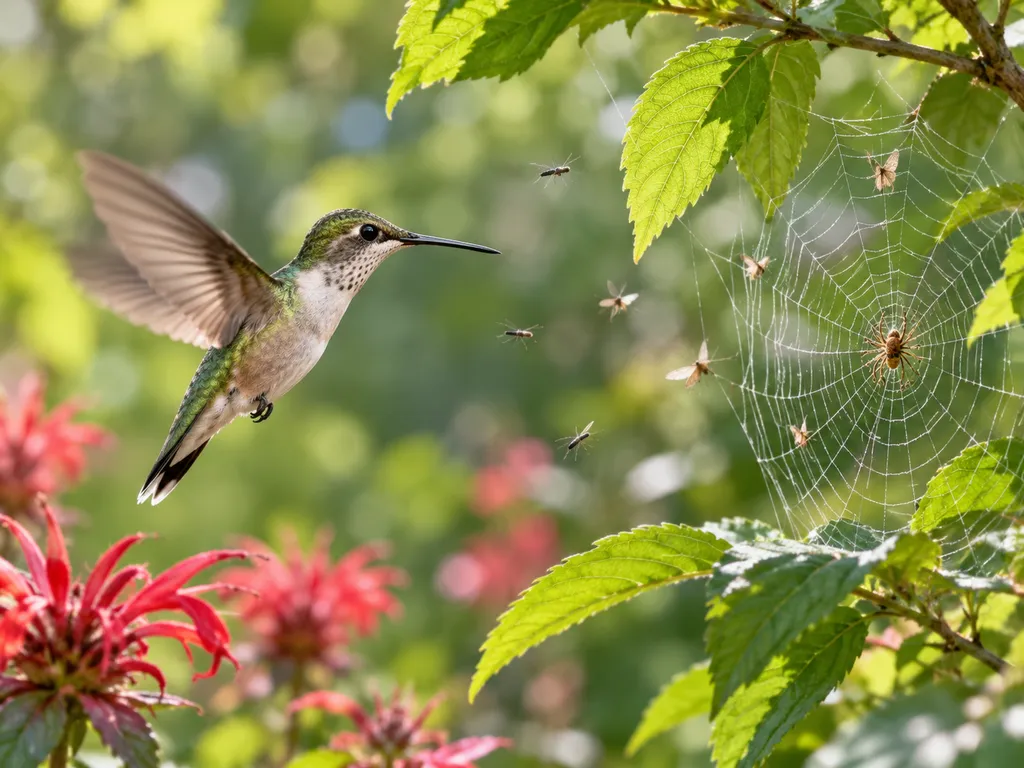
The part people miss most often is the hunting. Hummingbirds catch insects in midair, pick tiny prey from leaves, remove insects from spider webs, and sometimes take the spider too. Cornell Lab describes Ruby-throated Hummingbirds catching mosquitoes, gnats, fruit flies, small bees, spiders, caterpillars and aphids in its life-history account. Anna's Hummingbirds are also reported taking insects from understory leaves, streambanks, flowers, crevices and spider webs, then supplementing with sap from sapsucker holes according to Cornell Lab.
This is why a hummingbird yard should not be treated like a sterile display. A few aphids on native plants, tiny flies above a damp corner, small spiders in shrubs and leaf edges with insect activity all become part of the food web. Cornell's Living Bird article on the real diet of hummingbirds summarizes observations and stomach-content studies showing that arthropods are a regular, important part of hummingbird feeding, not a rare side habit as reviewed by All About Birds. Avoiding broad insecticide use around hummingbird plants helps preserve this natural prey supply.
Tree Sap and Sapsucker Wells
Tree sap is another food source, although it is not what most people see first. Sapsuckers drill rows of shallow holes in trees, and those wells can ooze sap. Hummingbirds may visit the wells for sap and for small insects attracted to the sticky flow. Cornell's Broad-tailed Hummingbird account says the species sometimes uses sap as a nectar substitute by visiting sap wells made by Red-naped Sapsuckers in its food notes. This helps explain why trees and shrubs matter even on a site about food: they are not just perches. They are part of the feeding landscape.
What Backyard Feeders Can and Cannot Provide
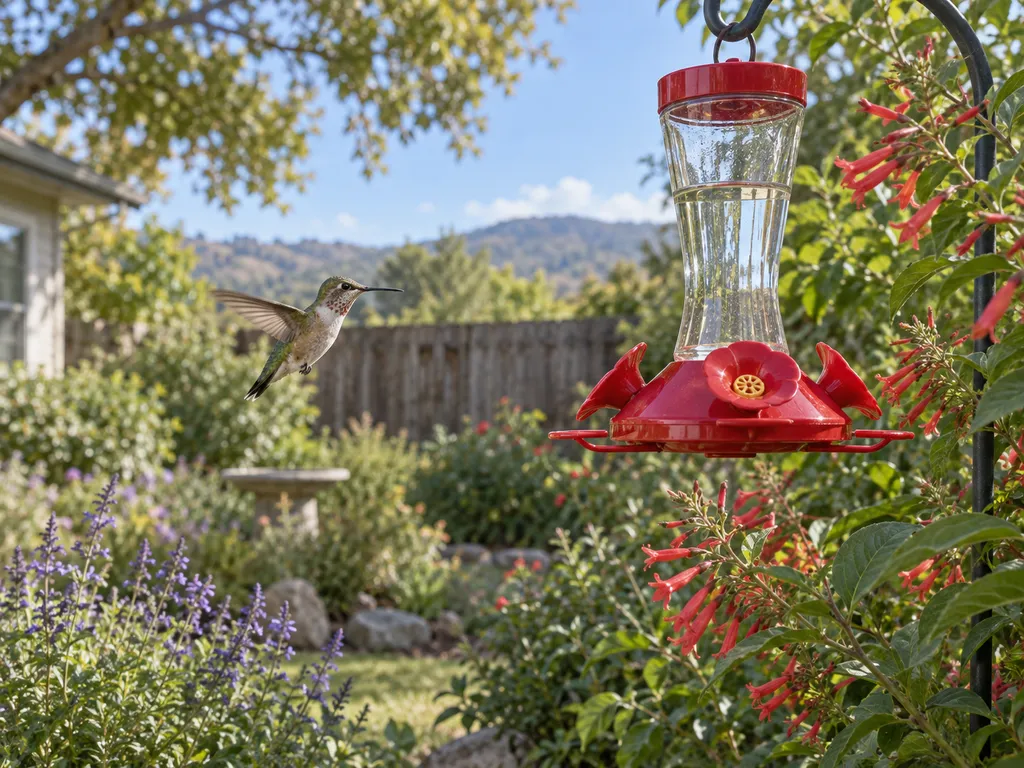
A feeder can provide quick energy when flowers are scarce, during migration, or while birds are defending a familiar feeding route. It cannot provide the whole diet. Use only the 4:1 ratio with plain white table sugar and water. The U.S. Fish and Wildlife Service advises using table sugar and water only, avoiding honey, red dye and other additives because natural nectar is clear and additives are not needed in its backyard bird feeding tips. Do not use honey, brown sugar, raw sugar, turbinado sugar, powdered sugar, maple syrup, agave, fruit juice, sports drinks, artificial sweeteners, vitamins or protein additives.
Freshness matters because sugar water spoils. In hot weather, change nectar more often: about every 1-2 days above 90 degrees F, every 2-3 days in the 80s, and every 4-6 days in cooler weather. Replace it immediately if it turns cloudy or stringy, smells sour, or shows mold or black specks. Clean the feeder at every refill with hot water and a bottle brush, and clean the ports with a small brush or pipe cleaner. A clean feeder is simply a delivery tool for clear energy food; it is not a replacement for flowers, insects, shrubs and trees.
Flowers That Feed Birds and Build a Food Web
The best hummingbird planting is regional and seasonal. Choose native plants that bloom at different times so birds find nectar from spring arrival through late-season migration. Focus on tubular red, orange, pink or purple blooms, then add shrubs and trees that shelter insect life. Useful choices often include bee balm, cardinal flower, coral honeysuckle, trumpet vine, columbine, penstemon, salvia, fuchsia, scarlet gilia and regional native currants. Native plants matter because they can feed the bird directly with nectar and indirectly by supporting caterpillars, small flies, aphids and other prey.
Good planting also changes how you judge a yard. A perfect hummingbird garden is not necessarily the tidiest one. It may include layered growth, a few seedheads, some uncut stems, leaf litter under shrubs, and small spiders in quiet corners. These features support the small creatures hummingbirds hunt. Keep flowers close enough to cover that birds can perch and watch their feeding area, but avoid putting food sources where cats can hide. Hummingbirds do not use birdhouses; the National Wildlife Federation notes that they nest on sheltered branches in trees and shrubs, not in houses in its habitat guidance.
How the Menu Changes Through the Year
Spring can be a difficult time because birds may arrive before peak bloom. Early native flowers, flowering shrubs and sap wells can help bridge the gap, and a clean feeder with clear 4:1 nectar may add a useful energy source. As nesting begins, insects and spiders become especially important. Female hummingbirds do the nest work and feed the young, so a yard with prey-rich shrubs and pesticide-free native plants is doing more than offering color.
In summer, abundant flowers and insects usually create the most complete menu. In fall, late-blooming native plants and clean feeders can help migrants refuel. Leaving a feeder up does not stop migration; Smithsonian notes that hummingbirds migrate by an internal clock influenced by changing day length, and keeping clean feeders up later can help stragglers in its feeder timing advice. A common practical guideline is to keep the 4:1 ratio in every season and avoid stronger mixes as a routine practice. The goal is steady, clean energy alongside natural foods, not a richer syrup that tries to override what flowers provide.
Common Mistakes to Avoid
The biggest mistake is thinking a feeder solves the whole food question. A feeder filled with clear 4:1 nectar can be helpful, but hummingbirds still need insects, spiders and natural bloom. Another mistake is improving nectar with ingredients that sound wholesome to people but are wrong for birds. Honey can ferment, raw and brown sugars contain molasses components, powdered sugar may contain starch, and artificial sweeteners provide no useful energy. Red dye is unnecessary because red feeder parts and flowers already attract hummingbirds.
A third mistake is removing every insect. Hummingbirds are not just flower visitors; they are tiny aerial hunters. If you remove all spiders, spray flowering shrubs broadly, or keep every planting too sparse to host prey, you reduce part of the menu. Finally, avoid treating hummingbirds like pets. Do not try to hand-feed, keep, raise, move a nest or handle a bird. If a bird appears injured or a nest seems threatened, the safe next step is to contact a licensed wildlife rehabilitator or appropriate wildlife agency rather than improvising care.
The Practical Takeaway
So, what do hummingbirds eat? They eat nectar, small insects, spiders, occasional tree sap and safe supplemental 4:1 sugar water. The best backyard support combines those needs: clear homemade nectar in a clean feeder, native tubular flowers, shrubs and trees, no red dye or sweetener substitutes, and enough unsprayed habitat for small prey. If your yard provides both fast energy and natural hunting opportunities, it comes much closer to the real hummingbird diet than a feeder alone ever can.
The Bottom Line
Hummingbirds are nectar feeders and insect hunters. Flowers and feeders provide fast sugar energy, while insects and spiders supply the prey they need for growth and nesting. A helpful yard uses the standard 4:1 nectar ratio, keeps feeders clean, skips dye and additives, plants native tubular flowers, and leaves enough healthy habitat for small insects and spiders.
Frequently Asked Questions
Do hummingbirds eat only nectar?
No. Nectar gives hummingbirds quick energy, but they also eat small insects and spiders. Those prey foods are especially important for nesting females and young birds.
Do hummingbirds eat mosquitoes?
Yes, mosquitoes can be part of the tiny insect prey hummingbirds catch, along with gnats, fruit flies, aphids, small bees and other small invertebrates.
Is sugar water the same as a hummingbird's whole diet?
No. Clear 4:1 sugar water can replace flower nectar as an energy source at a feeder, but it does not replace insects, spiders, sap wells, native plants or habitat.
Do hummingbirds eat from tree sap?
Sometimes. Several hummingbird species visit sap wells made by sapsuckers, taking sap and small insects attracted to it, especially when flower nectar is limited.
What should I plant to feed hummingbirds naturally?
Choose native tubular flowers with staggered bloom times, such as bee balm, cardinal flower, coral honeysuckle, columbine, penstemon, salvia and regional native currants or sages. Add shrubs and trees to support insects and perching cover.
Sources
This guide was researched using these sources.
- https://www.allaboutbirds.org/guide/Ruby-throated_Hummingbird/lifehistory
- https://www.allaboutbirds.org/guide/Annas_Hummingbird/lifehistory
- https://www.allaboutbirds.org/guide/Broad-tailed_Hummingbird/lifehistory
- https://www.allaboutbirds.org/news/not-all-sweetness-and-light-the-real-diet-of-hummingbirds
- https://www.nationalzoo.si.edu/migratory-birds/hummingbird-nectar-recipe
- https://www.nwf.org/Native-Plant-Habitats/Plant-Native/Habitat-Essentials/Hummingbird-Friendly-Gardening
- https://www.fws.gov/sites/default/files/documents/2025-01/01.29.2025-learn-more-about-bird-feeding-vyfwc.pdf