
 Pin it
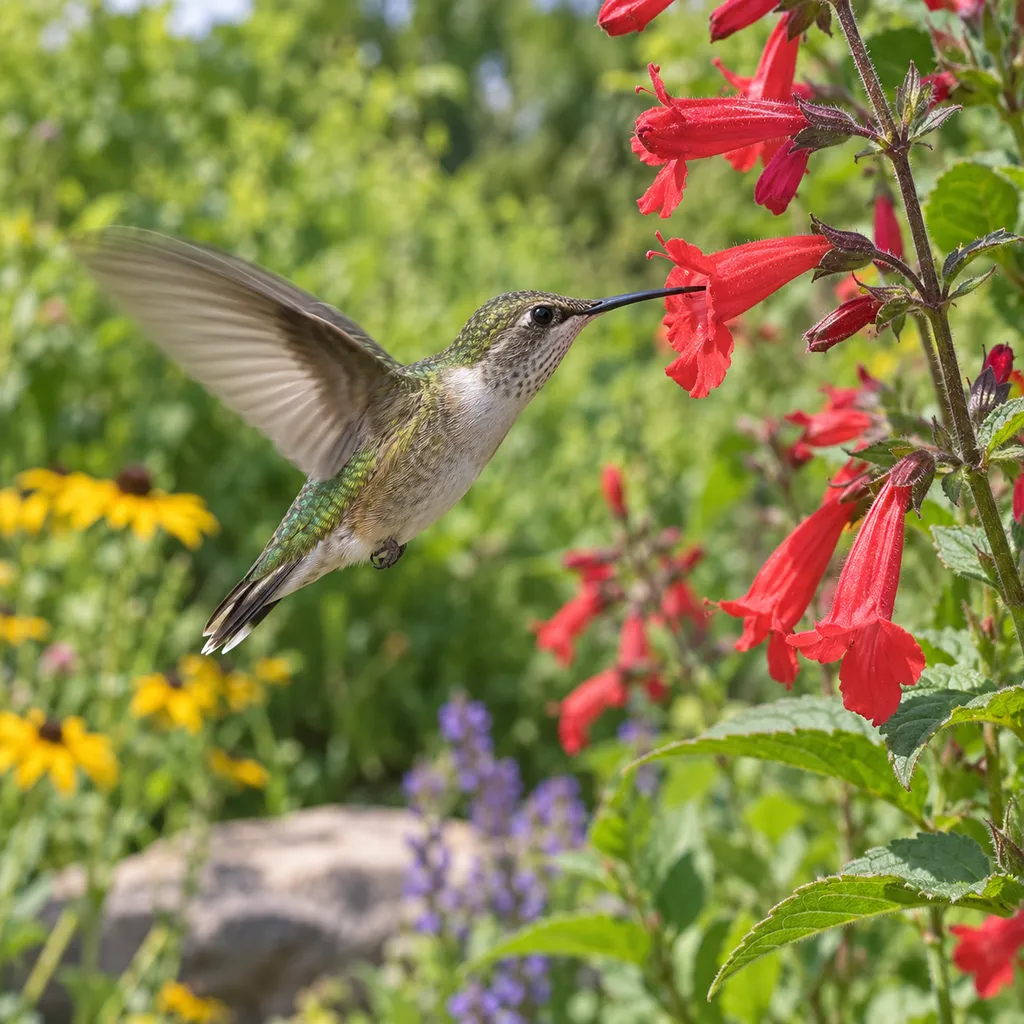
A hummingbird eats in tiny, frequent meals throughout daylight. For a Ruby-throated Hummingbird, which Cornell lists at about 2 to 6 grams, that means a daily intake measured in grams, not cups. The Smithsonian says Ruby-throated Hummingbirds may drink up to half their body weight in sugar water and nectar each day, and Audubon notes that hummingbirds may feed every 10 to 15 minutes while visiting 1,000 to 2,000 flowers in a day. The short answer is: they eat a lot for their size, but a single bird still consumes only small amounts at each stop.
The Practical Daily Answer
There is no single ounce amount that fits every hummingbird. Species size, weather, territory quality, breeding stage, migration, and the number of safe food sources all matter. A tiny Ruby-throated Hummingbird is not drinking a whole backyard feeder by itself in a day. Instead, it is taking many brief sips from flowers, sap wells, and feeders, plus catching small prey. Cornell gives the Ruby-throated Hummingbird's weight as 0.1 to 0.2 ounces, or 2 to 6 grams, which is why even a large daily intake looks small to us: Cornell Lab Ruby-throated Hummingbird measurements.
The most useful rule is relative, not absolute. Smithsonian's Ruby-throated Hummingbird fact sheet says these birds burn so much energy in flight that they drink up to half of their body weight in sugar water and nectar each day: Smithsonian National Zoo Ruby-throated Hummingbird. American Bird Conservancy gives a similar up-to-half-their-weight-in-sugar explanation for Ruby-throated Hummingbirds while also noting their use of insects and tree sap: American Bird Conservancy Ruby-throated Hummingbird. Other research and field summaries sometimes describe nectar volume as higher than body weight because liquid nectar contains water as well as sugar. That difference is why the best answer is a range, not a fixed teaspoon count.
Why They Need So Many Small Meals
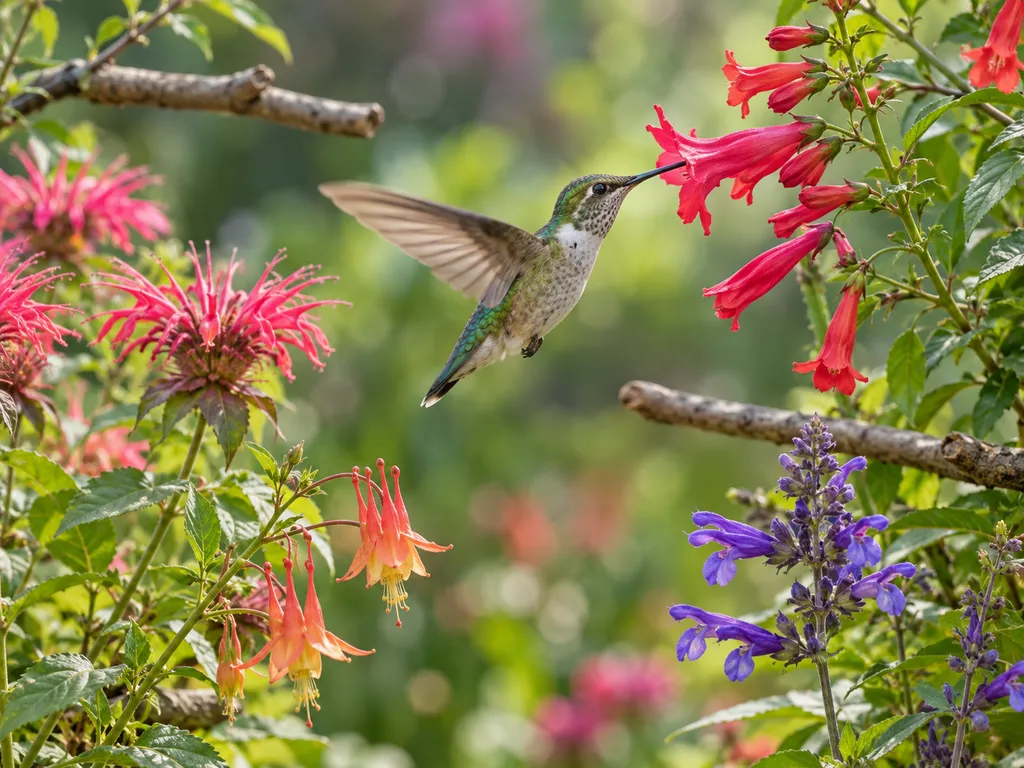
Hummingbirds are built around rapid flight. They hover, reverse, dart sideways, chase rivals, and commute among flowers. The Smithsonian notes that Ruby-throated Hummingbirds beat their wings rapidly in direct flight and even faster during dives; the same page explains that this demanding lifestyle pushes hummingbirds to locate dependable food sources: Smithsonian hummingbird biology overview. That does not mean they feed every second. A Nature paper on hummingbird feeding bouts reports that, despite high energy demands, hummingbirds may spend only about one-fifth of waking hours feeding and much of the remaining time perched: Nature paper on hummingbird feeding bout frequency.
That rhythm makes sense in a yard. A hummingbird often arrives, takes a few sips, backs away, perches nearby, watches its territory, and returns later. A bird defending a flower patch or feeder may spend energy chasing intruders, but it may also gain priority access to that food source. A bird that is passing through during migration may behave differently, using whatever flowers and safe feeders are available instead of defending one small patch for long.
Nectar Is Fuel, Not the Whole Menu
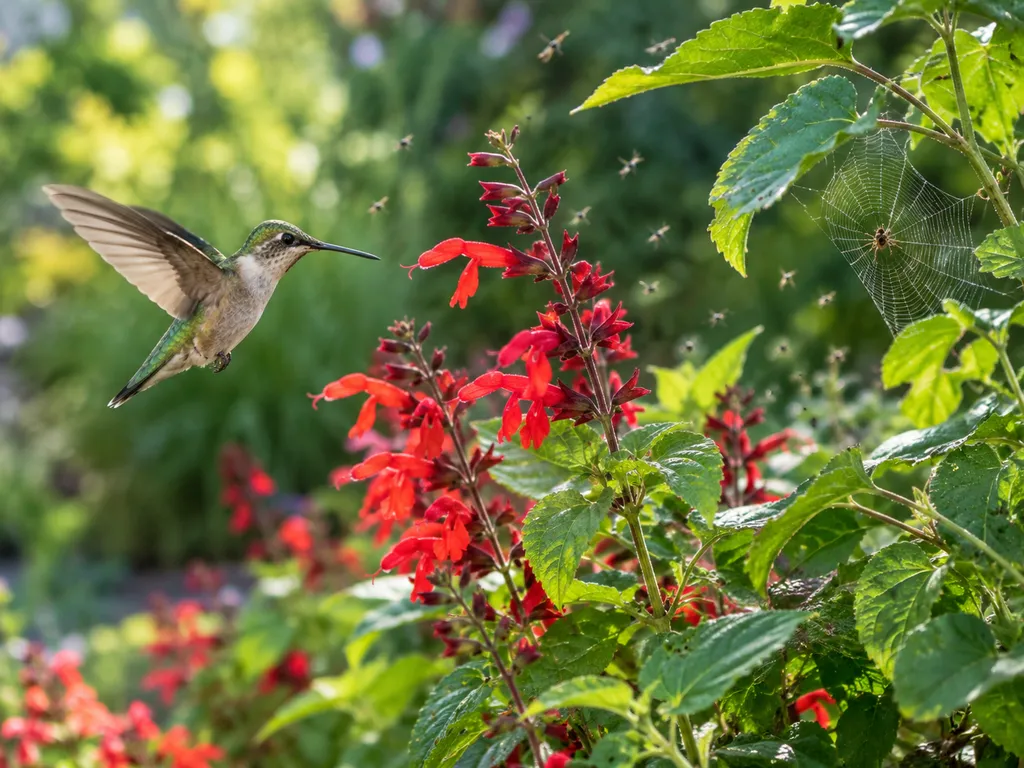
Nectar and properly mixed sugar water supply fast energy. They do not replace the small insects and spiders hummingbirds also need. Audubon explains that hummingbirds need protein from pollen and insects, snatch small insects from the air, and glean them from leaves and spider webs: Audubon hummingbird-friendly yard guidance. Cornell also notes that Ruby-throated Hummingbirds may pluck tiny insects from the air or spider webs. For a backyard reader, this means a feeder can help, but it should not be treated as the bird's whole food supply.
- Nectar and sugar water: quick energy for hovering, commuting, courtship displays, chases, and migration fueling.
- Small insects and spiders: important animal food, especially when females are nesting and feeding young.
- Tree sap: used by some hummingbirds when available, especially around sapsucker wells.
- Native tubular flowers: natural feeding stations that also support the small insects hummingbirds catch.
Why Your Feeder Level Is Not a Bird Counter
If two ounces disappear from a feeder, it does not mean one hummingbird drank two ounces. Several birds may be sharing the feeder, even if one dominant bird seems to own it. Warm weather can increase evaporation. A feeder can drip in wind or sun. Bees, wasps, ants, or other wildlife may take some of the liquid. Rain can dilute an open or poorly sealed feeder. Because of all that, the feeder level is a rough yard signal, not a precise measure of how much one bird ate.
A better way to read feeder use is by pattern. If nectar is dropping steadily and the feeder is clean, birds are probably using it. If the level is barely moving while flowers are abundant, the hummingbirds may be feeding mostly from blooms and insects. If the level drops unusually fast, check for leaks before assuming a sudden crowd of birds. A clean feeder filled with fresh 4:1 ratio nectar is simply one safe source among many, not a complete accounting system.
What Changes the Amount a Hummingbird Eats
Daily intake rises and falls with conditions. Cold nights can push birds to conserve energy through torpor, a low-energy nighttime state described by the Smithsonian. Breeding females need dependable food while building nests, incubating, and feeding young. Migrants may feed intensively before and during long travel. Flower abundance matters too: a yard with staggered native blooms gives birds more choices than a yard with one short bloom period.
Territory quality also affects what you see. A hummingbird guarding a rich patch of flowers may make short, frequent rounds and chase competitors. Another bird may use a route that includes many yards and wild patches, appearing at your feeder only briefly. Neither pattern proves the bird is eating too much or too little. It only shows that hummingbirds are balancing energy, safety, competition, and what is blooming nearby.
How to Support Their Daily Intake Safely
The safest backyard support is simple: grow nectar-rich tubular flowers, avoid pesticides where hummingbirds feed, and keep any feeder nectar plain and fresh. If you offer sugar water, use the standard 4:1 ratio: 4 parts water to 1 part plain white table sugar. Do not add red dye, honey, artificial sweeteners, fruit juice, or protein additives. Audubon also advises cleaning feeders regularly and immediately replacing cloudy nectar. On this food-focused site, the feeder detail is intentionally brief: clean the feeder at every refill so the food source stays fresh.
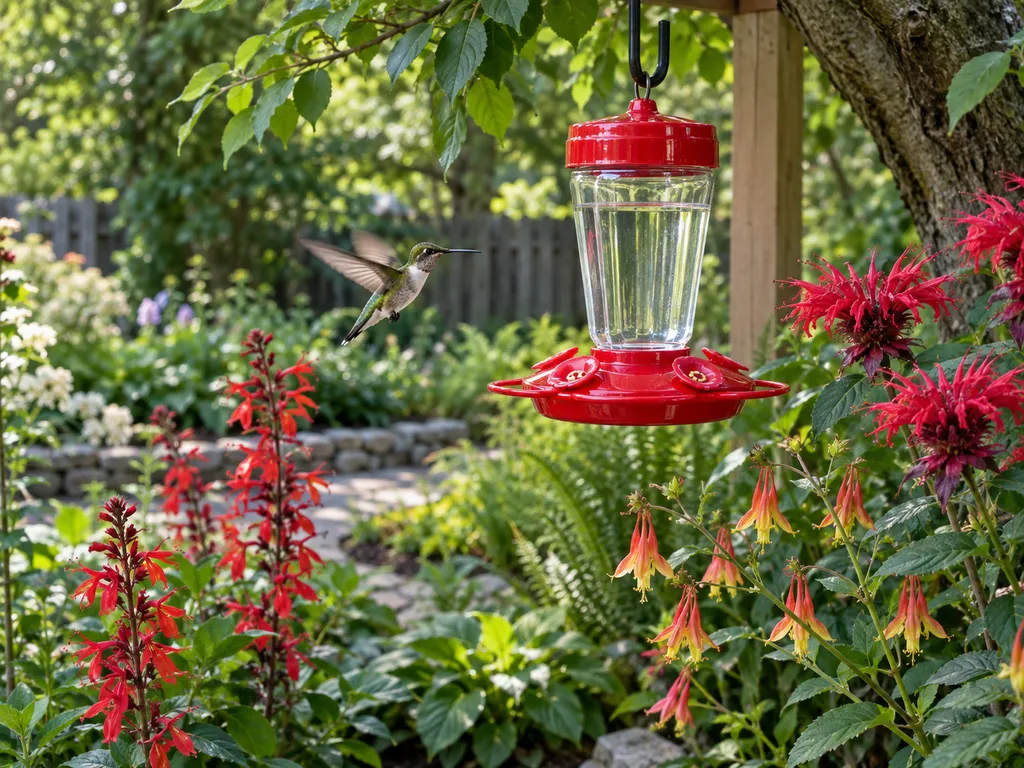
Flowers do more than offer nectar. Native plants support small insects and spiders, which are part of the bird's daily food. Good hummingbird flowers are usually tubular and red, orange, pink, or purple, such as bee balm, cardinal flower, salvia, coral honeysuckle, penstemon, columbine, trumpet vine, and fuchsia. A mix of bloom times matters more than one showy plant, because hummingbirds need food across the season.
A Simple Way to Estimate Backyard Demand
If you want a practical yard estimate, start with the number of birds you actually see at one time, then assume there are usually more visits than individuals. A 4-ounce feeder can serve many short visits because each sip is tiny. If nectar is gone every day during peak season and the feeder is not leaking, use a larger clean feeder or add another small feeder out of sight of the first. If nectar sits too long, use a smaller fill amount so you can replace it before it spoils.
Do not judge success by emptying a feeder. A yard full of native flowers may have hummingbirds that barely touch sugar water. That is a good outcome. The goal is not to make birds dependent on one feeder; it is to provide a reliable landscape with clear nectar sources, small prey, safe perches, and fresh supplemental nectar when used.
Bottom Line
Hummingbirds eat a great deal relative to their size, but the actual amount per bird is still tiny. A Ruby-throated Hummingbird weighs only a few grams, yet may take in about half its weight or more through nectar, sugar water, insects, spiders, and sometimes sap in a day. The visible behavior is the key: quick visits, frequent returns, bursts of chasing, and quiet perching between meals. Support that pace with flowers, small-insect habitat, and fresh 4:1 ratio nectar when you use a feeder.
The Bottom Line
Hummingbirds are extreme small-meal feeders. They may feed every 10 to 15 minutes during active periods, visit huge numbers of flowers, and still spend substantial time perched between feeding bouts. A feeder cannot tell you exactly how much one bird ate, because several birds, weather, leaks, and insects can change the level. Think in ranges: a hummingbird may take in about half its weight or more each day, with nectar and sugar water supplying fast energy and small insects and spiders supplying animal food. The best backyard support is a steady mix of native tubular flowers, fewer pesticides, fresh 4:1 ratio nectar if you offer it, and enough safe habitat that the bird is not depending on one source.
Frequently Asked Questions
How many times a day does a hummingbird eat?
During active daylight periods, hummingbirds may feed very frequently. Audubon gives a common field-friendly figure of feeding every 10 to 15 minutes and visiting 1,000 to 2,000 flowers per day, though the exact number varies with weather, flowers, territory, and season.
Can one hummingbird empty a feeder in a day?
Usually, an empty feeder means more than one factor is involved. Several hummingbirds, evaporation, dripping, insects, or other wildlife can all lower the level. A single bird takes tiny amounts at each visit, even though it eats a lot relative to its size.
Do hummingbirds eat only nectar?
No. Nectar and sugar water provide fast energy, but hummingbirds also eat small insects and spiders. Those foods are especially important around nesting because young birds are fed many small arthropods.
Should I make stronger nectar when hummingbirds seem hungry?
No. Keep homemade nectar at the standard 4:1 ratio: 4 parts water to 1 part plain white table sugar. Stronger mixes are not a routine fix for migration, cold weather, or heavy feeder use.
Why do hummingbirds perch so much if they need to eat so often?
Perching saves energy between short feeding trips. A hummingbird may take a quick sip, rest, watch its territory, chase a rival, and return later. Frequent eating does not mean nonstop drinking.
Sources
This guide was researched using these sources.
- https://nationalzoo.si.edu/animals/ruby-throated-hummingbird
- https://www.allaboutbirds.org/guide/Ruby-throated_Hummingbird/id
- https://www.audubon.org/community-science/hummingbirds/how-create-hummingbird-friendly-yard
- https://www.nature.com/articles/320062a0
- https://nationalzoo.si.edu/migratory-birds/hummingbirds
- https://abcbirds.org/birds/ruby-throated-humming