
 Pin it
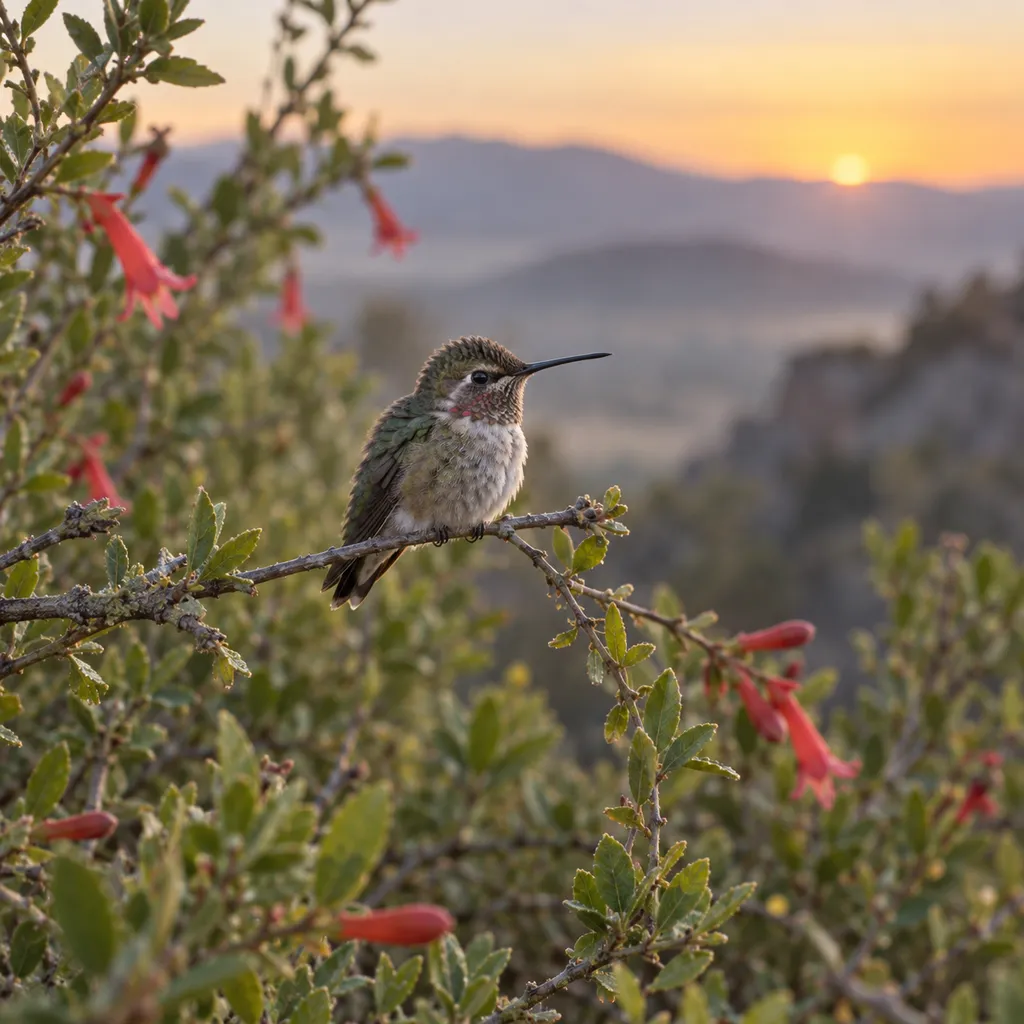
Hummingbird torpor is the overnight survival mode that helps these tiny birds get through cold or fuel-limited nights. In torpor, a hummingbird lets its temperature fall, slows breathing and circulation, and spends far less energy than it would while staying fully warm. Cornell Lab sources describe torpor as a deep daily energy-saving state rather than long seasonal hibernation, and Smithsonian explains that hummingbirds can use it when temperature and food conditions demand it Cornell Lab Bird Academy Smithsonian National Zoo. For backyard birders, the main takeaway is simple: torpor is usually normal, hidden, and best left undisturbed.
What torpor is
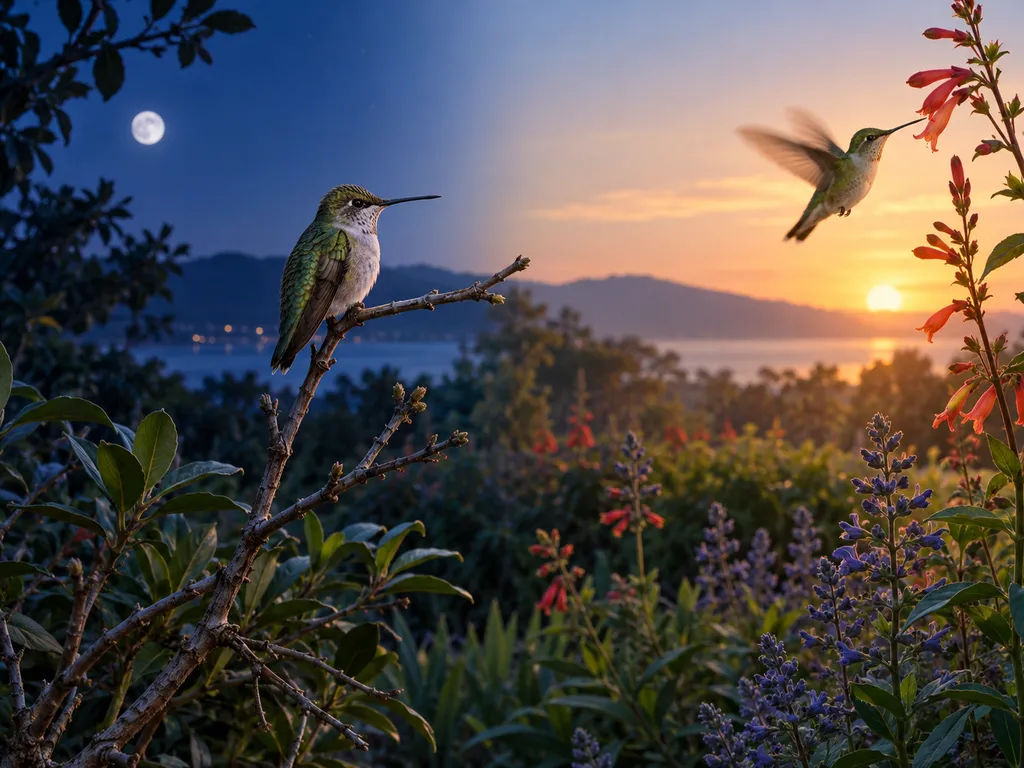
Torpor is not just a hummingbird taking a nap. It is a controlled drop in normal nighttime activity that reduces the energy cost of staying alive until morning. Audubon describes hummingbirds entering controlled hypothermia at night, with breathing, circulation, and temperature falling so the bird can save fuel Audubon. Smithsonian uses the useful comparison that if this kind of deep low-energy state lasted for long periods, people would call it hibernation; hummingbirds, however, can use daily torpor for a night and return to activity the next day Smithsonian National Zoo.
The reason torpor matters is scale. A hummingbird has very little mass, loses heat quickly, and spends daylight on demanding work: hovering, defending flower patches, visiting nectar sources, catching small insects, and migrating for some species. That leaves little margin for a long night. A bird that has fed well may stay warmer for much of the night. A bird facing cold air, long darkness, migration demands, or thin energy reserves may benefit from switching into torpor.
- It is temporary: most backyard-related torpor is a nightly state, not a winter-long shutdown.
- It is physical: the bird is genuinely colder and less responsive, not merely calm.
- It is flexible: research shows torpor use can vary by species, season, food reserves, and weather.
- It is hidden: many birds use sheltered night perches, so people usually do not see the whole process.
What changes inside the bird
During ordinary active hours, a hummingbird maintains a high operating temperature for flight and foraging. In torpor, it relaxes that costly control. Cornell Lab researchers explain that hummingbirds can shift from keeping a high, stable temperature to letting outside conditions strongly influence how cool they become Cornell Lab Bird Academy. That is why a torpid hummingbird may look puffed up, still, and cold instead of alert and ready to fly.
The change can be dramatic. Cornell's Broad-tailed Hummingbird profile says this mountain species enters torpor on cold nights and may maintain about 54 degrees F when surrounding temperatures fall below 44 degrees F All About Birds. Cornell also reports research on high-Andean hummingbirds in which a Black Metaltail reached 3.3 degrees C, or 38 degrees F, the lowest bird temperature recorded in that study summary All About Birds. Those numbers do not mean every backyard hummingbird gets that cold; they show how wide the physiological range can be.
Why torpor is not used the same way every night
A helpful way to think about torpor is as an energy budget decision, not a fixed bedtime routine. A 2024 open-access study on hummingbird torpor modeling reviewed evidence that torpor can act differently across seasons: during breeding periods it may be used more like an emergency reserve when fat stores are low, while approaching migration it may become part of conserving and managing stored fuel PMC. The study also discusses why torpor duration varies; a bird may enter for only part of the night because warming back up also has a cost.
This variability explains why backyard observations can seem inconsistent. One cold evening may produce no obvious sign. Another morning may bring a slow, quiet bird near a perch or feeder. A mild night after a full day of feeding may require little or no torpor. A long, cold night after limited feeding opportunities may make torpor more useful. The bird is balancing the savings of cooling down against the cost and vulnerability of rewarming later.
What a torpid hummingbird may look like
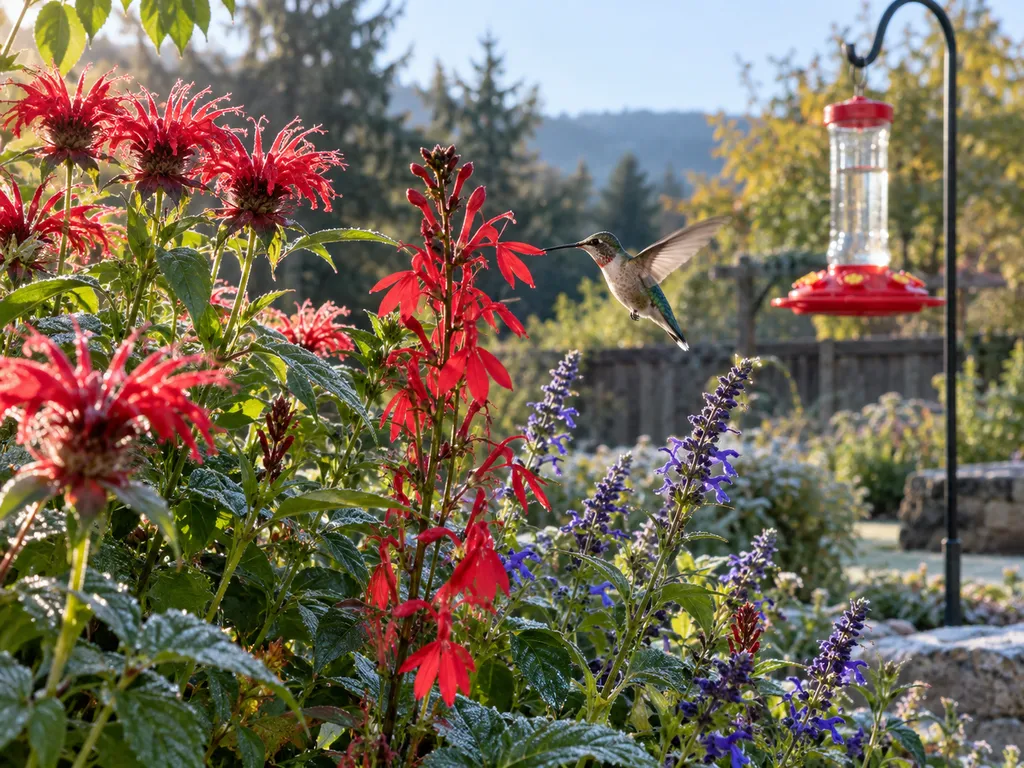
A torpid hummingbird is often cold, still, puffed, and slow to respond. Cornell's Bird Academy discussion notes that a bird in deep torpor may remain gripping a perch even while breathing very slowly, and that brief stillness at a feeder for a few minutes is not the same as true torpor Cornell Lab Bird Academy. In other words, a hummingbird that pauses, guards, or rests during the day is usually doing ordinary hummingbird behavior, not entering the deep overnight state.
Morning recovery is part of the process. Researchers in the Cornell Q&A described arousal times that can vary from minutes to much longer depending on conditions and individuals Cornell Lab Bird Academy. Rewarming is active work, so the first feeding after dawn can matter. This is one reason dependable natural nectar, insects, and properly mixed clear sugar water can help birds that are already using a yard, especially during cold snaps or migration stopovers.
Cold weather does not automatically mean danger
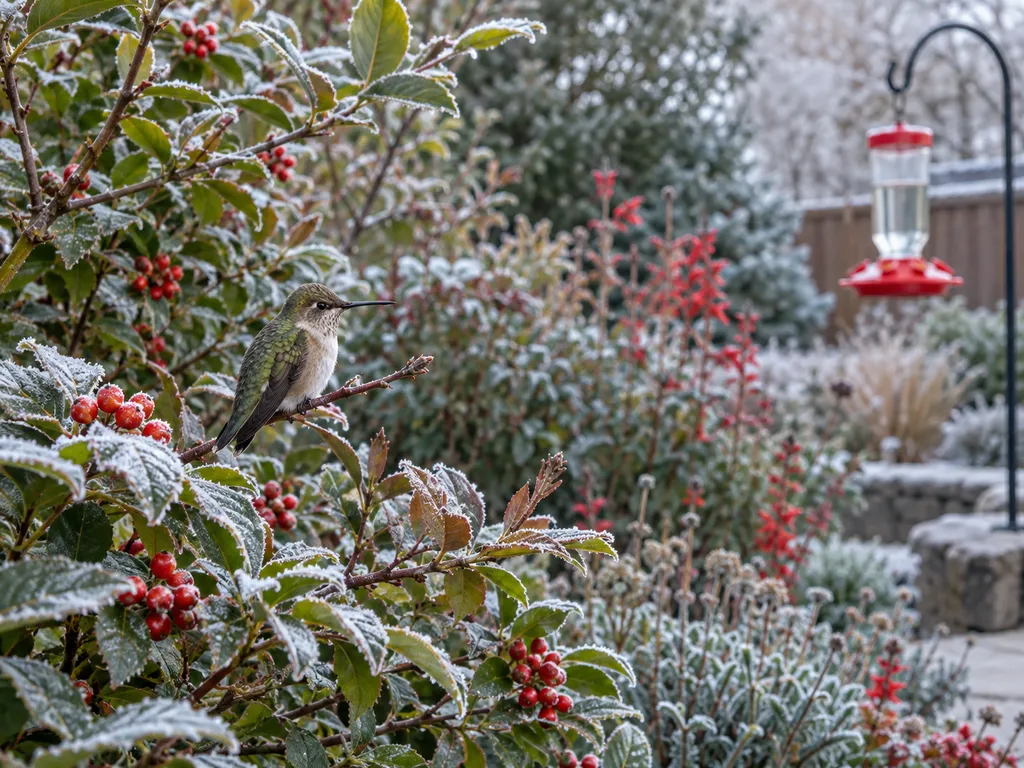
Seeing a hummingbird in winter or chilly weather can feel alarming, but cold alone is not proof that something is wrong. Cornell notes that some Rufous, Allen's, Anna's, and other hummingbirds have wintered farther north, and that Anna's Hummingbird regularly winters as far north as British Columbia All About Birds. Hummingbirds can be surprisingly cold tolerant when reliable food remains available.
That said, torpor is not a reason to interfere. A perched, motionless hummingbird is not inviting rescue, petting, warming in the hand, or indoor care. Hummingbirds are protected wild birds, and handling can create more risk than help. If a bird is clearly injured, trapped, caught, or unable to leave an unsafe location, contact a licensed wildlife rehabilitator or the appropriate state wildlife agency for instructions. Otherwise, the safest help is usually habitat support and distance.
How to support hummingbirds around torpor
The best backyard support is not trying to manage torpor directly. It is making sure hummingbirds have safe food sources before and after the night. On this food-focused site, that means planting tubular nectar flowers, avoiding insecticides where possible so small insects remain available, and using clear homemade nectar correctly when you offer a feeder. The standard nectar is the 4:1 ratio: 1 part plain white table sugar to 4 parts water. Do not add red dye, honey, brown sugar, raw sugar, artificial sweeteners, fruit juice, or vitamin additives. Clean the feeder at every refill and replace nectar promptly when it spoils.
In cool weather, do not make a stronger nectar mix as a cold-night strategy. Hummingbirds are adapted to manage energy in several ways, including feeding, perching, and torpor. The standard 4:1 ratio remains the reliable rule. If you feed during a cold spell, focus on freshness, access after dawn, and a safe location. A feeder is only one part of the picture; Smithsonian notes that hummingbirds also use small insects, sap wells in some settings, and flower resources across changing seasons Smithsonian National Zoo.
Torpor, sleep, and hibernation
Torpor overlaps with sleep because it often happens at night, but it is more than sleep. It overlaps with hibernation because both save energy by lowering normal activity, but hummingbird torpor usually happens on a daily scale. That distinction helps clear up two common misunderstandings. First, a hummingbird can sleep without spending the whole night in torpor. Second, a hummingbird can use torpor and still be ready to fly, feed, and defend a perch later that morning.
The distinction also helps explain why torpor is so hard for casual observers to confirm. You may see a bird fluffed on a branch, but without temperature or metabolic data you cannot know the depth of the state. Researchers use tools such as thermal imaging and respirometry to study these hidden changes without relying only on appearance Cornell Lab Bird Academy. For a backyard reader, the practical answer is to respect the behavior, keep safe food available when you choose to feed, and avoid handling.
What torpor teaches us about hummingbirds
Torpor is one of the clearest examples of how hummingbirds live close to the edge without being fragile in the ordinary sense. They are demanding animals: fast, territorial, mobile, and dependent on frequent fuel. They are also remarkably flexible. They can perch through long nights, cool down when energy savings matter, and return to daylight activity with astonishing speed. That flexibility is why a bird that looks impossibly small on a cold morning may still be following a normal survival pattern.
The Bottom Line
Hummingbird torpor is a natural overnight energy-saving state, not a sign that every still hummingbird needs rescue. It lets a bird lower its operating demands when nights are cold, food has been limited, or seasonal energy management matters. Backyard support is simple: provide safe flowers and insect-friendly habitat, use only clear 4:1 ratio nectar if feeding, keep it fresh, and leave torpid birds undisturbed unless a licensed wildlife rehabilitator advises otherwise.
Frequently Asked Questions
Do hummingbirds hibernate?
Hummingbirds usually use daily torpor, not long winter hibernation. Torpor can last through part or much of a night, then the bird warms and resumes normal activity when conditions allow.
Should I wake a hummingbird that looks frozen?
No. A torpid hummingbird may look very still and cold, but waking or handling it can waste the energy it is trying to conserve. If the bird is injured, trapped, or in immediate danger, contact a licensed wildlife rehabilitator.
Does torpor happen only in freezing weather?
No. Cold can make torpor more useful, but food reserves, season, night length, and individual condition also matter. Some hummingbirds may use torpor on cool or energy-limited nights, while others may not need it every night.
Can feeders help after a torpor night?
A clean feeder with fresh clear 4:1 ratio nectar can provide quick energy after dawn, but it should not replace flowers, insects, and natural habitat. Keep the standard ratio and clean the feeder at every refill.
Is a quiet hummingbird at a feeder in torpor?
Usually not. Brief stillness, guarding, or resting near a feeder is common behavior. True torpor is deeper, colder, and less responsive, and it is most often associated with overnight rest on a perch.
Sources
This guide was researched using these sources.
- https://academy.allaboutbirds.org/live-event/how-high-energy-hummingbirds-survive-a-qa-with-the-experts
- https://nationalzoo.si.edu/migratory-birds/hummingbirds
- https://www.audubon.org/magazine/where-do-hummingbirds-get-all-energy
- https://www.allaboutbirds.org/guide/Broad-tailed_Hummingbird/overview
- https://www.allaboutbirds.org/news/the-coolest-hummingbird-as-measured-by-an-actual-thermometer
- https://pmc.ncbi.nlm.nih.gov/articles/PMC11732420
- https://www.allaboutbirds.org/news/theres-a-hummingbird-at-my-feeder-in-the-dead-of-winter-will-he-be-okay