 Pin it
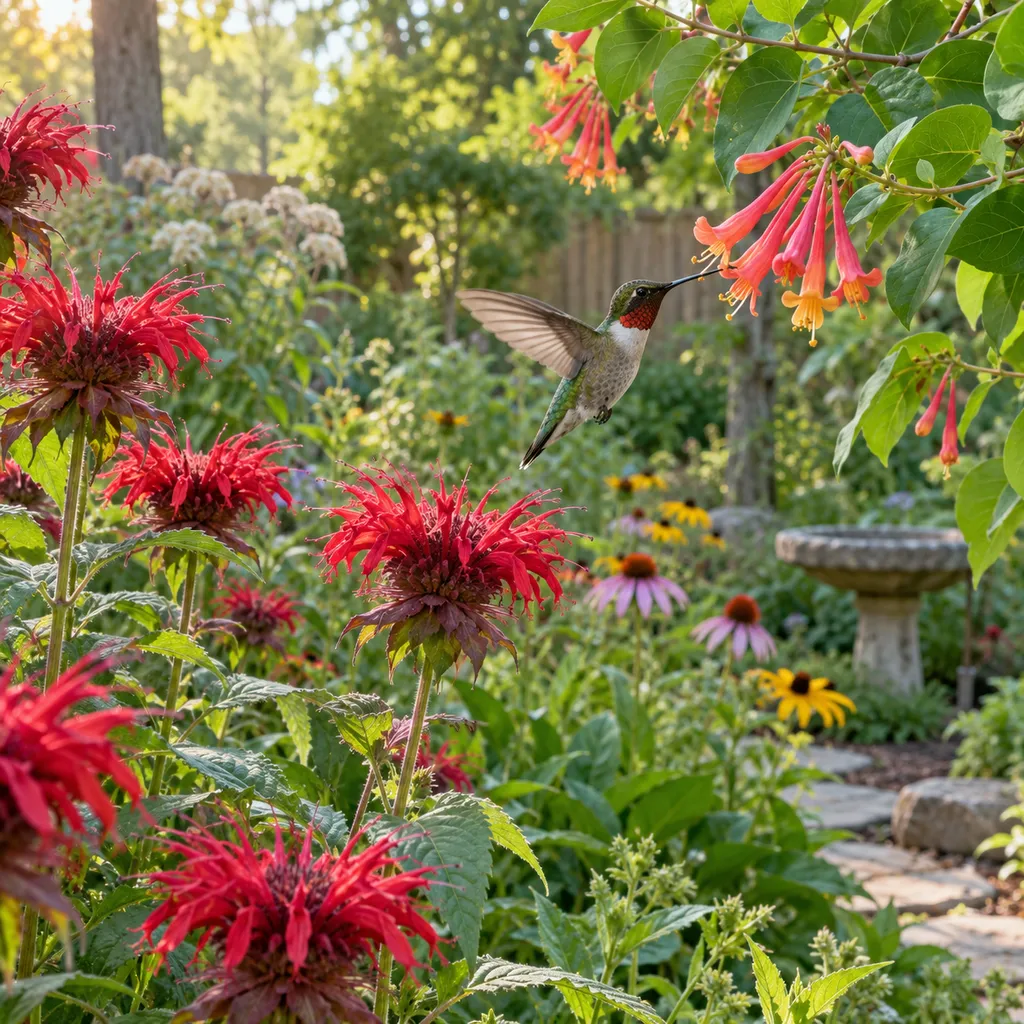
The best plants for hummingbirds are native nectar plants chosen for your region, arranged so something is blooming from spring through fall. Start with tubular flowers in bright red, orange, pink, or purple, then add native shrubs, vines, and a few insect-friendly plants around them. Hummingbirds visit flowers for nectar, but they also take tiny insects, spiders, and sometimes tree sap, so a good hummingbird garden is more than a row of showy blooms. Pollinator Partnership says native nectar plants are the best way to support hummingbirds and other pollinators in your area, and Cornell notes that flower gardens and feeders both bring Ruby-throated Hummingbirds into yards when conditions are right (Pollinator Partnership; Cornell Lab of Ornithology).
Native First Is the Best Rule
“Hummingbird plants” can mean almost any flower a hummingbird samples, but the most useful definition is narrower: plants that provide dependable nectar in forms hummingbirds can use, while also fitting the local climate and supporting the surrounding web of insects. Native plants usually do this better than random ornamentals because they are adapted to local soils, weather patterns, and pollinators. University of Minnesota Extension explains that native plants evolved in their regions over long periods and can support wildlife while often needing less water, fertilizer, and pesticide once established (University of Minnesota Extension).
That does not mean every non-native flower is useless, or that every native plant is automatically a top hummingbird plant. A native oak, grass, or goldenrod may be wonderful habitat, but it may not be the flower a hummingbird hovers at. The practical approach is to build the hummingbird layer with native nectar flowers first, then use well-behaved annuals or tender perennials only as gap fillers. In cold regions, a pot of red salvia or fuchsia can help bridge a sparse week, but the permanent backbone should be regionally appropriate native species.
Think Like a Hummingbird, Not Like a Catalog
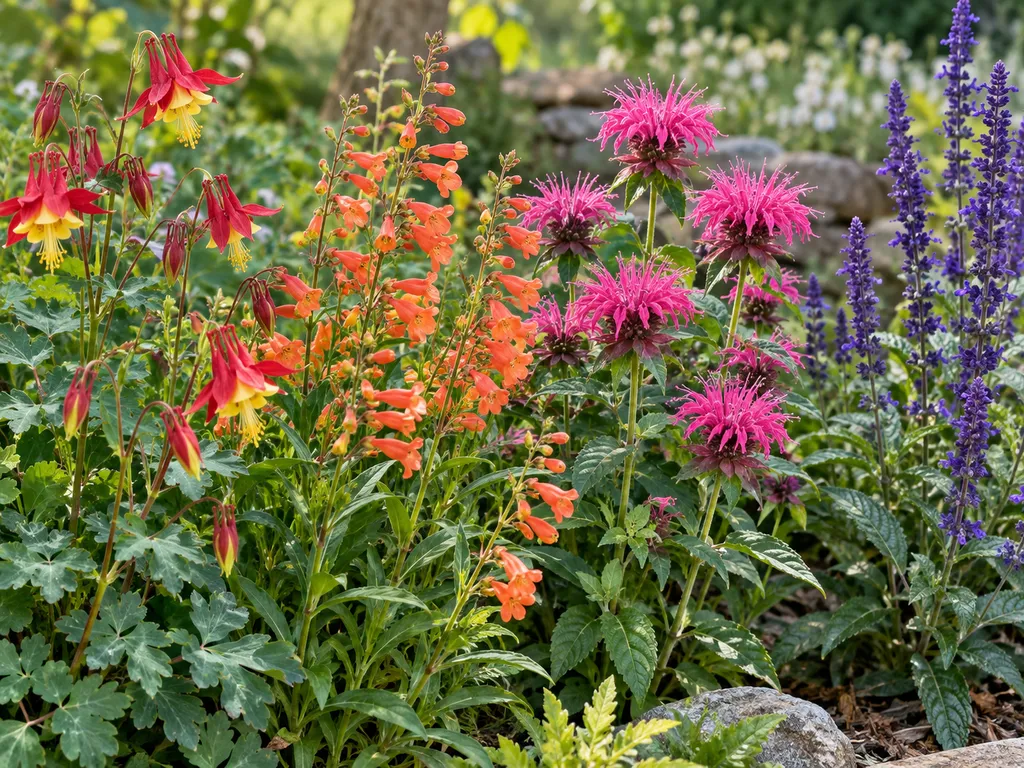
Hummingbirds are visual foragers. Cornell notes that Ruby-throated Hummingbirds often prefer red or orange flowers, and the broader pattern across hummingbird gardening is easy to see: long, tubular blooms put nectar where a long bill and tongue can reach it. The flower does not have to be red, and hummingbirds may visit many colors, but red, orange, pink, and purple tubes are strong starting signals. Examples include bee balm, cardinal flower, native columbine, penstemon, coral honeysuckle, trumpet-shaped salvias, fire pink, and red buckeye where those plants are native or well adapted.
The Core Plant Traits That Matter
A plant earns space in a hummingbird garden when it provides accessible nectar, blooms at a useful time, grows well in the site you actually have, and does not create new problems. A beautiful flower that needs constant rescue is less helpful than a slightly less dramatic native that blooms reliably every year. The Eastern United States hummingbird habitat guide from Pollinator Partnership lists native nectar plants by ecoregion and emphasizes locally adapted plant material rather than generic seed or plants from far away (Pollinator Partnership Eastern U.S. guide).
- Flower shape: Choose tubular or trumpet-shaped flowers that let a hovering hummingbird reach nectar efficiently.
- Color signal: Use plenty of red, orange, coral, pink, and purple, while remembering that color alone is not enough.
- Bloom sequence: Plan early, midseason, and late flowers so migrants and nesting birds find nectar at different points in the year.
- Local fit: Match plants to your region, light, soil, winter cold, summer heat, and moisture.
- Insect value: Include plants that support small insects and spiders, because hummingbirds need more than nectar.
- Low chemical pressure: Favor plants that can thrive without routine insecticide use.
A Strong Native-First Plant Palette
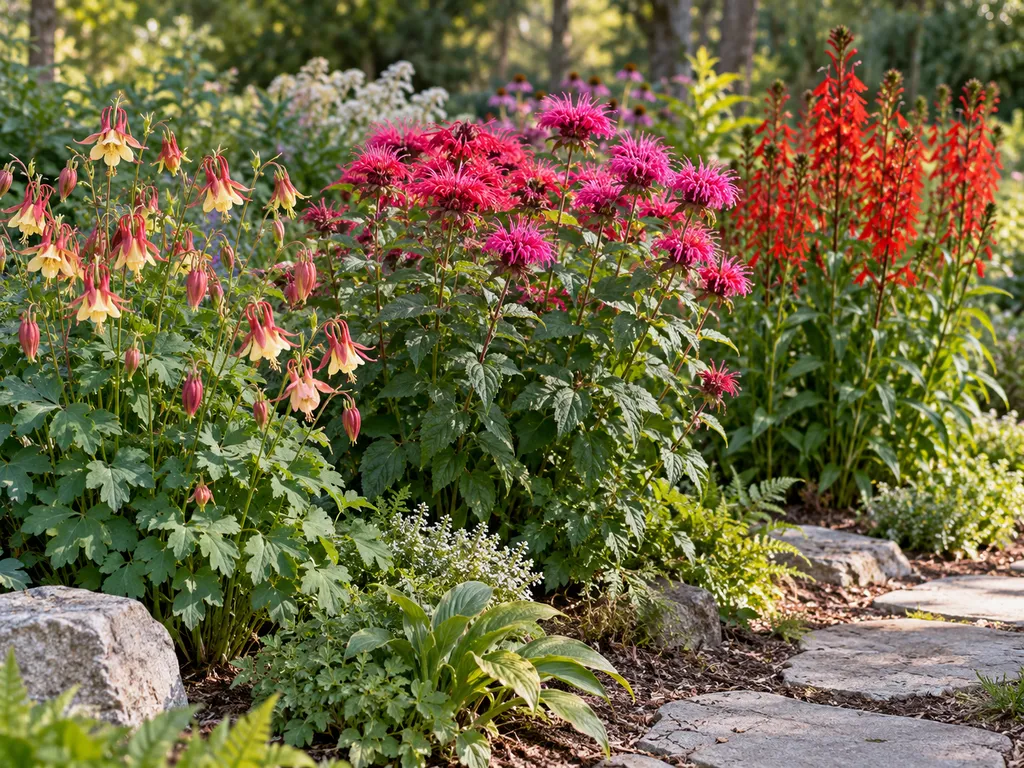
For eastern yards, start with native columbine for spring, bee balm or wild bergamot for summer, cardinal flower for moist late-season areas, coral honeysuckle on a trellis or fence, and red buckeye where a small flowering tree or shrub fits. Trumpet vine can be powerful for hummingbirds, but it is vigorous and needs space, pruning, and the right site. In the West, look at regional natives such as western columbine, penstemon, scarlet gilia, native sages, currants, and paintbrush where they are appropriate. Cornell’s Broad-tailed Hummingbird life history page lists flowers such as larkspur, red columbine, indian paintbrush, sage, and scarlet gilia among nectar sources for that western species (Cornell Lab of Ornithology).
Build a Bloom Calendar
A single favorite plant can bring a thrilling visit, but a hummingbird garden works better as a calendar. In spring, early native columbine, red buckeye, flowering currants, and other regional early bloomers can help returning birds and early nesters. In summer, bee balm, wild bergamot, penstemon, salvia, and coral honeysuckle can keep the garden active. In late summer and early fall, cardinal flower, late salvias, jewelweed where native and appropriate, and other moisture-loving late bloomers can support birds moving through. The exact sequence changes by region, so use your state extension service, regional native plant society, or Pollinator Partnership guide to pick species that actually bloom in your local window.
Think in overlapping waves rather than a strict handoff. Weather can speed up, delay, or shorten bloom periods, and young plants often flower less in their first year. Planting several species from each season makes the garden more resilient. A good target is at least three spring sources, three summer sources, and three late-season sources, with more diversity if space allows. Larger yards can repeat the same plant in several clumps so hummingbirds can see the color from a distance.
Match Plants to Sun, Soil, and Water
Right plant, right place is not just a landscaping slogan; it determines whether a hummingbird planting becomes a long-term food source or a short-lived experiment. Xerces recommends matching plants to their preferred conditions, such as sun versus shade and wet versus dry soil, because healthier plants are better able to handle stress (Xerces Society). Cardinal flower, for example, usually wants consistent moisture and can shine near a rain garden, pond edge, or low spot. Columbine tolerates partial shade and woodland edges. Bee balm prefers good air movement and soil that does not stay parched. Penstemon often needs sharper drainage, especially in the West.
Containers Can Help Small Spaces
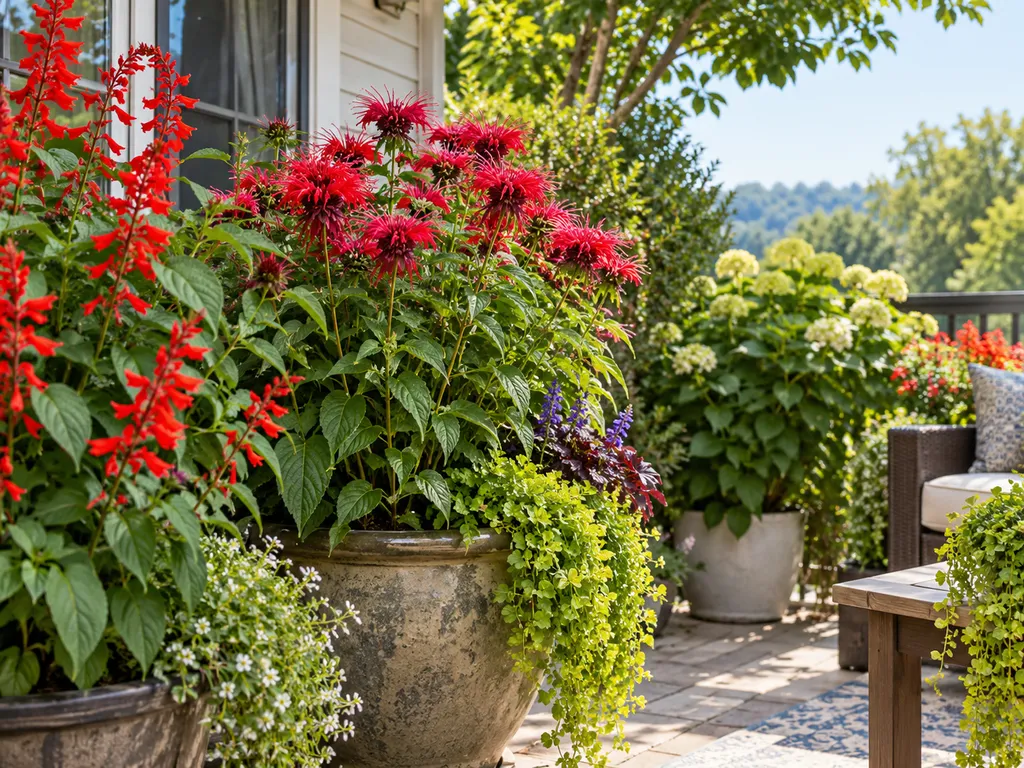
Balconies, patios, and tiny yards can still offer real nectar. Use deep containers with drainage holes, place them where flowers get the light they need, and water consistently during heat. Good container candidates include compact bee balm cultivars, native or regionally adapted salvias, penstemon in dry sunny containers, and fuchsia in cooler shaded spots where it is appropriate. Containers dry out faster than garden beds, so a plant that is “drought tolerant” in the ground may still need frequent watering in a pot.
Place container flowers where hummingbirds can approach and retreat easily. A cluster near a railing, porch edge, or open patio gives them room to hover. Avoid crowding flowers against a busy doorway, glass corner, or place where cats wait. If the container sits near a window, either keep it very close to the glass or place it well away from the window to lower collision risk. The goal is a feeding stop, not a trap.
Do Not Forget the Tiny Prey
Nectar powers hovering flight, but hummingbirds are not living on flower sugar alone. Pollinator Partnership notes that hummingbirds also eat insects such as fruit flies and gnats and may use tree sap when available. Cornell’s Living Bird article explains that hummingbirds take insects and spiders in several ways, including catching flying insects, gleaning from leaves, and taking prey from spiderwebs (Cornell Lab of Ornithology). For a gardener, that means a spotless, heavily sprayed yard is less useful than one with layered plants, leaves, stems, and a modest amount of natural insect activity.
This is where many “hummingbird plant” lists fall short. A flower can provide nectar and still sit in a landscape that offers little else. Add native shrubs for perches and shelter, leave some leaf litter in planted beds, tolerate minor leaf chewing, and avoid treating every insect as a failure. A few aphids or gnats may become food. Spiderwebs on shrubs and fences are not automatically bad; hummingbirds may take small prey from them, and females use spider silk in nest construction. Do not touch nests or birds, and never try to raise or move a hummingbird; if a bird is injured, the safe route is a licensed wildlife rehabilitator through the appropriate state agency.
Regional Examples, Not One National Shopping List
The United States has too many climates for one perfect hummingbird plant list. In much of the East, Ruby-throated Hummingbird is the expected breeding hummingbird, and Cornell describes it as the only breeding hummingbird in eastern North America. Along the Pacific Coast, Anna’s Hummingbird is common in many areas and may be present year-round, while Rufous Hummingbird is known for its long western migration and seasonal appearances in flower-filled places (Cornell Lab of Ornithology; Cornell Lab of Ornithology). Plant choices should follow those patterns: early and late flowers matter especially along migration routes, while year-round residents need winter or cool-season nectar where climate allows.
Use common names as a starting point, then confirm the Latin name and local status before buying. “Honeysuckle” could mean a native coral honeysuckle or an invasive shrub honeysuckle. “Sage” could mean a western native, a culinary herb, or a bedding annual. “Trumpet vine” may be native and useful in part of the country but far too aggressive for a small bed. A native-first hummingbird garden is less about chasing a universal top ten and more about choosing the right local members of the same functional groups: early tubular flowers, midsummer nectar clumps, late-season bloomers, shrubs or small trees, and insect-supporting structure.
Common Mistakes to Avoid
The first mistake is planting only one red annual and expecting a steady stream of birds. Hummingbirds may inspect it, but a single pot cannot do the work of a layered planting. The second mistake is choosing showy flowers with poor nectar access. Roses, daisies, sunflowers, and tulips may be beautiful, but they are not the classic hummingbird flower shape and should not be treated as the core of a hummingbird plan. The third mistake is ignoring moisture: cardinal flower in a hot dry strip will struggle, while dryland penstemon in heavy wet soil may fail.
Another mistake is using chemicals to make the garden look perfect. Xerces recommends managing pests without routine pesticides and avoiding applications around blooming plants when pesticides are used at all. For hummingbirds, this matters twice: pesticides can reduce the small insects the birds take, and flowering plants are the very places wildlife is visiting. A few damaged leaves are often a sign that the garden is feeding more life than just the flower show.
How to Start This Season
If you are starting from lawn or an empty bed, do not try to finish the whole garden in one weekend. Pick one sunny or partly sunny area you can water during establishment, remove invasive plants, and plant three to five native nectar species with different bloom times. Group each species in small drifts rather than scattering one plant here and one plant there. Add a native vine or shrub if space allows. Mulch lightly with untreated organic material, leaving some open soil and stems for beneficial insects where appropriate.
If you also use a feeder, keep it secondary to the plant plan: clean it at every refill and fill it with fresh, clear nectar made at the 4:1 ratio. Do not use red dye, honey, brown sugar, raw sugar, powdered sugar, maple syrup, fruit juice, sports drinks, artificial sweeteners, or additives. Plants do not replace clean feeder care, and feeders do not replace plants. The strongest yard offers both fresh nectar when a feeder is present and a living garden that blooms, shelters insects, and changes through the season.
The Bottom Line
A hummingbird-friendly planting is a living schedule, not a single flower. Choose native nectar plants first, favor tubular blooms in bright colors, and make sure your garden has something useful in spring, summer, and late season. Match plants to your soil and light, ask about pesticide practices when buying nursery stock, and keep enough natural structure for the tiny insects and spiders hummingbirds also use. The best plan is local: a native columbine in one region, a western penstemon in another, a moist patch of cardinal flower where it belongs, and a well-placed coral honeysuckle or red buckeye where those fit the yard.
Frequently Asked Questions
What is the single best plant for hummingbirds?
There is no single best plant for every yard. In many eastern gardens, native columbine, bee balm, cardinal flower, coral honeysuckle, and red buckeye are strong choices. In western gardens, look at regional penstemons, western columbine, native sages, scarlet gilia, currants, and paintbrush. The best plant is native or well adapted to your region, blooms at a useful time, and fits your site.
Do hummingbirds only visit red flowers?
No. Red and orange tubular flowers are especially visible and often productive, but hummingbirds may visit pink, purple, white, blue, or other flowers when nectar is accessible. Use red and orange as strong signals, then build a wider native planting for season-long support.
Are annual flowers useful for hummingbirds?
Annuals can help fill gaps, especially in containers or new gardens, but they should not be the whole plan. Use them as temporary bloom while native perennials, shrubs, and vines establish. Avoid plants treated with long-lasting insecticides, and do not rely on flowers with shapes that hummingbirds cannot use well.
How many hummingbird plants do I need?
Even a few pots can help in a small space, but a garden works better with repeated clusters. A practical starting point is three to five nectar plants with different bloom times. Larger yards can add spring, summer, and late-season groups, plus shrubs or vines for structure.
Should I remove spiderwebs from a hummingbird garden?
Do not remove every web automatically. Hummingbirds take small prey from leaves, air, and spiderwebs, and females use spider silk in nest building. Clear webs only where they block paths, doors, or routine human use.
Can I use a feeder instead of planting flowers?
A feeder can supplement a garden, but flowers add more than nectar. Native plants support insects, provide cover and perches, and create bloom through the season. If you use a feeder, keep nectar clear, use the 4:1 ratio, and clean the feeder at every refill.
Sources
This guide was researched using these sources.
- https://www.pollinator.org/learning-center/hummingbirds
- https://www.allaboutbirds.org/guide/Ruby-throated_Hummingbird
- https://extension.umn.edu/about/our-stories/news/yard-and-garden-news/native-plants-for-minnesota-gardens
- https://www.pollinator.org/pollinator.org/assets/generalFiles/HummingbirdGde.5.5x8.5.East.FINAL.web.4.13.2017.pdf
- https://www.allaboutbirds.org/guide/Broad-tailed_Hummingbird/lifehistory
- https://xerces.org/blog/how-to-make-pollinator-garden
- https://www.allaboutbirds.org/news/not-all-sweetness-and-light-the-real-diet-of-hummingbirds
- https://www.allaboutbirds.org/guide/Annas_Hummingbird/overview
- https://www.allaboutbirds.org/guide/Rufous_Hummingbird/overview